




Built for Revs, Still Vulnerable to Failure
High-performance engines aren’t built like your average commuter motor. They’re engineered to survive high RPM, withstand serious cylinder pressures, and take the kind of punishment that would quickly wear out a regular engine. Lamborghini’s naturally aspirated 5.2-liter V10 in the Huracan is a good example: it revs past 8,000 RPM and is known for thriving doing so.
That’s why this teardown from I Do Cars on YouTube is interesting to us. The engine came from a 2018 Huracan Performante with less than 20,000 miles. It allegedly failed at about 7,000 RPM – well within its normal range. On paper, that shouldn’t be a problem for a motor built to run hard all day. But the teardown showed just how quickly things can go wrong, even in an engine like this.
What the Teardown Uncovered
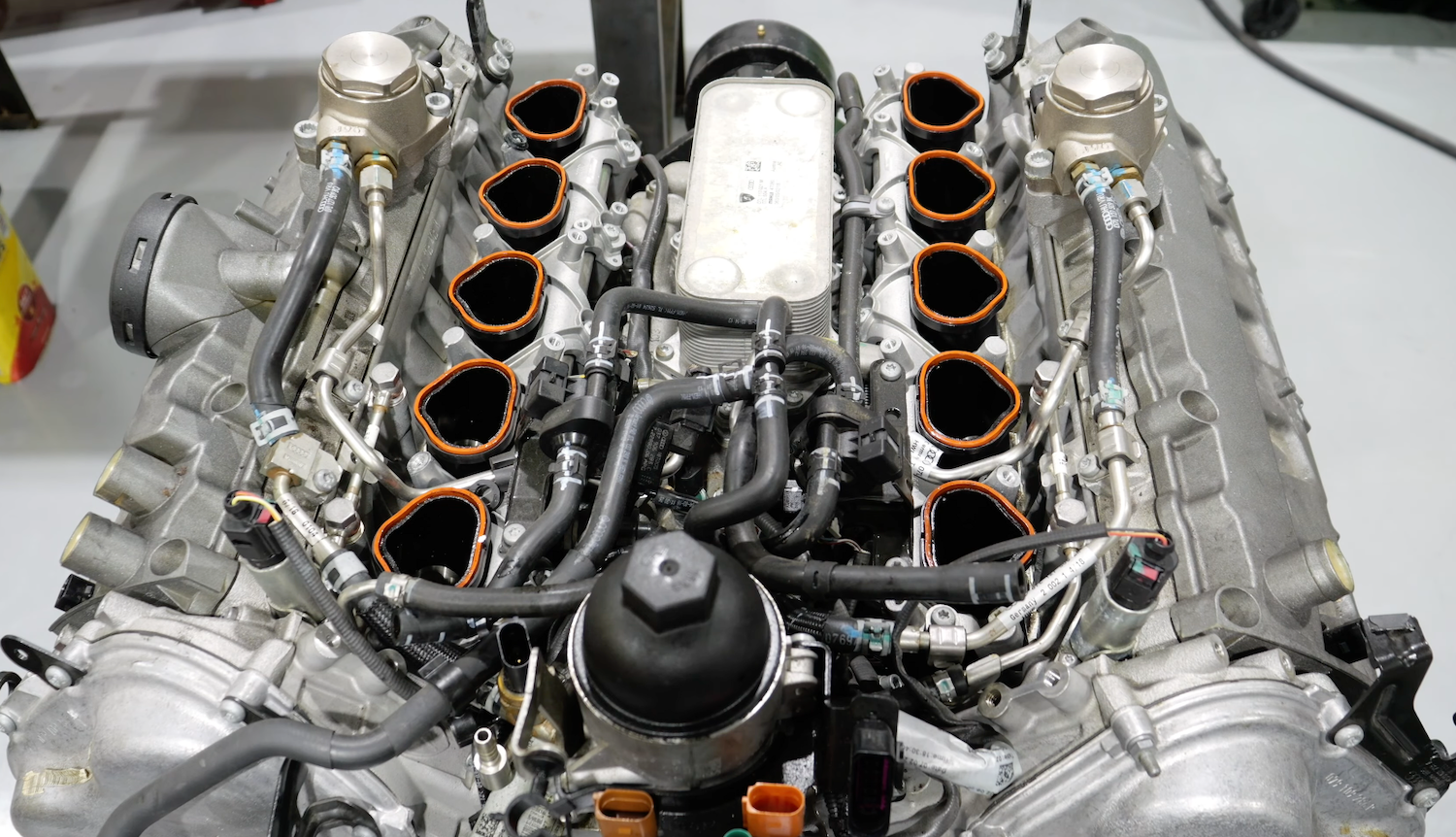
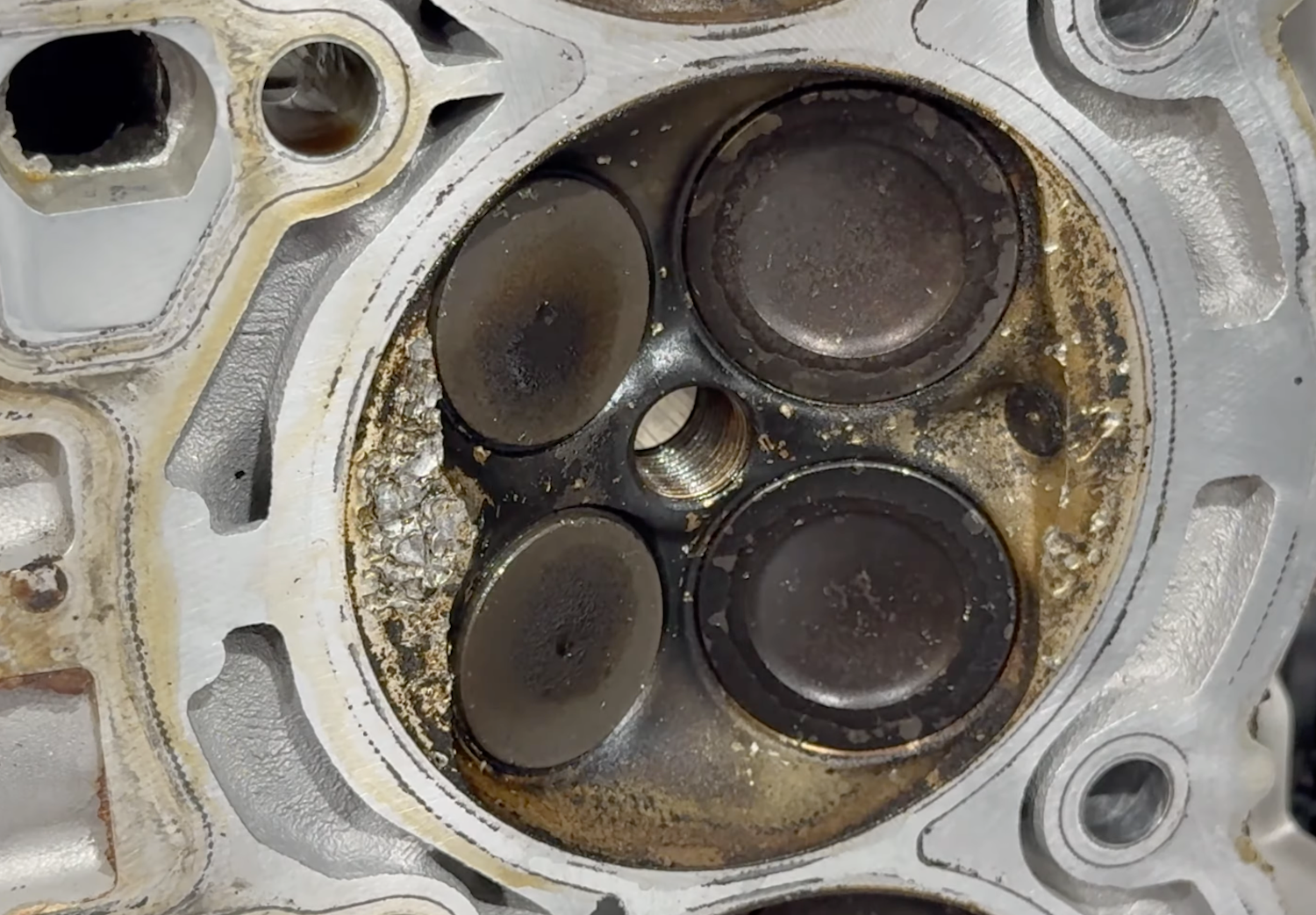
Even before the engine was fully apart, there were red flags. There was visible damage on the outside, metal debris where it shouldn’t be, and at least one spark plug that refused to come out. Pulling the intake made things clearer: one cylinder had lost part of a valve, and the fragments were stuck in the combustion chamber.
Digging deeper, the damage wasn’t limited to one area. One cylinder head had battered combustion chambers and clear signs of debris impact. The other side had bent valves stuck open and broken valve guides. Down in the bottom end, things looked even worse: several connecting rods had failed, breaking through the block and taking out the dry-sump oil pump. Despite all that, the bearings looked surprisingly healthy, which points to the engine still having oil pressure when it failed.
I Do Cars/YouTube
There Are Theories
Unfortunately, even I Do Cars – which tears down engines for a living – couldn’t land on a single clear cause for the catastrophic failure in this particular Huracan V10. One theory is that a stuck injector caused hydrolock at high RPM, which would explain the broken rods. Another is an over-rev, though that’s less likely with a modern automated gearbox. The valvetrain failure adds another layer, since it doesn’t line up directly with the rod damage.
Whatever the cause, we can say that this Huracan V10 didn’t go peacefully. It’s a reminder that even engines built for high-performance applications can fail, and when they do, the results aren’t subtle. Just a reminder that no engine is bulletproof, no matter how well it’s engineered.
I Do Cars/YouTube


There are no reviews to display.