




BMW's M Badge stands for 'Motorsport.'
If you reel in the years, BMW’s M-series cars, including the M2, M3, M4, M5, and other miscellaneous M-badged cars in its lineup, can trace back their roots to the M1, a special supercar built all the way back in 1978. During its production run, just 456 road-going M1s were ever built, as they were sold to customers to meet homologation rules.
At the time, BMW had motorsport dreams, and the mid-engined M1 was initially developed to be its vehicle to compete against rival Porsche in the Group 4 and Group 5 categories of sports car racing. To achieve this, the Bavarians got Giorgetto Giugiaro to design the body and Lamborghini to develop its chassis; however, by 1978, its plans to actually race were thwarted when Lamborghini pulled out of the project due to its own financial difficulties, and the FIA dramatically changed Group 5 homologation rules.
When these changes threatened to derail BMW's racing plans, BMW Motorsport chief Jochen Neerpasch devised a new idea that became one of motorsport’s most memorable spectacles: the BMW M1 Procar series, a special single-make championship series. Billed as a support series during European grand prix weekends, this championship featured Formula 1 stars competing directly against drivers from the World Sportscar Championship, European Touring Car Championship, and other international series in identical race-prepared M1s.
From 1979 to 1980, the Procar series showcased BMW’s new supercar on a grand stage, while BMW worked out the M1's homologation requirements. At the same time, F1’s biggest names, including legends like Niki Lauda, Nelson Piquet, Alan Jones, and Clay Regazzoni, entertained audiences with intense wheel-to-wheel action before the actual race on Sunday.
Bingo Auction
Mint condition and never raced
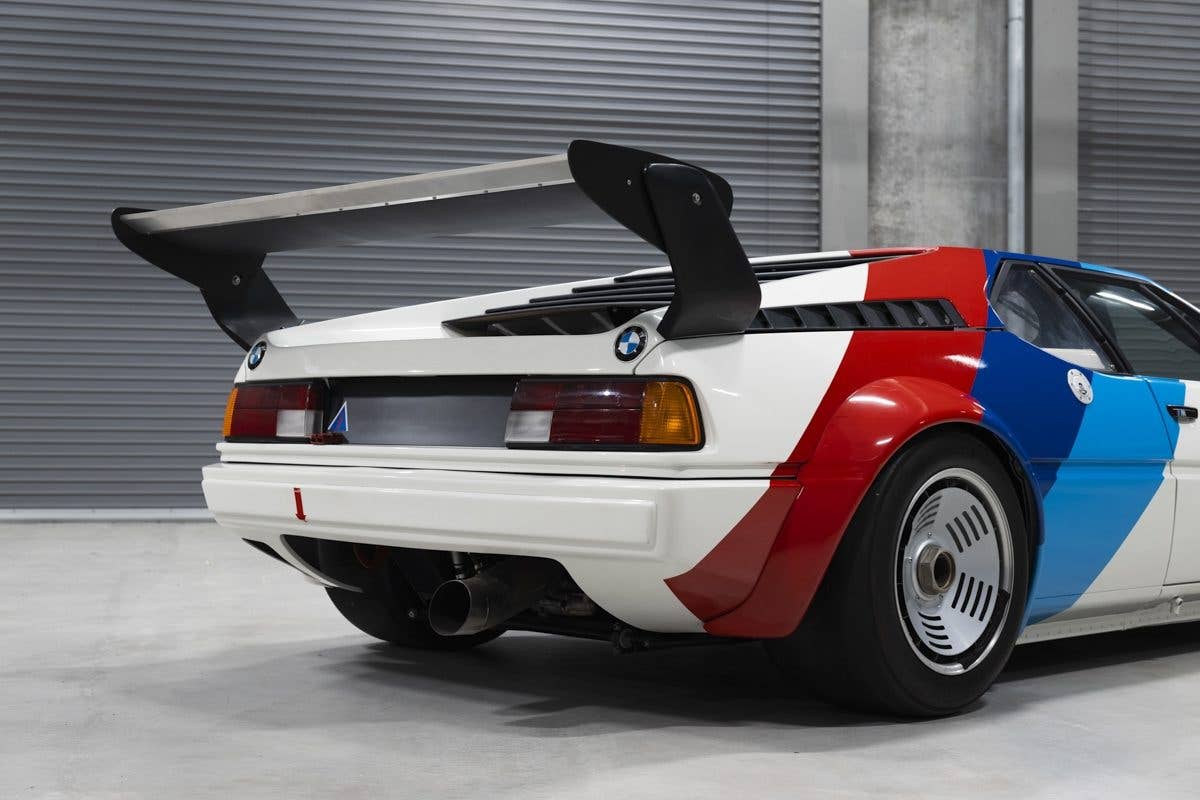
Headed for Bingo's BH AUCTION 1.10 at City Circuit Tokyo Bay on January 9 and 10, 2026, is none other than a mint-condition, genuine 1979 BMW M1 Procar; one of the exact kind of cars that racing legends like Mario Andretti, Alain Prost, Niki Lauda, and Tiff Needell drove during the prolific series.
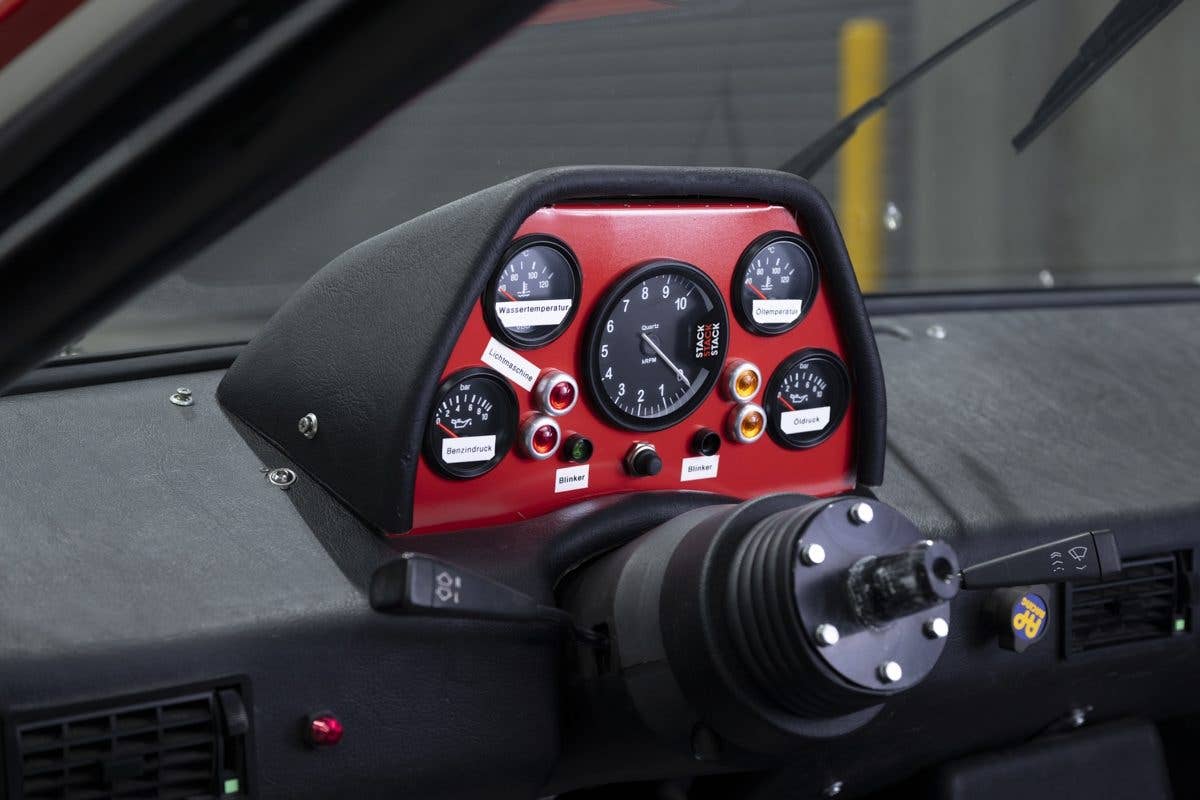
All M1 Procars, including the one shown here, were built to identical standards; however, they share little in comparison to the standard road-going M1. For starters, the Procars received extensive aerodynamic tweaks, including a prominent front bumper spoiler, wide fender flares, and a huge, adjustable rear wing. In addition, the Procars went on a crash diet, reducing their weight to just 2,250 lb, and also received extensive suspension and brake modifications.
Under the rear clamshell rests a modified version of the M1's 3.5-liter M88 inline-6 cylinder engine, known as the M88/1, which featured forged pistons, sharper camshafts, and larger valves. In this form, it made 464 horsepower from the stock engine's 288 horsepower, and drove the procars from 0-60 in 4.3 seconds and to a top speed of nearly 193 mph.
Bingo Auction
The inaugural season of the Procar Championship took place in 1979, featuring events from May to September. During this period, the Formula One championship made eight consecutive stops in Europe, including Zolder, the Monaco street circuit, Silverstone, and Monza. However, in 1980, the schedule was revised to include its own standalone events alongside the support events for Formula One races. Three-time F1 Drivers’ Champion Niki Lauda won the inaugural championship, while Brazilian racing legend Nelson Piquet took home the 1980 trophy.
Although this vehicle features the same M-stripes livery as the cars driven by Formula One stars on the streets of Monaco and legendary racetracks like Silverstone and Monza, the auctioneers state that this particular vehicle was left unscathed and in immaculate condition because it served as a race support vehicle and was never used in actual competition. Bingo states that this car comes with official DMSB and FIA documentation, confirming its official status and verifying that the engine has been successfully started.
Final thoughts
According to Bingo, the BMW M1 Procar is lot number 21 and will be auctioned off during BH AUCTION 1.10 at City Circuit Tokyo Bay in Japan, marking its first auction event of 2026. The auction will be conducted in Japanese Yen, and the M1 is estimated to fetch between ¥180,000,000 and ¥220,000,000 (~$1.15M and ~$1.4M).
Although it is expected to fetch seven figures, this and the Lauda BMW M1, set to cross the block at Mecum's Kissimmee auction, are prime opportunities to own vehicles that are part of a larger story that cemented a brand beloved by enthusiasts. I can imagine a determined collector or museum would snag both to display side by side.


There are no reviews to display.