




Godzilla, Reimagined
Nissan had a very limited, special edition of the R35 GT-R called the GT-R50, but it faced production woes due to factors like the pandemic. Out of the 50 planned units, only 18 were reportedly hand-built. Through FRAME, we get a look at how the team in Italy created these futuristic-looking GT-Rs a few years back.
The GT-R50 was a collaboration between Nissan and Italdesign, an Italian coachbuilder founded by Giorgetto Giugiaro, who designed iconic models like the one-off Ferrari 250 GT Berlinetta Speciale. Celebrating the 50th anniversaries of both the GT-R (2019) and Italdesign (2018), the project may not have reached its full production potential, but the extremely limited numbers ultimately contributed to its ultra-rare and collectible status.
Italian Design Blends With Japanese Engineering
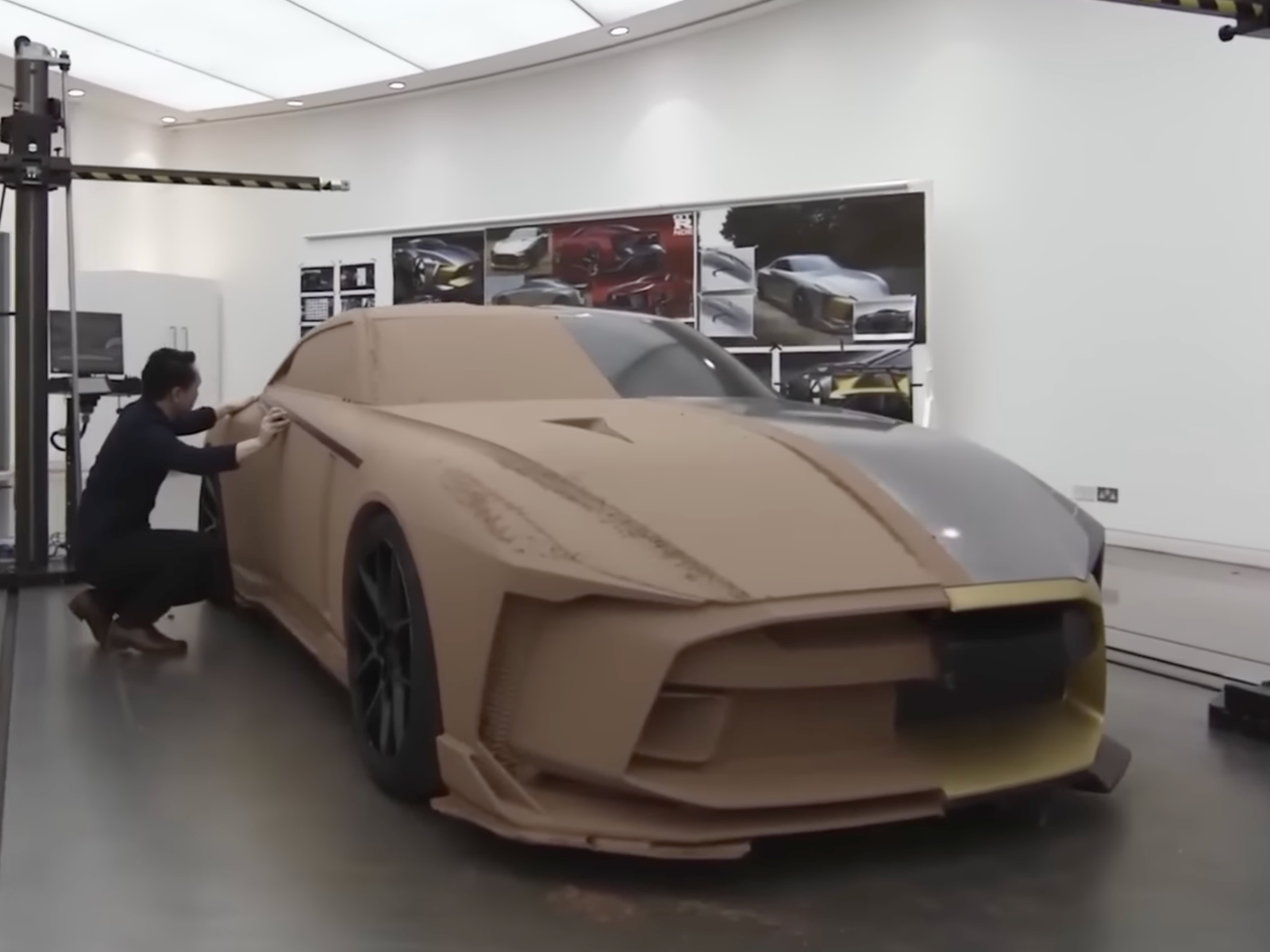
The team didn’t use machinery like big automated robots because the GT-R50 was already based on an existing R35 GT-R Nismo. Clay modeling allowed engineers to reshape the body more organically, giving the coachbuilt version a sleeker, more streamlined design reminiscent of modern EVs. The C-pillar area was also redesigned to improve airflow toward the rear, while the roofline was lowered by 54 mm (2.1 inches).
Tools such as calipers, 3D scanners, computer-aided design (CAD) software, and micrometers were used to achieve precise dimensional accuracy during the build. As a proudly hand-built vehicle, the team shaped the body panels using traditional tools like hammers and chisels.
The styling wasn’t the only thing that changed. Nissan also tweaked the 3.8-liter VR38DETT V6 engine to produce 710 horsepower and 585 lb-ft of torque, representing a 110-horsepower increase over the regular GT-R Nismo. That output bump was made possible through larger turbochargers, upgraded intercoolers, and strengthened internal components.
A Collector’s Dream
All of the Nissan GT-R50 examples were already sold before production began. Each carried a starting price of €990,000 (about $1.2 million), putting it in the same ballpark as coveted hypercars like the McLaren Senna and Ferrari LaFerrari.
This year, the Japanese marque has officially ended production of the R35 GT-R after an 18-year run. Reports suggest that its potential successor could be an EV hinted at by the all-electric Hyper Force concept. But with the EV market currently experiencing a slowdown, that unprecedented version may not materialize anytime soon.


There are no reviews to display.