


The BMW S55 Usually Has a Pretty Good Reputation
The BMW S55 engine has earned its fans, and it’s easy to see why. This twin-turbo 3.0-liter inline-six, found in the F80 M3 and F82 M4, is often called one of BMW M’s more reliable modern engines – if you keep up with maintenance. Out of the box, it puts down 425 horsepower and 406 lb-ft of torque. Even better, it can take a fair bit of tuning abuse before your wallet starts sweating.
That said, the S55 is a tuner’s dream. Bolt-ons, bigger turbos, ethanol mixes, wild ECU tunes – these cars see it all, and many keep running strong for years.
But even the S55 has its limits, especially if you ignore maintenance or brush off warning signs. Not every engine gets an easy life. A recent I Do Cars teardown showed exactly what happens when a small problem is left to spiral into a full-blown disaster.
This particular engine came out of a 2015 BMW M3. From the first turn of the wrench, it was clear: something had gone seriously wrong inside.
The Damage Started Bad and Somehow Got Worse
Even before cracking it open, the clues were there. The engine wouldn’t turn over like it should. A few spark plugs were missing. One cylinder looked suspiciously wet. Rust and moisture in the ports hinted that this S55 had spent some time outside after it died.
Then things got ugly as soon as the valve cover came off. Multiple intake cam caps were shattered – some of the worst valvetrain carnage the host had ever seen. The S55’s Valvetronic system puts a lot of spring pressure on the valvetrain, and once oil stopped flowing, the camshaft just started eating into the cylinder head.
As for the oil filter, metallic bits everywhere, including copper-colored shavings that usually mean bearing failure. At this point, it was obvious the damage went way beyond the top end.
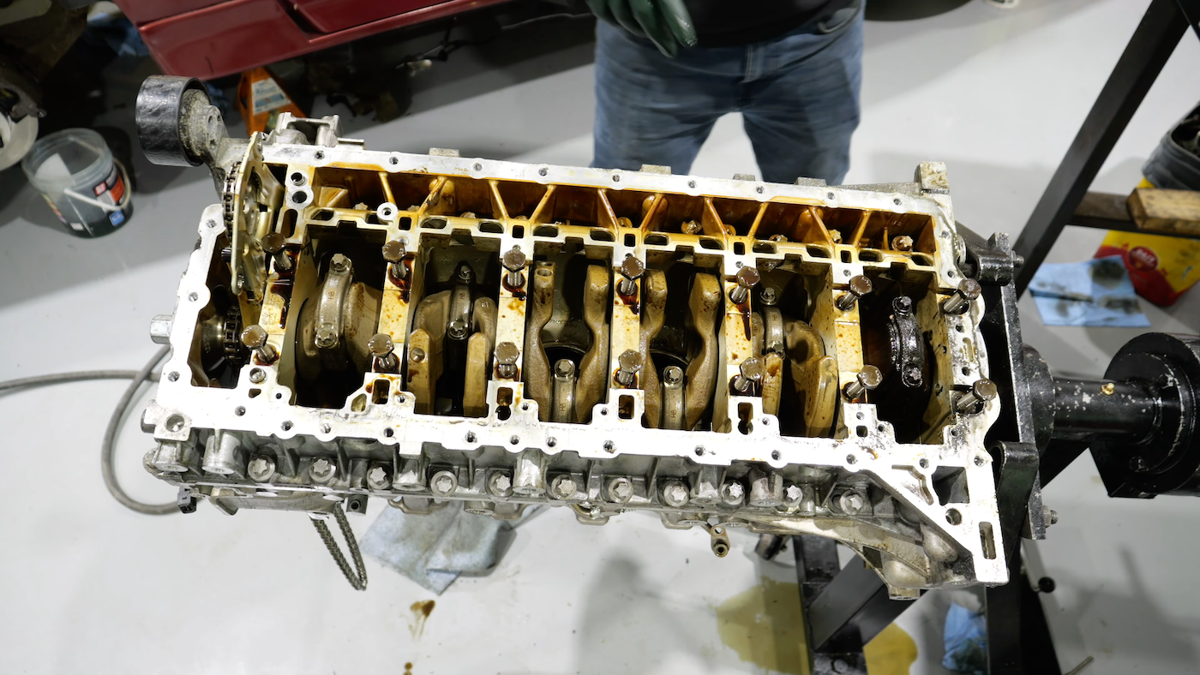
Digging deeper, the real culprit showed up: cylinder six had a rod-bearing failure of the worst kind. Bearing material had spread through the oil system, contaminating almost every part that needed lubrication. Things got so hot that plastic parts inside the oil pan actually melted.
Surprisingly, the pistons and valves weren’t smashed up as you’d expect from a failure this bad. Instead, the engine just slowly tore itself apart from oil starvation and heat, bit by bit.
I Do Cars/YouTube
Modern Performance Engines Still Need Attention
What’s wild is this probably didn’t happen all at once. As I Do Cars pointed out, the damaged cam journals and broken cam caps indicate the engine kept running for a while after oil pressure began to drop.
That’s the uncomfortable truth here. Modern performance cars warn you about almost everything. Knocks, low oil pressure, rough running, weird vibrations – you usually get plenty of hints before things get this bad. This teardown makes it clear: someone kept driving this BMW M3 long after the trouble started.
If you own an S55, the advice hasn’t changed. Stay on top of oil changes. Watch your oil pressure and temps. Don’t ignore weird noises just because the car still moves. Rod-bearing wear is always something to watch, especially if you’re running more power than stock.
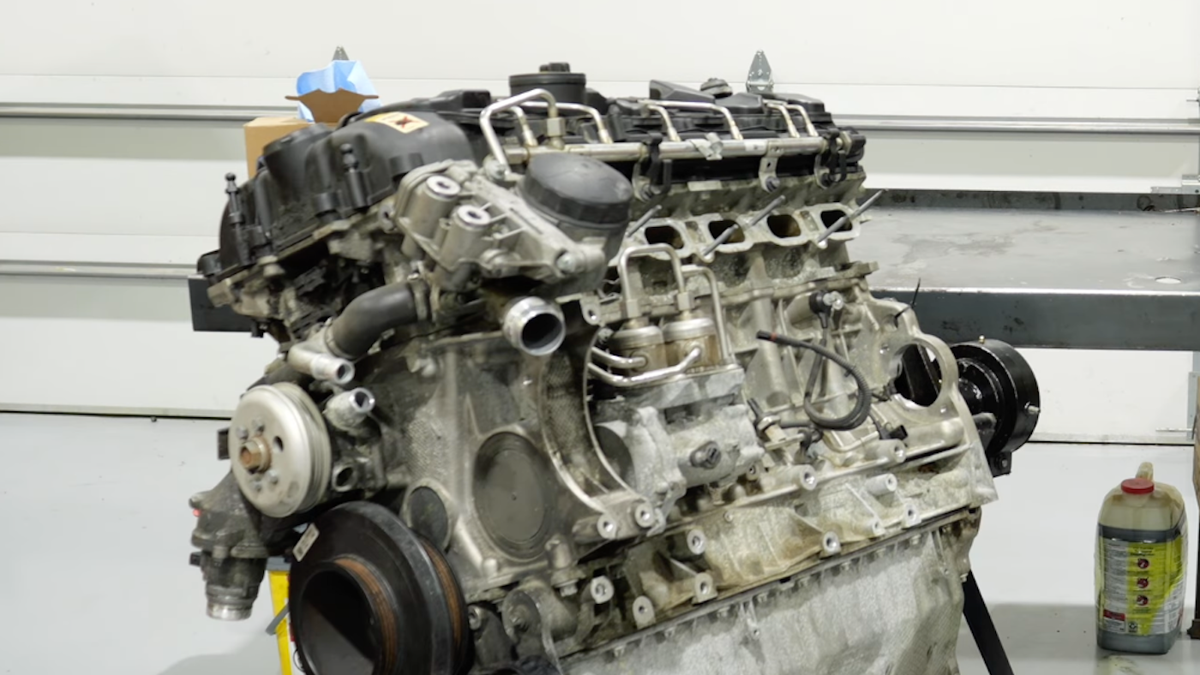
The surprise? Even after all this carnage, some good parts survived, such as the block, a few pistons, and the oil pan and injectors. But the cylinder head? That one’s done for good.
I Do Cars/YouTube


There are no reviews to display.