




The Charger Finally Gets Its Shot
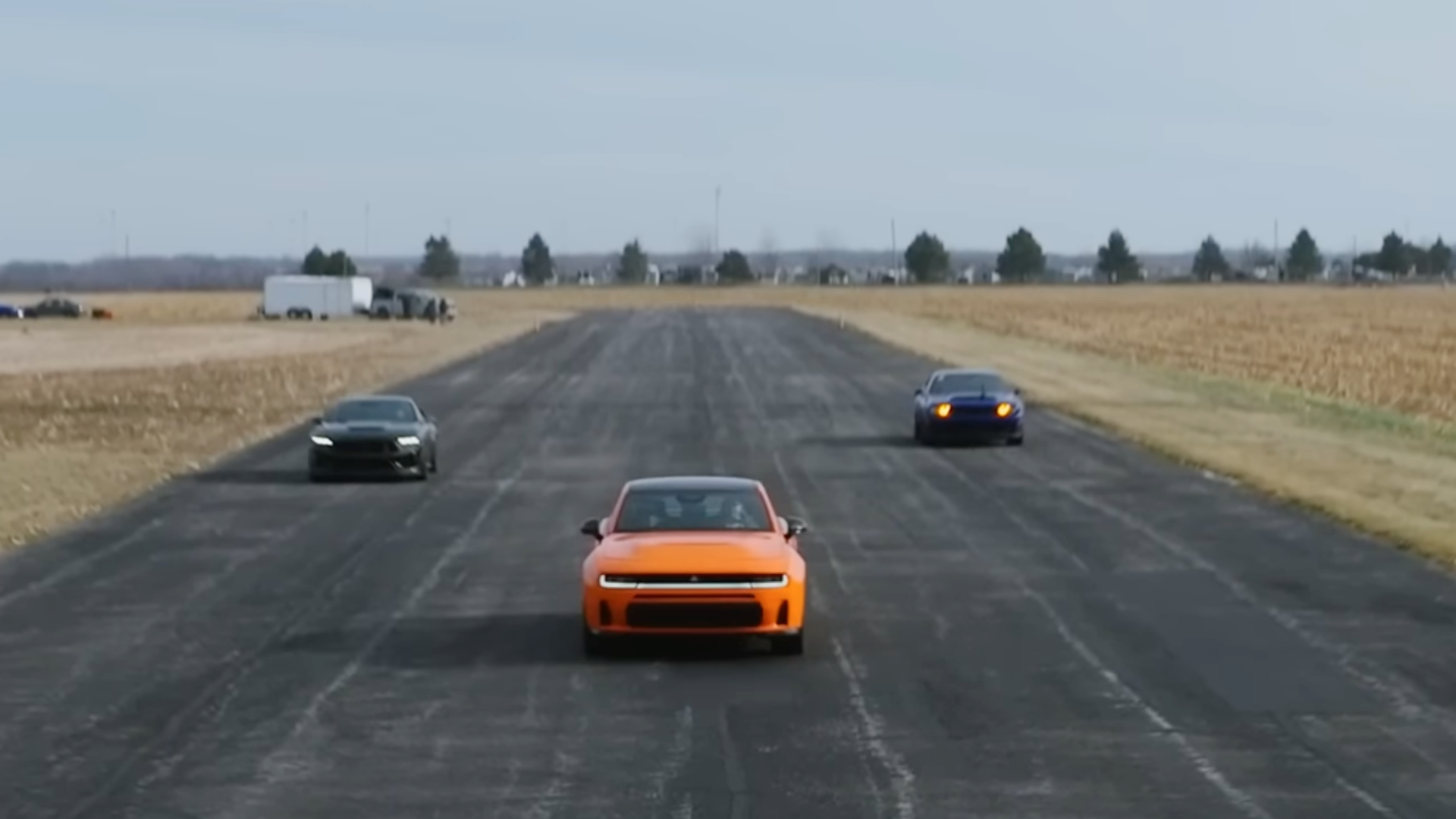
For the first time since Dodge controversially pivoted the Charger nameplate toward electrification, we finally get a proper answer to the question muscle car fans have been asking: Can a gasoline-powered Charger still run with the best? In a cold-weather drag race staged by YouTube channel Throttle House, the new gas-fed Dodge Charger lines up against two modern American benchmarks, the Ford Mustang Dark Horse and the older brute force of a Dodge Challenger SRT Hellcat Redeye.
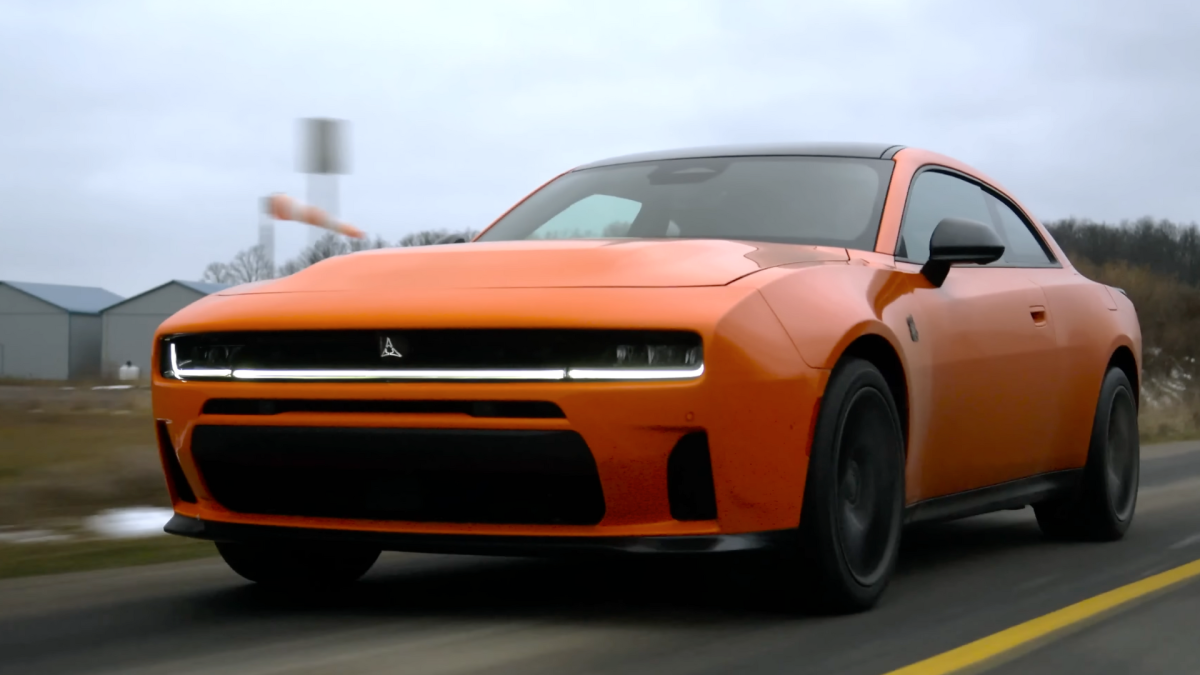
This is the matchup that many Charger fans have been waiting for. Dodge already showed us an electric Charger was quick, but quick isn’t the same as convincing in the muscle car world. Here, the Charger SIXPACK arrives with all-wheel drive, turbocharged power, and something Dodge loyalists haven’t had in years: traction.
On a frigid, non-prepped Canadian road, that setup immediately changes the conversation, especially against rear-drive rivals trying to put serious horsepower to the ground.
Launch Wars: Traction vs Tradition
From a standing start, the Charger’s advantage is obvious. While the Mustang Dark Horse relies on its naturally aspirated V8 and the Hellcat Redeye wrestles with nearly 800 supercharged horsepower, the Charger simply leaves. All-wheel drive allows it to hook up cleanly while the Redeye spins violently, proving once again that “spinning ain’t winning.” In real-world, light-to-light conditions, the Charger looks shockingly effective, even against cars with far more power on paper.
Switch everything to rear-wheel drive, though, and the hierarchy begins to shift. The Charger stays competitive with the Dark Horse but can’t overcome its weight penalty. The Hellcat, once it finally finds grip, storms back with terrifying speed, reminding everyone why it remains one of the most outrageous muscle cars ever built. This is the raw, slightly unhinged experience traditionalists still crave, and the Charger, for all its tech, can’t quite replicate that drama.
Throttle House/YouTube
Roll Races
When the launch is removed from the equation, the story evolves again. In roll races with the Charger back in all-wheel drive, the playing field levels out. The Dark Horse hangs on impressively, showcasing its balance and consistency, while the Hellcat, once fully hooked, simply disappears up the road. On a longer stretch or a prepped surface, the Redeye’s advantage is decisive; it’s in another league altogether.
Still, the takeaway isn’t that the new Charger dominates everything. Instead, it reframes what “muscle” means in 2026. The Charger SIXPACK is safer, more predictable, and undeniably effective. It may lack the white-knuckle fear factor of a Hellcat, but it finally delivers straight-line credibility in gasoline form. Until we finally get a V8-powered Charger, Dodge has proven one thing clearly with the SIXPACK: the Charger name still belongs in a drag race, even if the definition of muscle has evolved.
Throttle House/YouTube


There are no reviews to display.