




A Fresh Start After Theta II
When the Genesis GV80 was launched around five years ago, it came with a new 2.5-liter turbocharged Smartstream four-cylinder, effectively replacing the troubled 2.4-liter Theta II in Hyundai Motor Group's lineup of power plants. The latter had become infamous for recalls, oil consumption complaints, and sudden failures, so, on paper, the new motor looked like a clear improvement.
Known internally as the G4KR, the 2.5-liter Smartstream makes 300 horsepower and 311 lb-ft of torque, numbers that comfortably move the GV80 without feeling strained. It also came with modern updates like dual injection, using both port and direct injectors to improve efficiency and reduce carbon buildup. Reliability, however, was a mystery – something that owners will attest to after years of ownership. There was a previous recall tied to fuel pump issues across Hyundai Motor Group products, though it wasn't specific to the four-cylinder Smartstream.
For one GV80 owner, however, that uncertainty became real when their engine locked solid at just around 30,000 miles.
Inside the Prematurely Locked-Up Engine
As always, our favorite engine CSI, I Do Cars on YouTube, initiated this engine teardown. On the stand, the engine was completely seized, refusing to rotate in either direction. From there, the teardown took an unexpected turn. The valve cover came off to reveal an extremely clean valvetrain, with healthy-looking cams, rollers, and timing components. The timing chain system looked almost new, and there were no signs of oil starvation up top.
Pulling the cylinder head didn't change much. The pistons showed no valve contact, the combustion chambers looked even, and bore wear was present but not extreme for the mileage. The oil filter was nearly spotless, with no obvious metallic debris. It wasn't until the teardown reached the bottom end that the real damage surfaced.
The connecting rod bearings had catastrophically failed. Several were effectively welded to the crankshaft journals, completely locking the engine. Once the rods were disconnected, the crank would finally turn. The damage pattern was consistent across cylinders and unmistakable.
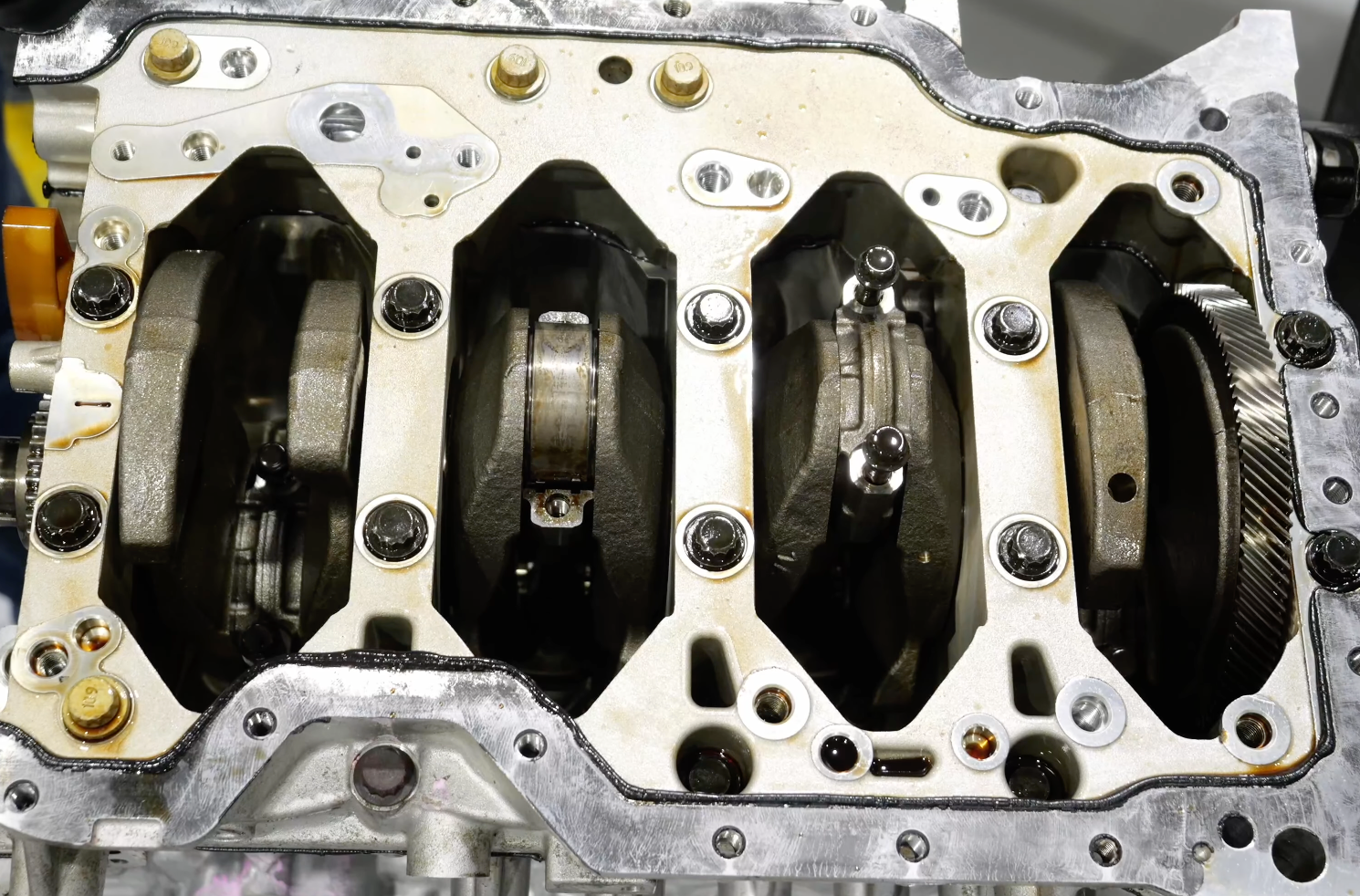
I Do Cars/YouTube
A Simple Human Mistake
Unfortunately, this teardown shows that the engine problem wasn't due to a design flaw. The rod bearings evidently failed without the typical signs of prolonged oil starvation, and the upper engine remained largely untouched. That strongly suggests the engine was started and run without oil, possibly after an oil change in which the engine was drained but not refilled before start-up.
Preventing this kind of failure comes down to the basics. Oil refills during service should always be checked by verifying oil pressure after maintenance, and don't assume a warning light will save an engine in time. Modern engines can destroy themselves in seconds without lubrication. In this case, the Smartstream 2.5 looks fundamentally sound, but even good hardware can't survive a simple human mistake.



There are no reviews to display.