



This NA V6 May Not Be As Reliable as We Thought
Toyotas are known for their reliability more than anything else, but this isn’t necessarily always the case. The naturally-aspirated 3.5-liter 2GR-FKS V6 engine replaced the 2GR-FSE in 2015 and has been in production ever since. It is used in a number of models from Toyota, including the Camry, Tacoma, Avalon, and Highlander, as well as the Lexus GS 350, RX 350, IS 350, and RC 350. While these engines, especially from later years, are considered bulletproof and reliable for up to 200,000 miles, earlier examples from before 2018 occasionally didn’t fare as well.
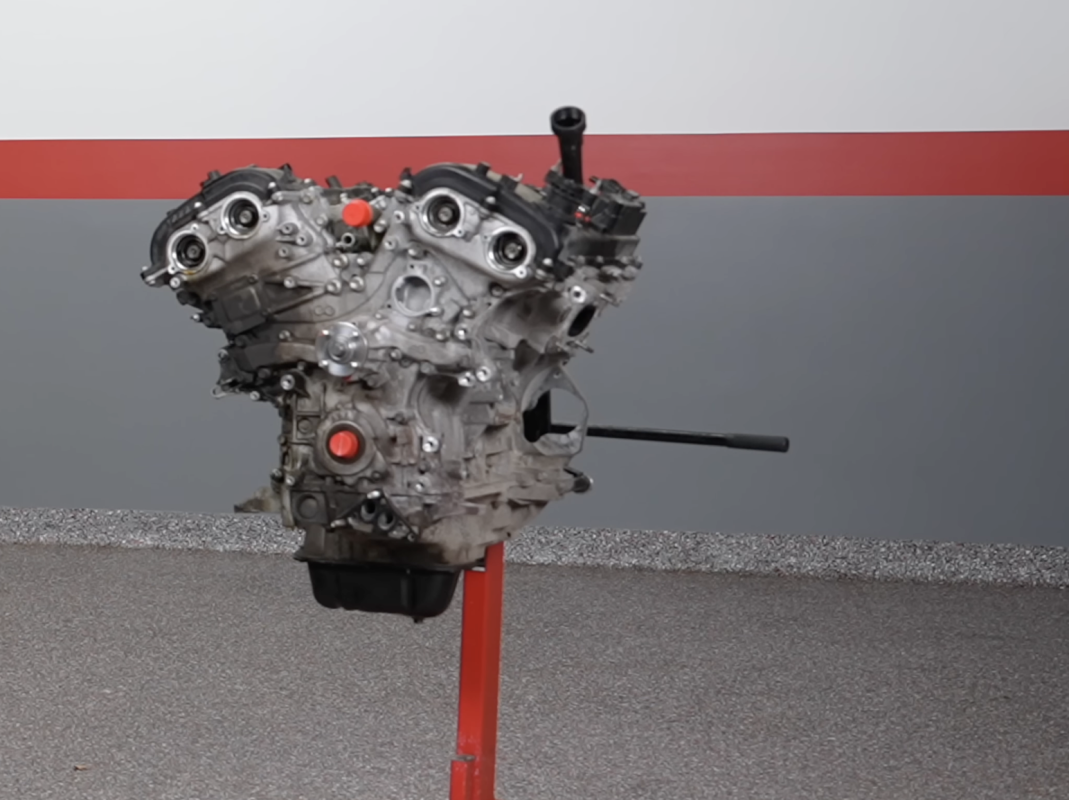
The motor being taken apart in this teardown video from The Car Care Nut YouTube channel came out of a 2017 Toyota Tacoma. The owner complained of loud knocking noises at just around 69,000 miles — a clear indication that something was seriously wrong within.
Initial Findings
The first visible issue on this engine was substantial oil stains from a timing cover leak — a common issue with 2GR motors. There were also coolant stains on the back of the engine, indicating a slow coolant leak from the plastic bypass pipe; yet another known issue. However, neither of these fluid leaks could be responsible for an engine failure.
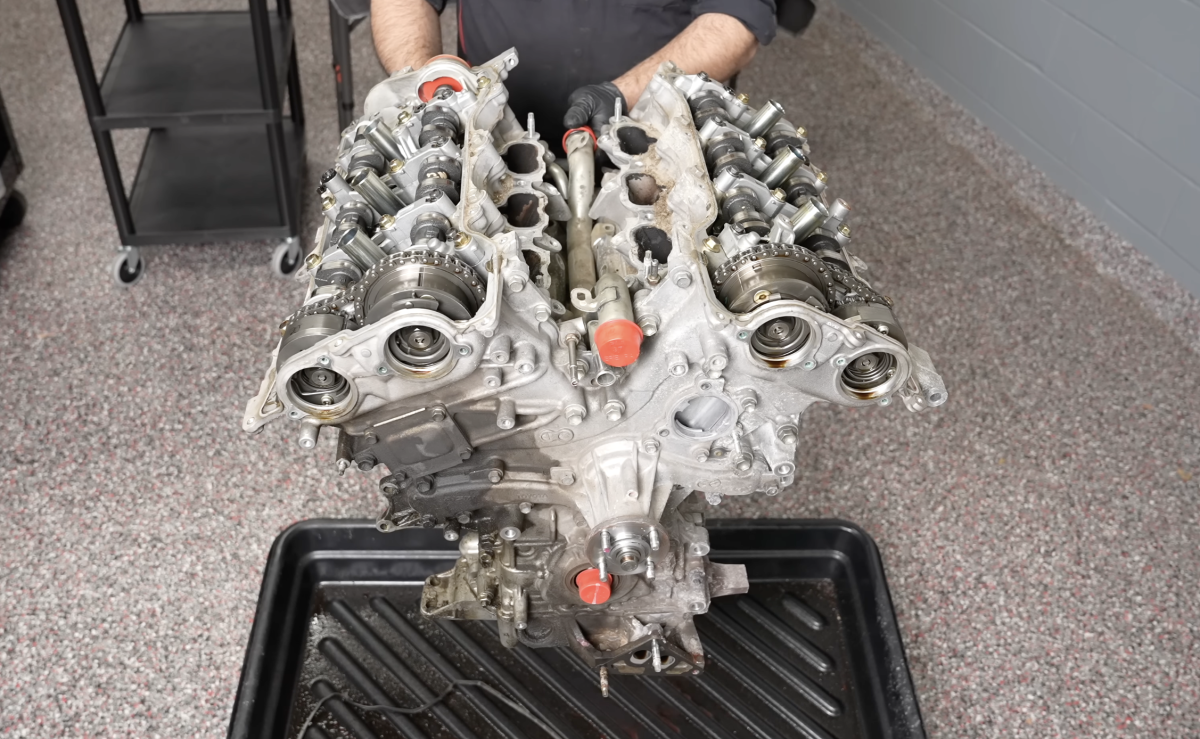
Spotless Top End
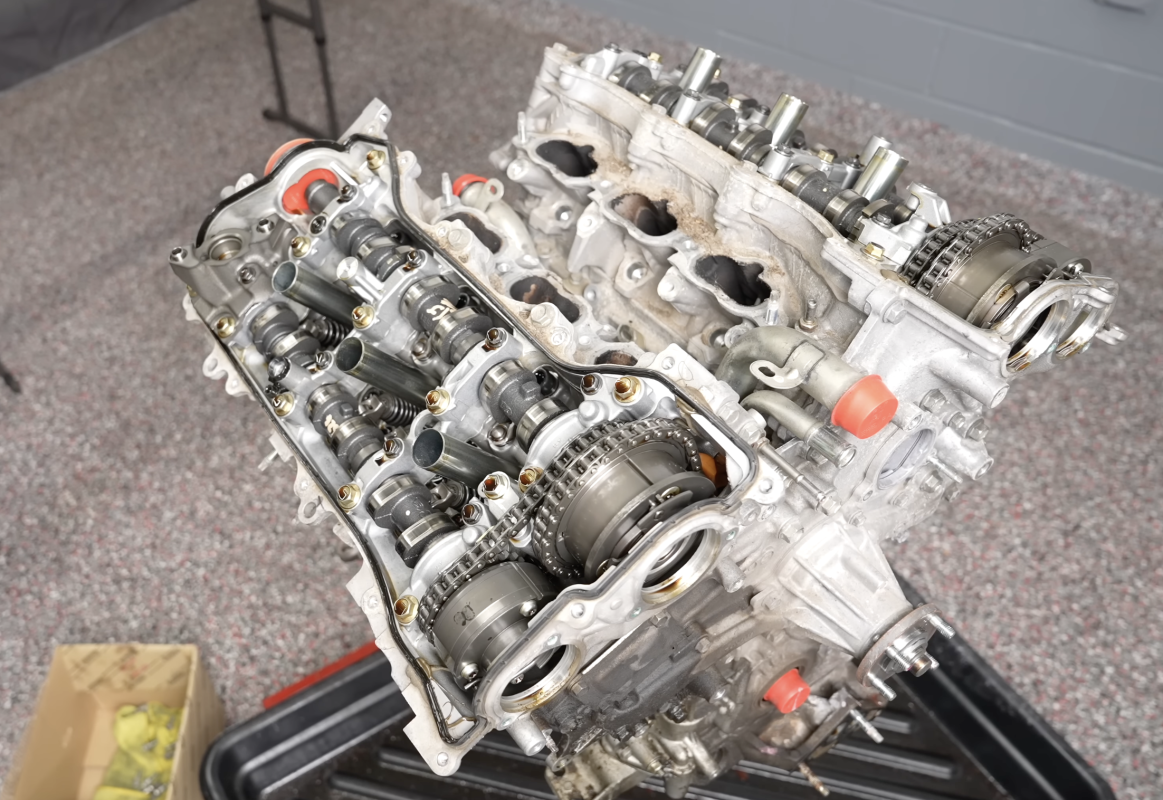
Pulling off the cam covers revealed clean camshafts and timing chains, with everything where it should be and absolutely no surprises. Flipping the engine over and pulling off the lower oil pan didn’t reveal anything either, with no metal flakes in the pan and an extremely clean pickup tube. Ditto for the upper oil pan.
The Car Care Nut
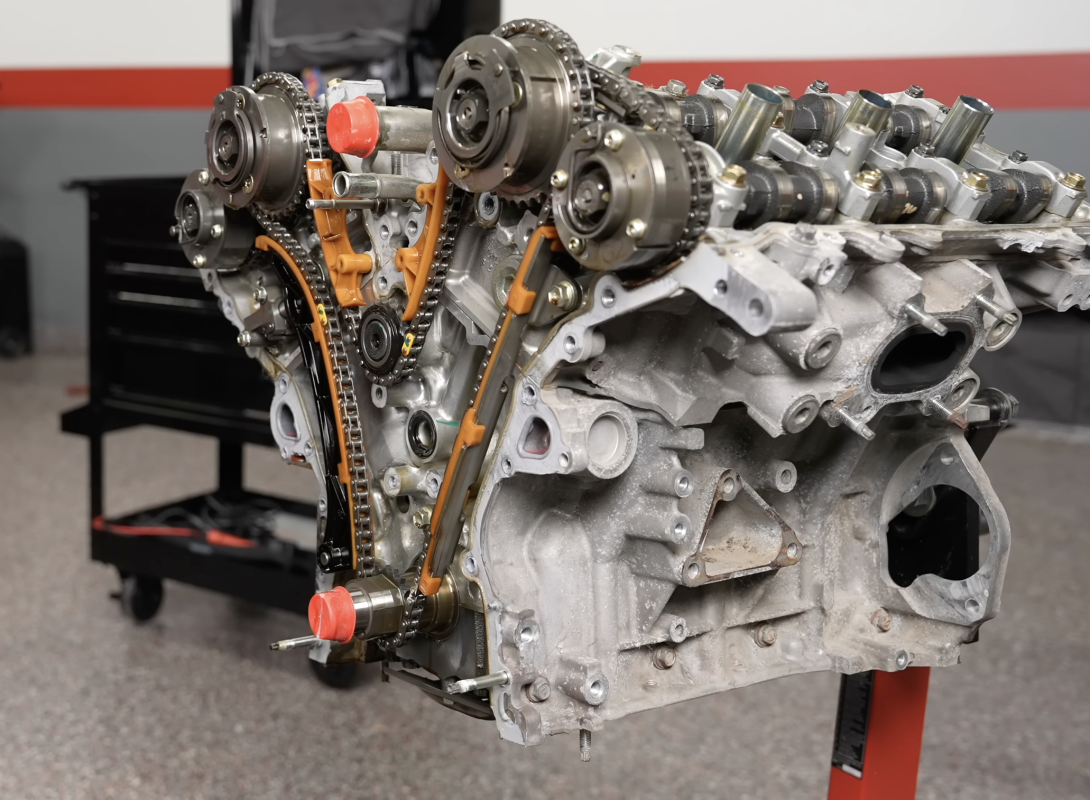
With the oil pans out of the way, the water pump and front timing cover could come off, revealing the timing chain setup; still, no visible issues here, save for that minor oil leak in the upper corner. Taking off the cam towers and camshafts enabled a thorough inspection of the hydraulic lifters and lower half of the heads, which, once again, were extremely clean with no sludge and no obvious problems making their presence known.
Th
Into the Lower End
The first signs of trouble became visible once the heads were removed; deep scoring on the cylinder walls of the middle cylinders on both banks, with the piston rocking back and forth within the bore. This clearance issue would have been the source of the loud knocking sound, as the piston slapped against the cylinder walls, scoring them in the process.
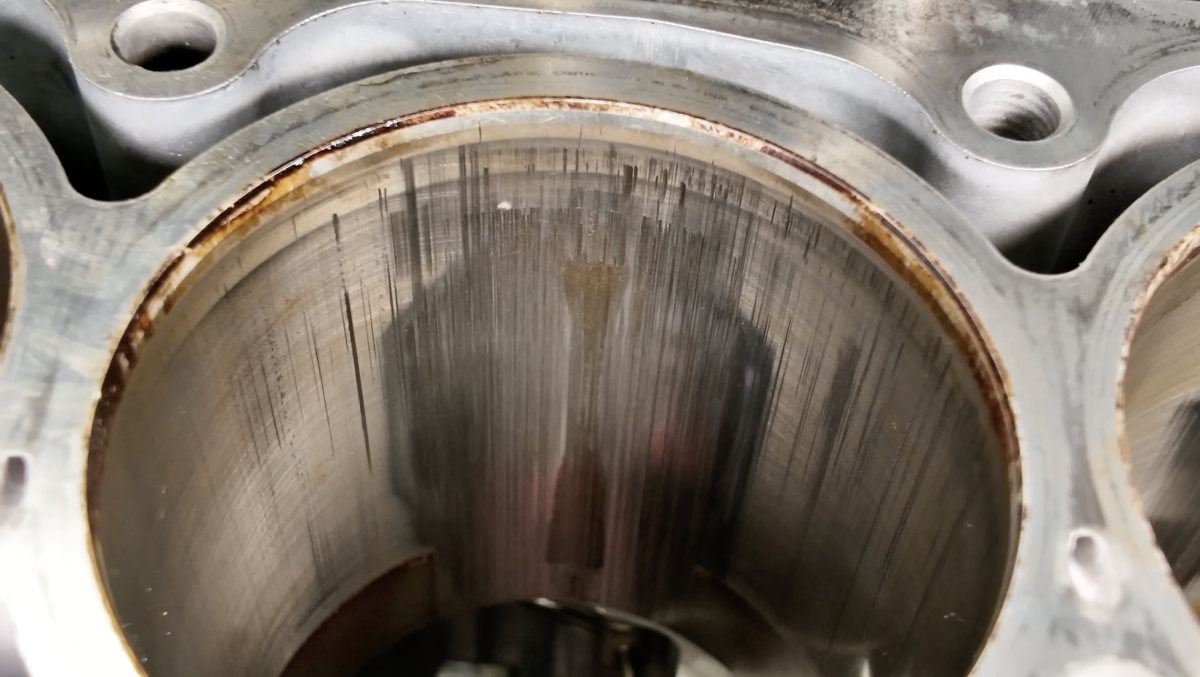
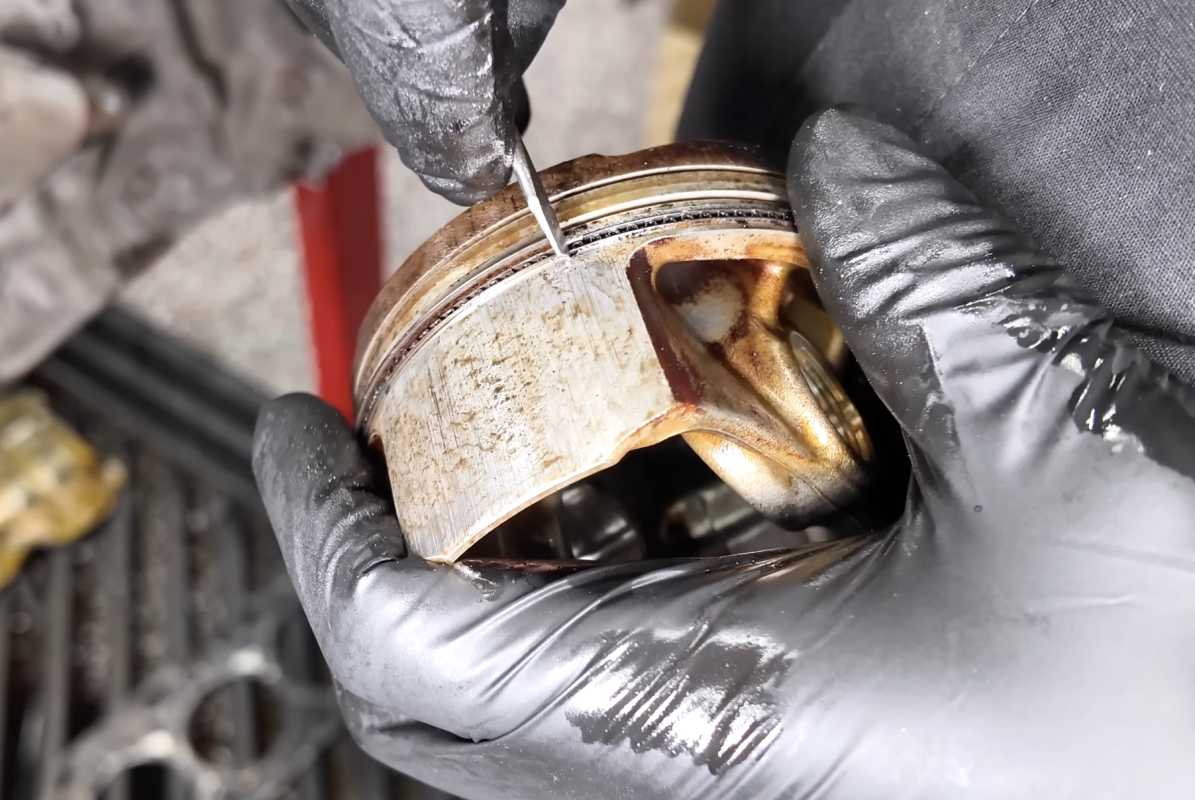
The crank, rods, and associated bearings showed absolutely no wear, but the pistons from the middle cylinders displayed severe scoring and physical damage on the skirts, and oil rings that were seized in place. These are all indicators that the pistons have been rocking back and forth within the bore, damaging themselves and the cylinder walls in the process. Closer inspection of the pistons from the undamaged cylinders also revealed minor scoring on the skirt, which shouldn’t have been present at just 69,000 miles.
What Owners Can Do
While this teardown didn’t offer a definite cause for the accelerated piston and cylinder wear, the presenter is of the opinion that it may be a design issue with the oil control holes in the piston, leading to the oil rings seizing in place. This is supported by the fact that Toyota changed the design of these holes from 2018 onwards. If you own a pre-2018 Toyota or Lexus with this engine, you can pull out the spark plugs and inspect the cylinder walls with a borescope to check for scoring or damage. This will give you an early indication of whether or not your car’s motor is affected by this issue. Beyond this, there isn’t really much else you can do, aside from completely taking the engine apart.


There are no reviews to display.