




A Familiar V8 With a Long Track Record
Ford’s 5.0-liter Coyote V8 has been a mainstay in the Blue Oval lineup since 2011. From the Mustang GT to the F-150, Ford's small-block V8 powers many models in varying tunes and applications, and it has earned its renown for its distinct rumble and respectable power output. Still, it had its flaws. Early versions were known for oil consumption, noisy valvetrains, and cam phaser issues, problems that often became more noticeable as mileage increased.
With the arrival of the latest-generation Coyote in 2021, Ford intended to solve those issues while bringing in new technology. It introduced cylinder deactivation and a belt-driven oil pump, but kept much of the cast-iron block. On paper, it was the most advanced and refined Coyote so far.
That context makes a teardown of a Coyote V8 with just 65,000 miles especially interesting, done by our favorite engine coroner on YouTube, I Do Cars. This engine came from a 2021 F-150 that received regular dealer oil changes every 7,000 to 8,000 miles. Despite that maintenance history, it was replaced outside the dealership, which means it didn’t go through a warranty claim. Guess the most obvious question is: Why?
What the Teardown Revealed
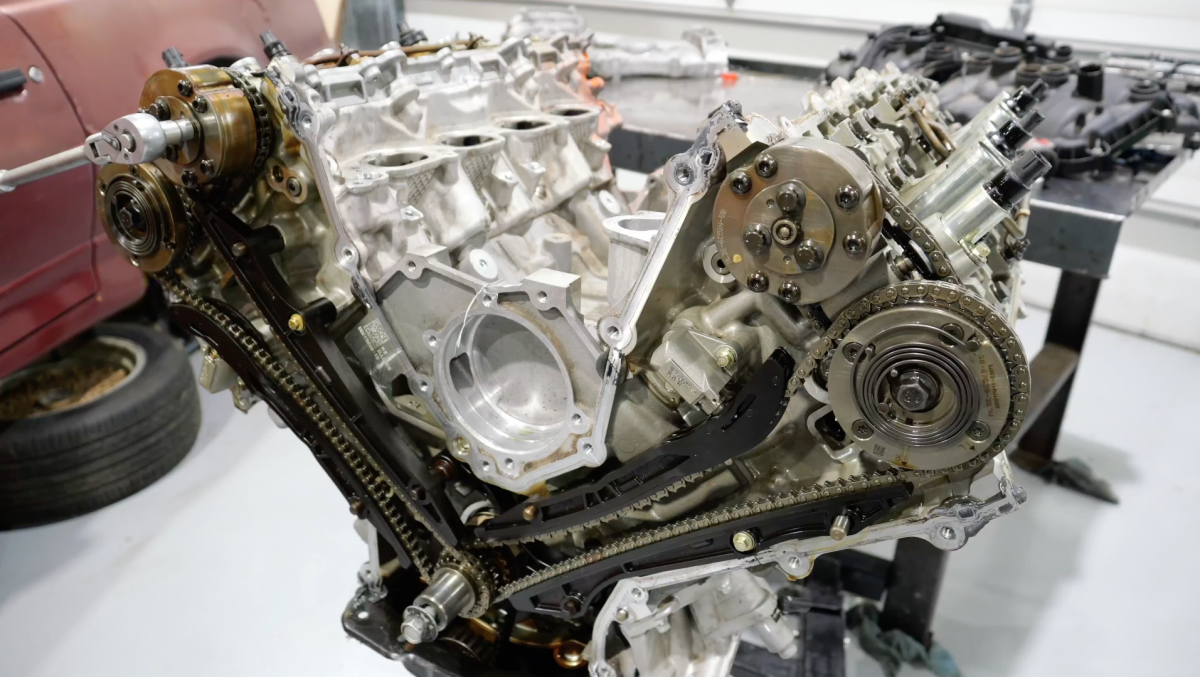
That question was what the engine teardown above tried to answer. During initial inspection, it’s clear that the engine had not been abused. The timing chains, guides, and tensioners all appeared to be in good shape. Even the oil pump belt, often a focus of concern, showed little to no wear.
The findings became more detailed (and a bit mind-boggling) as the teardown progressed. As opposed to the problematic GM's L87 V8 block, this Coyote V8's cylinder bores were clean, the bearings showed normal wear for the mileage, and the oil filter had almost no metallic debris. That ruled out major bottom-end failure or serious oil starvation.
So, what gives? The most significant clues were found at the top end of the engine. Several pistons had clean spots on their crowns, a sign of oil wash, and the combustion chambers were heavily carboned. Wet areas in the heads indicate oil consumption. One bank also showed metal transfer on the camshafts and cam followers. Though not enough to cause immediate failure, this indicated early valvetrain wear that could progress over time.
I Do Cars/YouTube
A Replacement Without a Breakdown
According to I Do Cars, there was no single dramatic failure. Instead, a combination of issues was likely at play. Oil consumption seems to have been the primary concern, though not as much as might be expected, but possibly enough to frustrate a likely meticulous owner or fail an oil consumption test. Camshaft wear may have been a secondary issue that made replacement seem like the safer long-term option.
The key point is that this engine was not removed because of a dramatic failure. Instead, it highlights how a modern engine can be replaced early due to a buildup of smaller issues rather than a single breakdown. It is still unclear whether this is another (persistent) Coyote issue or just an isolated case, but at least we get a closer look at this particular block.
Ford


There are no reviews to display.