




Relentless Pursuit of Lap Time
Ferrari is arguably the most race-oriented automotive brand, having been a constant presence in Formula 1 and competing across multiple series, including the World Endurance Championship (WEC). On the track, gains measured in tenths or even hundredths of a second can prove decisive, and the Italian marque’s latest patent could potentially give its future road cars a measurable advantage in lap times.
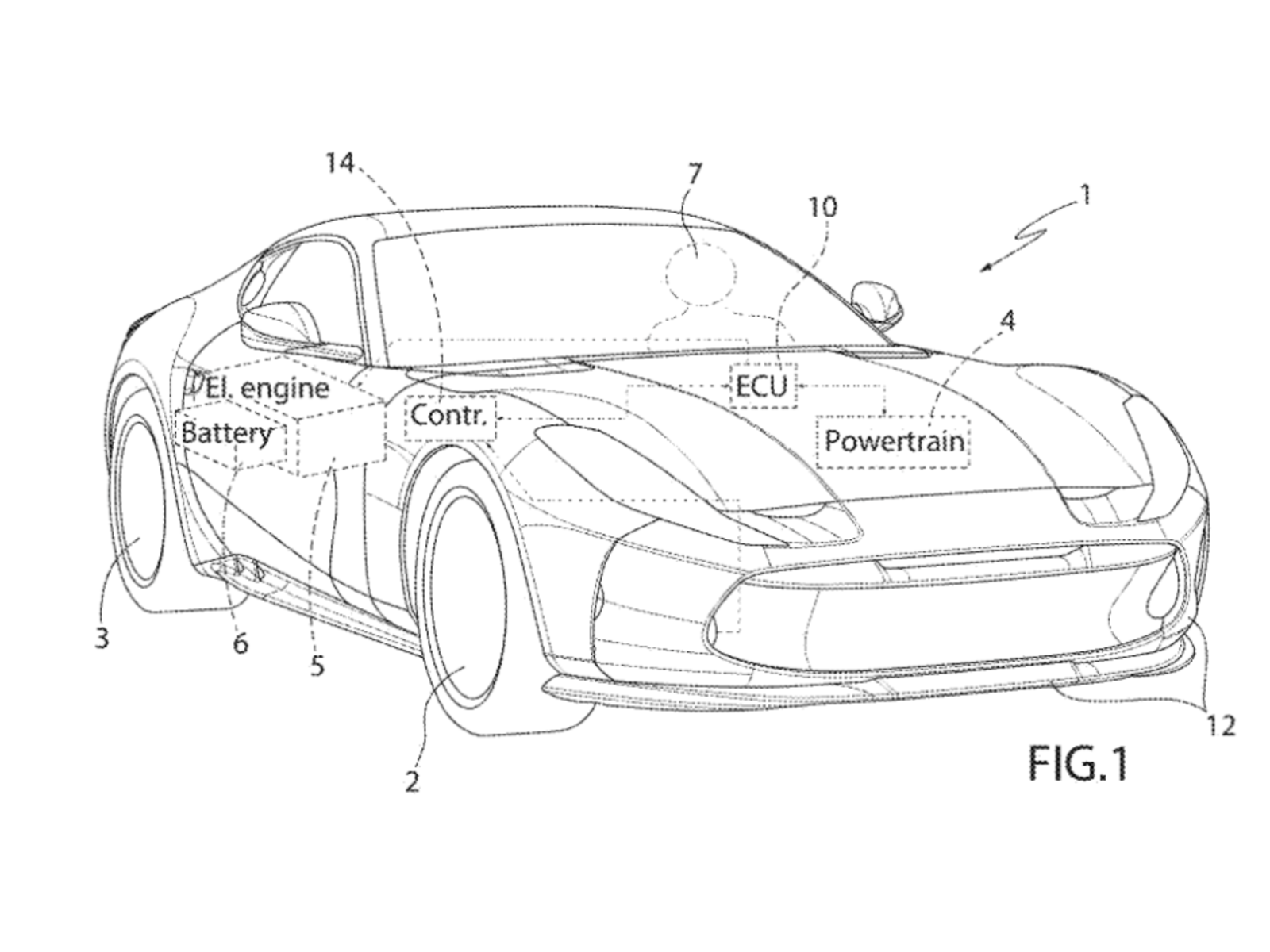
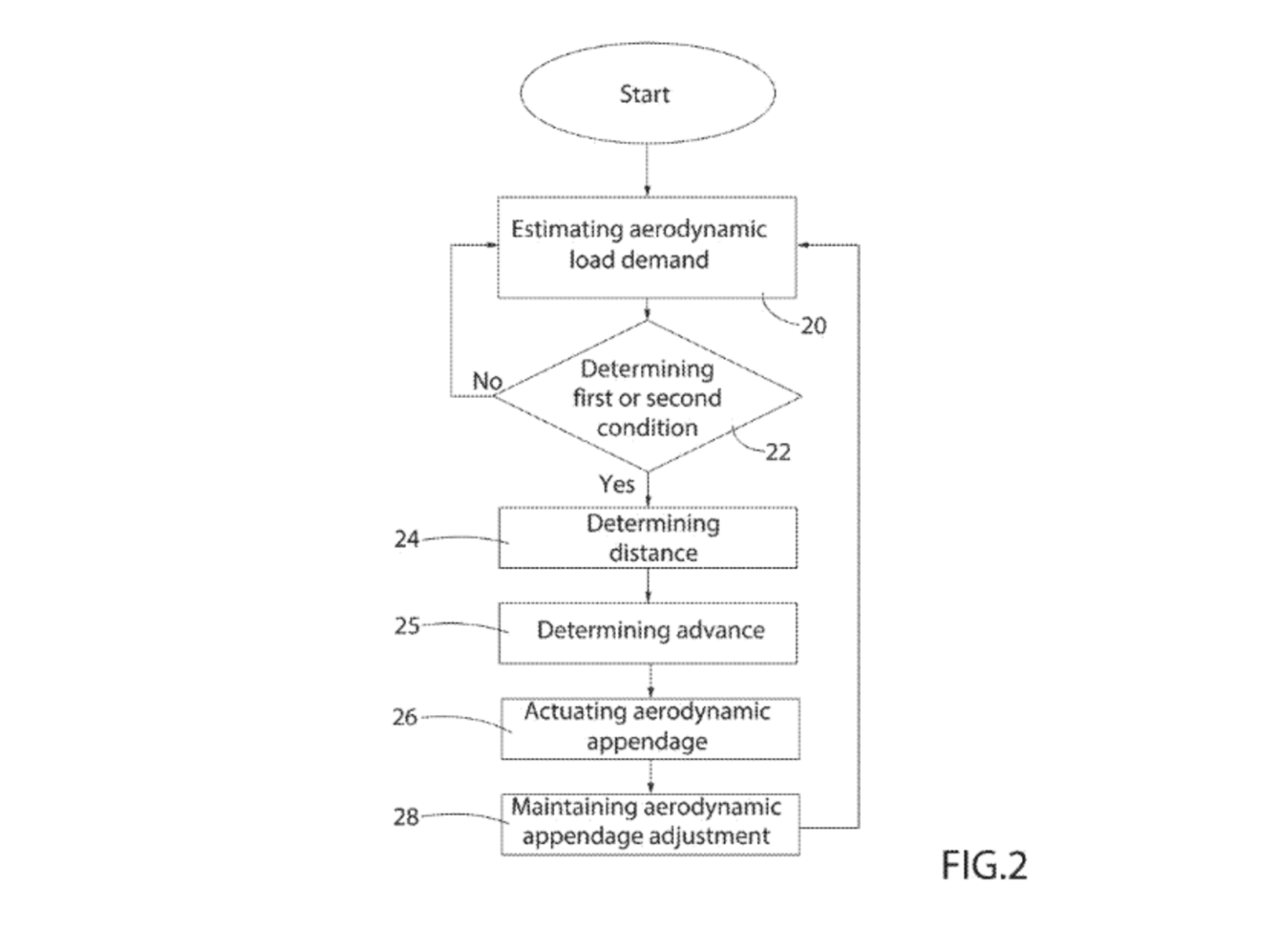
The patent application outlines a technology described as a “predictive control system for aerodynamic appendages in a road vehicle.” According to the filing, the system relies on predictive algorithms to estimate aerodynamic load demand and forthcoming driving conditions. Ferrari submitted the application (look up no. 20250388276) in June 2025 and was published by the United States Patent and Trademark Office (USPTO) in December.
USPTO
From Reaction to Prediction
Active aerodynamic components themselves are nothing new in performance-oriented road cars, with the Porsche 911 GT3 RS widely regarded as one of the benchmarks in this space. What differentiates Ferrari’s patent, however, is not the presence of active aero but the logic behind it. Instead of merely responding to driver actions, the system predicts when and how aerodynamic elements should be deployed ahead of time based on estimated vehicle operation.
Under conventional systems, when a driver applies the brakes, active aerodynamic components switch to a high-drag configuration to aid stability and deceleration. These elements also adjust automatically in response to throttle input and steering angle, each triggering a predefined aerodynamic setting. In this sense, most current systems remain largely reactive to driver inputs – whereas Ferrari’s patent proposes an anticipatory approach.
USPTO
Reimagining a Familiar Aero Tool
The patent does not specify which aerodynamic components would be controlled by the system, although the most common example would be an adjustable rear wing. In low-drag scenarios, the wing can shift to a more streamlined profile to reduce aerodynamic resistance and enable higher top speeds, similar in principle to the drag reduction system (DRS) used in F1. Under braking, the wing can move into a high-drag position, increasing downforce at the rear axle, improving grip, and allowing the car to maintain stability and cornering speed without spinning.
While the idea of predicting aerodynamic adjustments in advance is compelling, a patent filing does not guarantee that the technology will ultimately reach production. But if Ferrari chooses to allocate resources toward implementing this system, it could become another track-oriented feature integrated into its road-going models – alongside existing technologies such as the active aero system found in the SF90 Stradale and the extensive weight-saving measures applied to the brand's “Speciale” variants.



There are no reviews to display.