


A Different Take on Smart Doors
Automakers have been tinkering with smarter doors for years. Luxury brands already have soft-close doors, powered sliders, and even front doors that open and shut with a button. Some cars use sensors to warn you if a door is about to hit something. Others just use heavier door checks to keep swings in check.
Ford’s latest idea doesn’t go all-in on motors or stick with old-school resistance. Instead, it steps in only when something’s about to go wrong. The aim is straightforward: stop the door from flying open or smacking into something, but otherwise let it feel like any other door.
Day to day, it’s just a regular door. No motors whirring, no automation taking over. The smart tech only kicks in when it’s actually needed.
USPTO
What Makes This Tech New
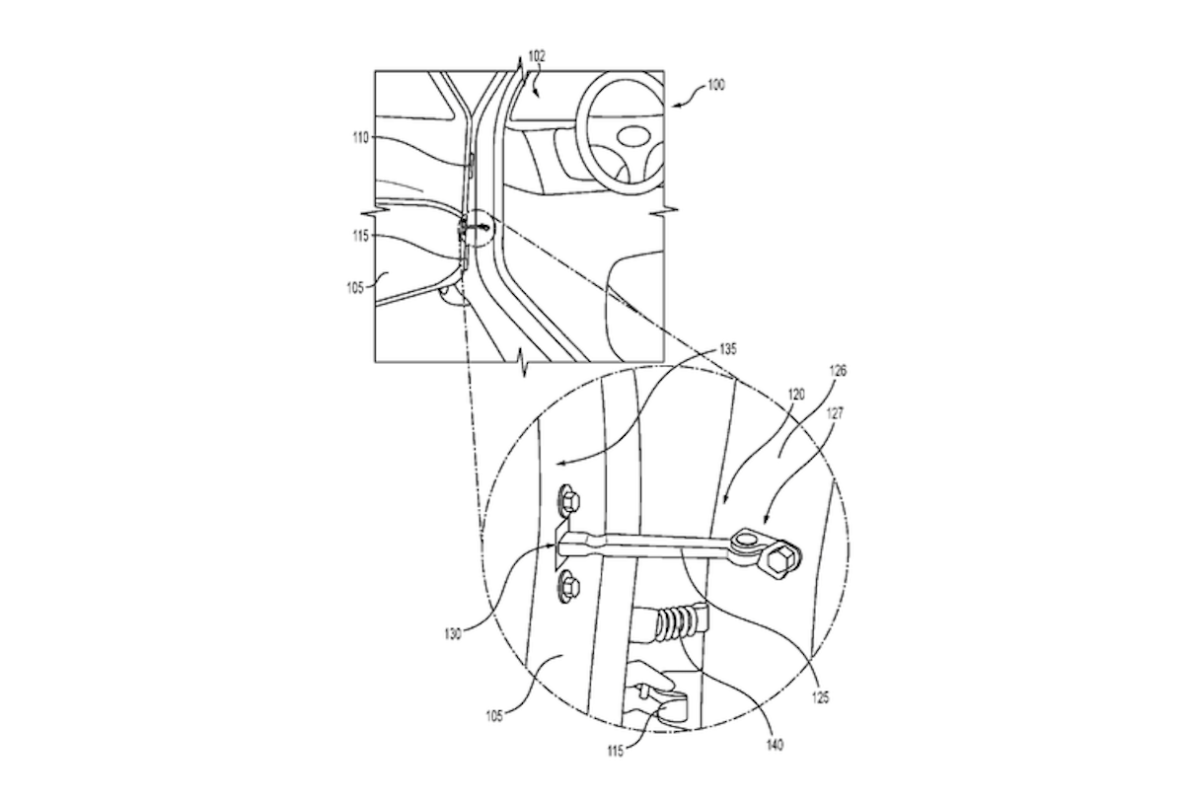
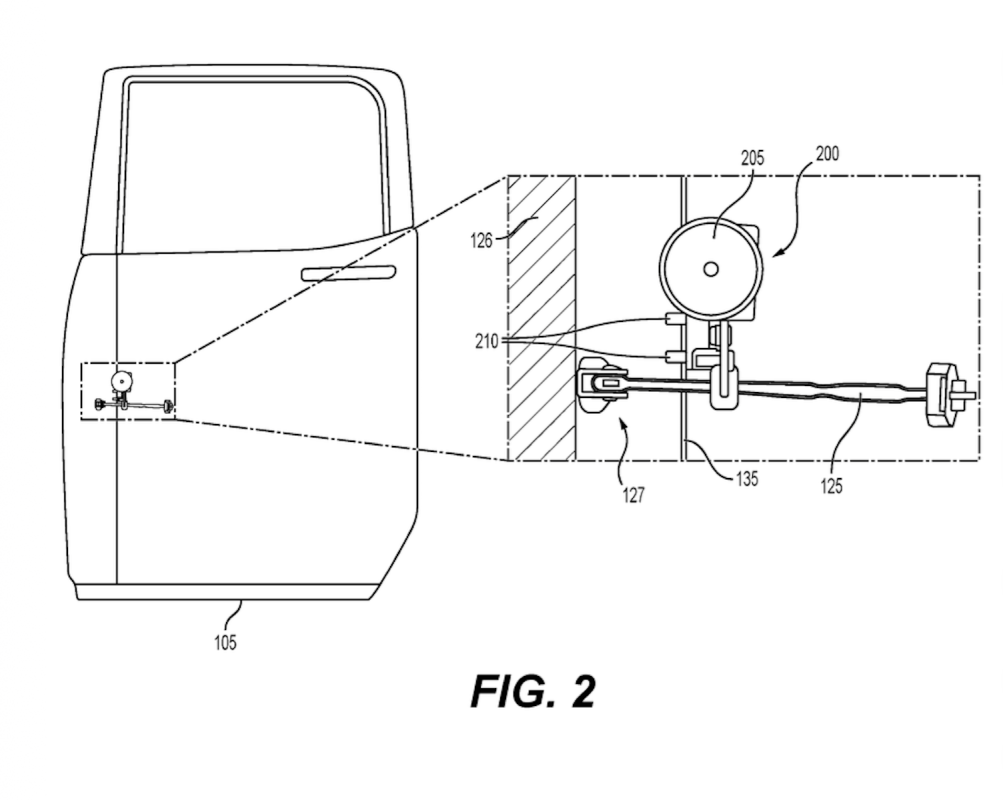
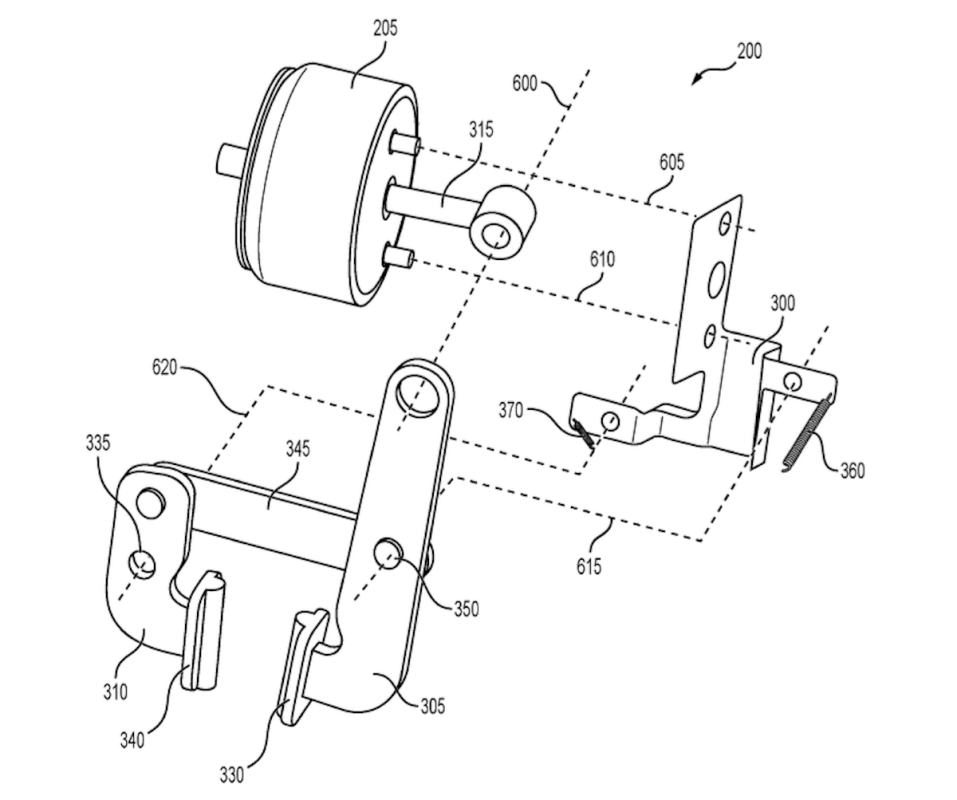
The patent describes a door brake that uses sensors, software, and a small mechanical setup. An accelerometer tracks how fast the door moves, while another sensor looks for obstacles like parked cars or walls.
If the system thinks the door is about to swing too fast or hit something, it triggers a brake inside the door. Brake pads, levers, and springs add resistance and slow things down on the spot. Once the coast is clear, the brake lets go.
What sets this apart is how it only steps in when needed. Old-school door checks always fight you, no matter what. Powered doors add weight, cost, and complexity. Ford’s setup lands somewhere in between – adaptive resistance, but no full-on automation. Basically, practical control that only steps in when you actually need it.
USPTO
Not for Production Just Yet
Ford filed this application with the United States Patent and Trademark Office (USPTO) in 2024, which was published last week. If you’re keen on digging through the technical specifics, look up patent no. 20260035976.
As usual, don’t get your hopes up just yet. Patents don’t mean a tech will make it to production, or even show up at all. Automakers file these all the time to protect ideas or test out new directions, and most never see the light of day.
Still, it’s a reminder that even something as basic as a car door is getting a rethink. With all the current headaches around electronic doors, though, Ford will probably play it safe – or at least make sure there’s a clear mechanical backup if things go sideways.
USPTO


There are no reviews to display.