




A New Take on an Old Off-Road Trick
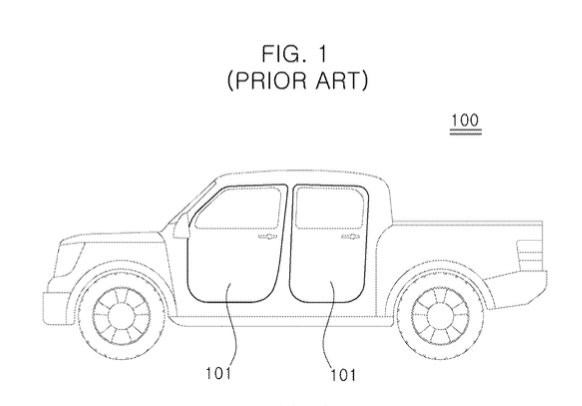
Jeep and Ford have long offered truck-based vehicles with removable doors, giving passengers an open-air experience that is especially appealing for off-road use. Now, Hyundai Motor Company appears interested in exploring a similar concept, having filed a patent for what it describes as a “Detachable Modular Door.”
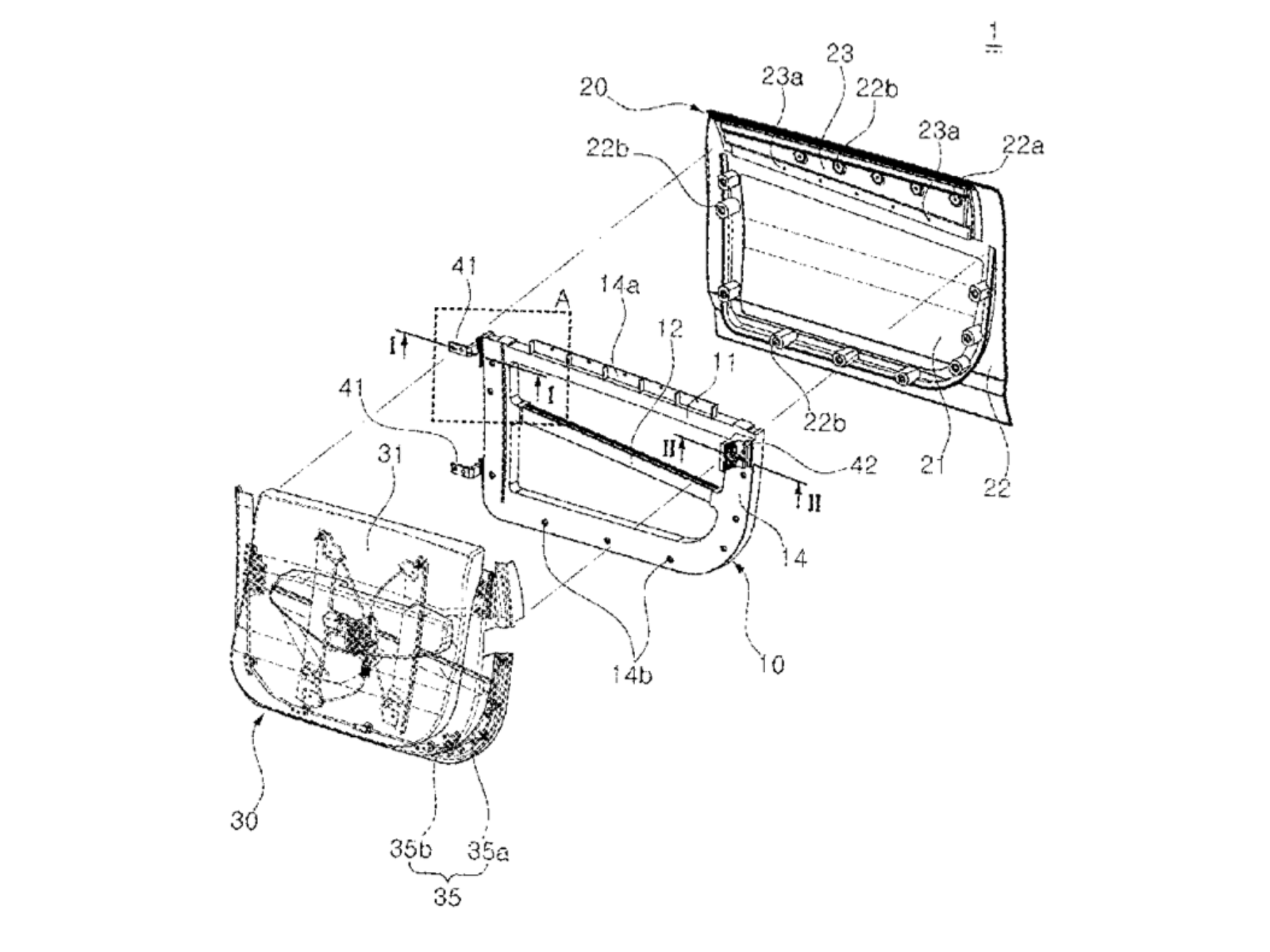
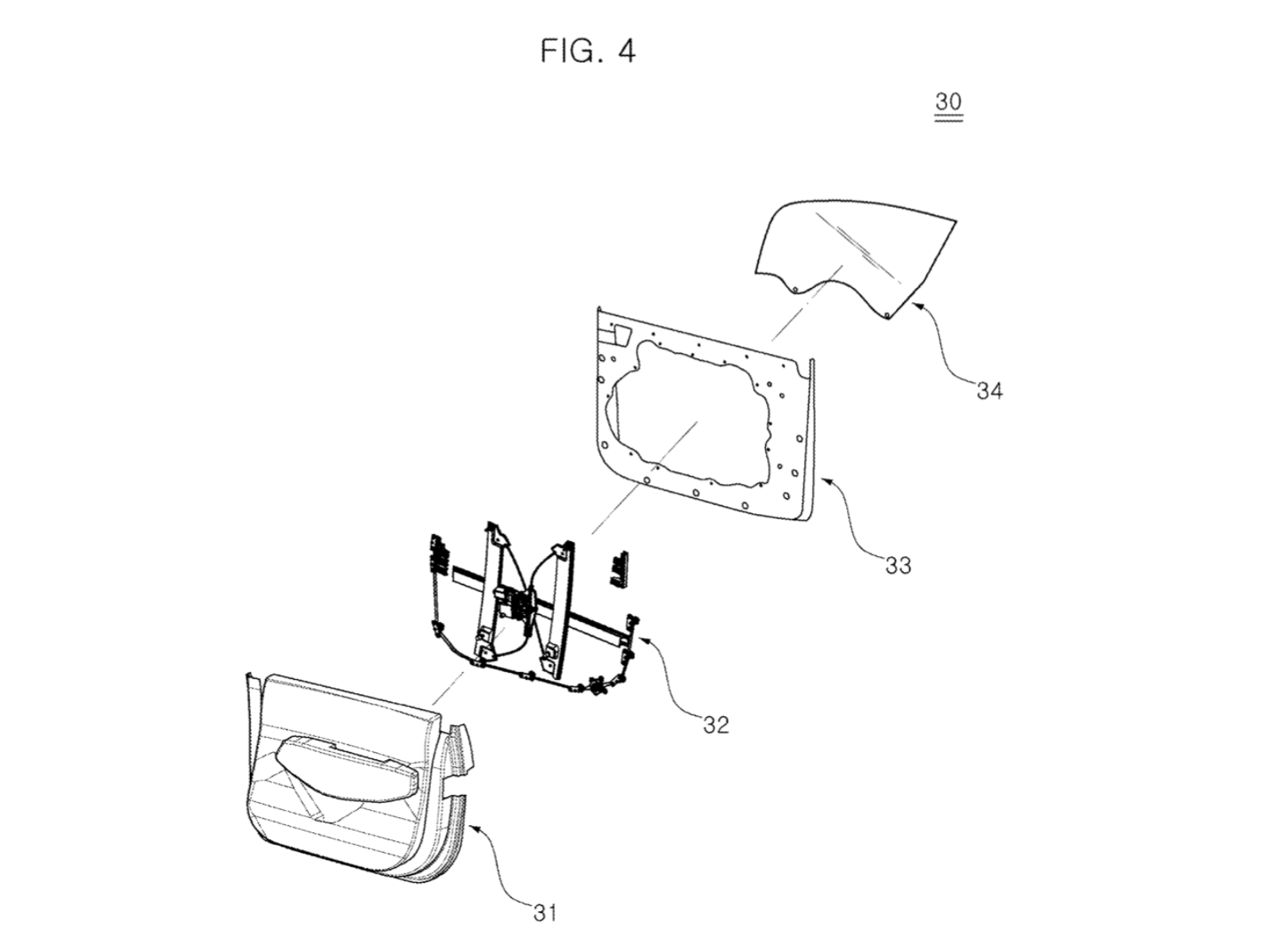
The Korean automaker filed the patent application (U.S. Patent No. 12502938 B2) in July 2024, published by the United States Patent and Trademark Office (USPTO) in late December 2025. The design is intended to simplify door installation and removal while preserving structural integrity, occupant safety, and proper weather sealing. It consists of a detachable outer skin and an inner trim module – housing components such as the armrest and electronics – that function much like a door system and not just a removable shell.
USPTO
Lock, Align, Seal
This is enabled by rotary locking mechanisms that rotate into engagement with the door frame, securing the modules in place and helping ensure proper alignment and sealing. Compared with the Ford Bronco, Hyundai’s patented design would eliminate the need for a wrench to remove door bolts. Door removal on the Jeep Wrangler previously relied on a bolt-based setup, but it was updated for the 2026 model year to quick-release hinge pins, eliminating the need for tools.
The Bronco, Wrangler, and Gladiator also require owners to disconnect the wiring harness when removing the doors. Hyundai’s patent, however, outlines an automatically aligned electrical connector system designed to simplify this process. The patent also places particular engineering emphasis on sealing to protect occupants from water and air intrusion.
The patented setup may appear more modernized than existing removable-door systems, but it may come with trade-offs. The added complexity introduces more components, which could translate to higher manufacturing and repair costs.
USPTO
A Possible Fit for Future Pickups
The technology could become increasingly relevant as Hyundai plans to expand its pickup truck portfolio, up to four models globally by 2030. Two are already on sale, including the Hyundai Santa Cruz and the Kia Tasman. Another model is expected to target markets dominated by the Toyota Hilux and Ford Ranger, while a fourth – reportedly destined for the U.S. – is said to be based on a body-on-frame architecture, a layout considered more robust than the unibody construction used by the Santa Cruz.
While this patent could position Hyundai closer to Ford and Jeep in the lifestyle off-road space, it is worth noting that a granted patent does not guarantee a production application. Automakers file patents either to explore future possibilities or to prevent competitors from adopting similar technologies.
USPTO


There are no reviews to display.