




Where Legends Still Clock In
The Porsche 911 has changed a lot over the years, and the modern version even comes with a hybrid-assisted powertrain. But one thing has stayed the same – every 911 has always been built at Porsche’s Zuffenhausen plant in Germany. Thanks to YouTube's FRAME, we now get a behind-the-scenes look at how this iconic sports car comes to life inside the factory, on a site spanning more than 6.6 million square feet.
In 2024, Porsche delivered 50,941 units of the 911, slightly higher than the previous year’s output. The U.S. market, however, saw a far sharper rise, recording more than a 20 percent increase in 911 sales. Its popularity stems from its reputation as a performance benchmark, consistently measured against rivals such as the Mercedes-AMG GT, Nissan GT-R, and Ferrari 296 GTB.
Shaping a 911
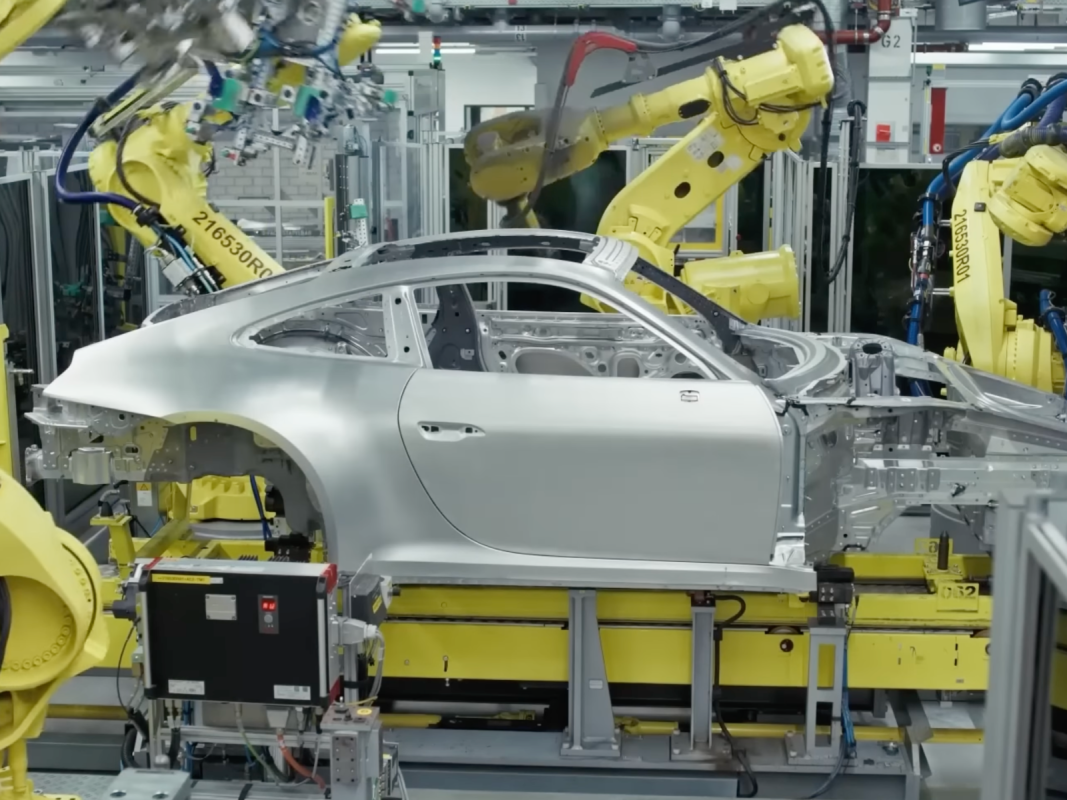
Each 911 starts on Zuffenhausen’s mixed-material production line, where an army of robotic arms manipulates stamped metal panels and structural components to form the timeless coupe silhouette. Conveyors shuttle the body-in-white across various stages, including the anti-corrosion immersion bath.
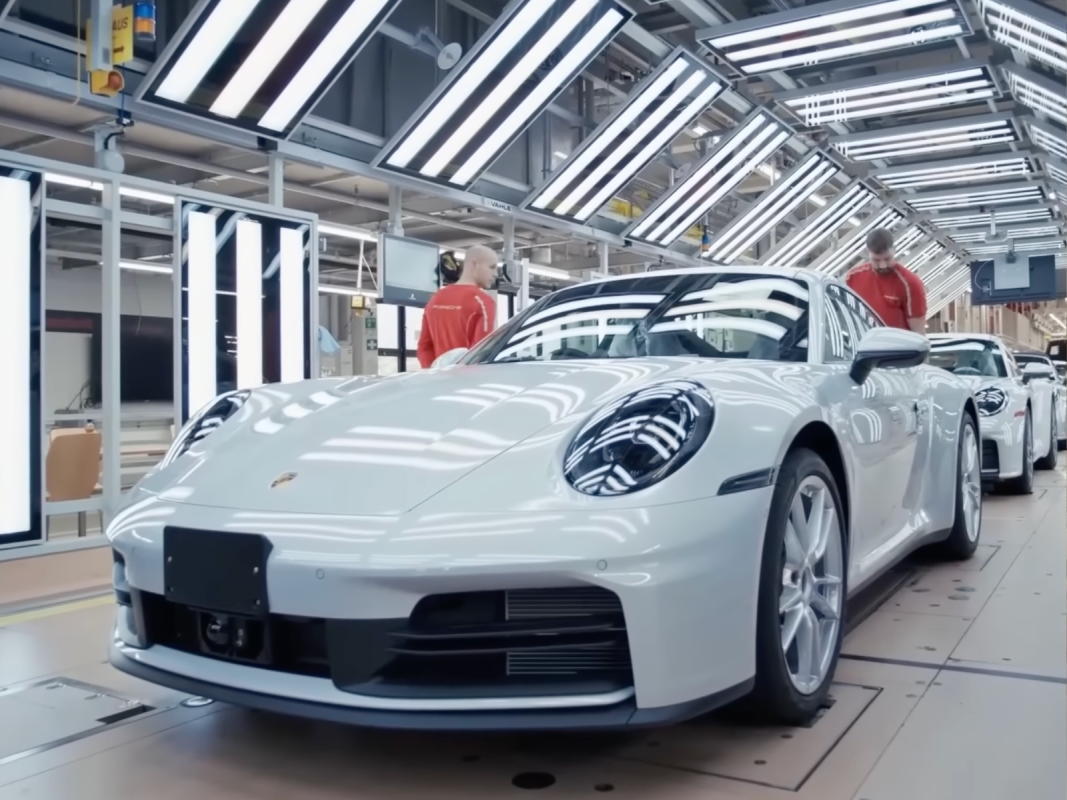
After the dip, soft-brush robots clean the panels to prepare them for paint. Highly controlled spray booths then apply primer, base coat, and clear coat, after which quality-control inspectors examine the finish under high-intensity light tunnels to spot imperfections.
Once the painted shell passes inspection, human craftsmanship becomes more prominent. Technicians install interior components, wiring harnesses, seats, windows, lighting elements, and structural pieces. They also carry out the “marriage” process, where the powertrain is joined to the body.
Under the Hood, Things Get Serious
Porsche offers several engine options, starting with a 3.0-liter twin-turbo flat-six in the base Carrera. The Carrera S increases output to 473 horsepower, while the new T-Hybrid system pairs a 3.6-liter single-turbo flat-six with electric assistance for a combined 532 hp. Higher up the range, the GT3 and GT3 RS use a 4.0-liter naturally aspirated flat-six, with the RS adding an F1-style DRS wing.
The previous 3.7-liter twin-turbo flat-six has been replaced in the 992.2 mid-cycle refresh by a new 3.6-liter hybrid-ready engine architecture, which produces 701 hp in the range-topping 911 Turbo S, making it the most powerful 911 ever built.
The Zuffenhausen plant also builds the 718 and the all-electric Taycan. It even housed a dedicated production hall for Porsche’s hybrid hypercar, the 918 Spyder. Other models, such as the Panamera and Macan, are assembled at Porsche’s Leipzig facility, while the Cayenne is built at a Volkswagen plant in Slovakia.


There are no reviews to display.