




The Electric Truck Reality Nobody Talks About
Electric trucks have a fundamental problem that no one wants to admit out loud. Take a Rivian R1T out on the highway, for example, and you'll quickly discover why they remain controversial for long-haul work. Their heavy curb weight, brick-like aerodynamics, and power-hungry motors mean electric trucks are fighting a losing battle against physics. Even with Rivian's largest available battery pack and 420-mile EPA estimated range, real-world range hovers somewhere in the 275-300 mile vicinity at highway speeds.
YouTube channel Aging Wheels decided to see just how far they could take their R1T, with an ambitious mission: beat the electric vehicle Cannonball Run record by driving from Manhattan to Los Angeles, a distance of over 2,800 miles, faster than anyone in an EV had done before. The benchmark time? 39 hours and 29 minutes set in a 2025 Porsche Taycan, an electric sedan that has far less physics to fight.
YouTube/Aging Wheels
Building a Battery Beast Nobody Asked For
The Cannonball Run is typically a test of how fast one can go from coast to coast, but with an EV, wind resistance at higher speeds and charging speeds are to be accounted for. That means speeds have to be kept reasonable, and charging time needs to be kept at a minimum, either through improving charge speeds or making it so the vehicle can travel longer between needing to stop to charge.
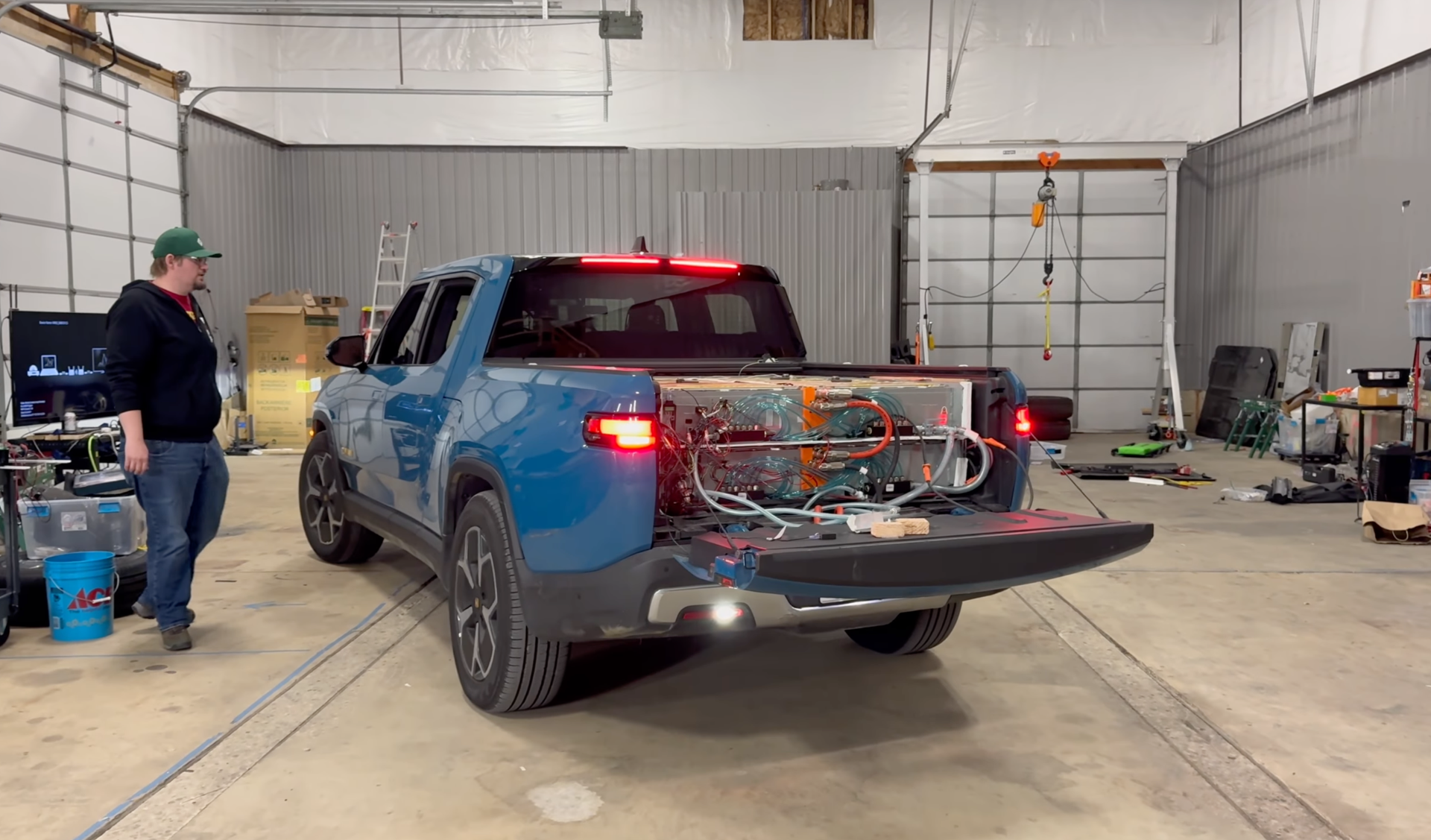
The engineering solution that the team devised borders on absurd, but it works. They sourced two additional Rivian battery packs from crash-tested vehicles and assembled what they dubbed a Mega Pack taking up the whole of the R1T's sizeable cargo bed. The final tally sits at 310 kWh, roughly three times what the stock truck carries. Their calculations amounted to a theoretical 620 miles of range under ideal conditions.
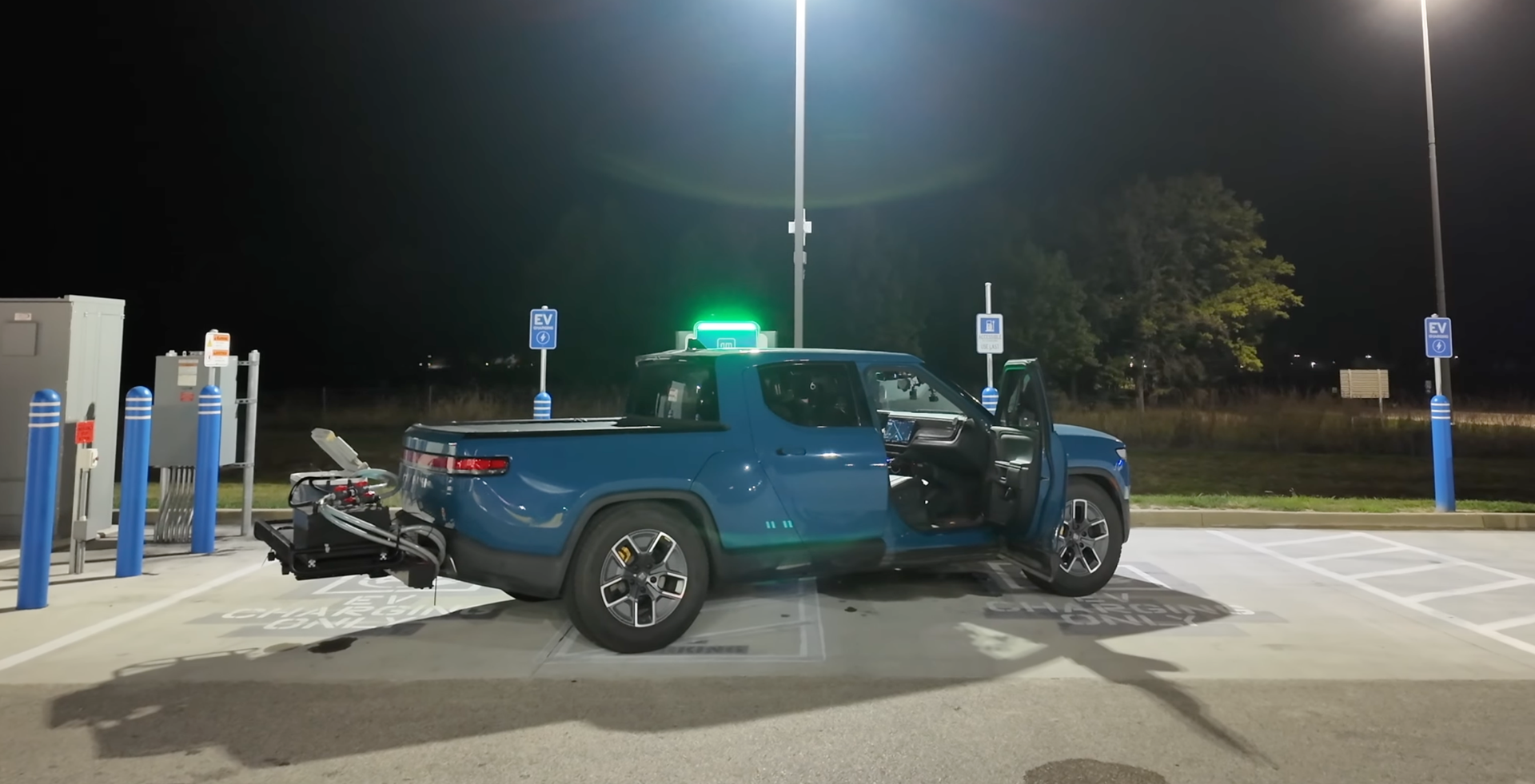
To make things more interesting, those extra batteries don't just sit there passively. The team engineered a bespoke BMS capable of charging at nearly 300 kilowatts and feeding power directly into the truck's main battery as it drives. They even put together a cooling setup using an ice chest that requires manual refills at every charging stop.
What It Really Takes to Go 500 Miles
When the modified R1T finally hit the open road for its record attempt, reality delivered mixed results. The truck managed an impressive 510-mile run at an average speed of 68 mph. That's legitimate performance that would make any electric vehicle owner jealous. But consider what it took to achieve that number. Thousands of dollars in salvaged batteries. A completely unusable truck bed. A cooling system that requires manual intervention. And a vehicle that can barely be called a pickup anymore, since the only cargo it hauls is its own batteries.
YouTube/Aging Wheels
Even though the experiment failed to break the EV Cannonball Record this time around, it reveals the uncomfortable truth about electric trucks and extended range. To deliver the kind of mileage that would satisfy real users, they would need either revolutionary new battery technology or the sort of compromises that affect core utility. Until battery energy density improves dramatically or charging infrastructure improves massively, electric pickups will continue hanging in this awkward middle ground between impressive capability and real-world limitations.


There are no reviews to display.