


A Workhorse With a Question Mark
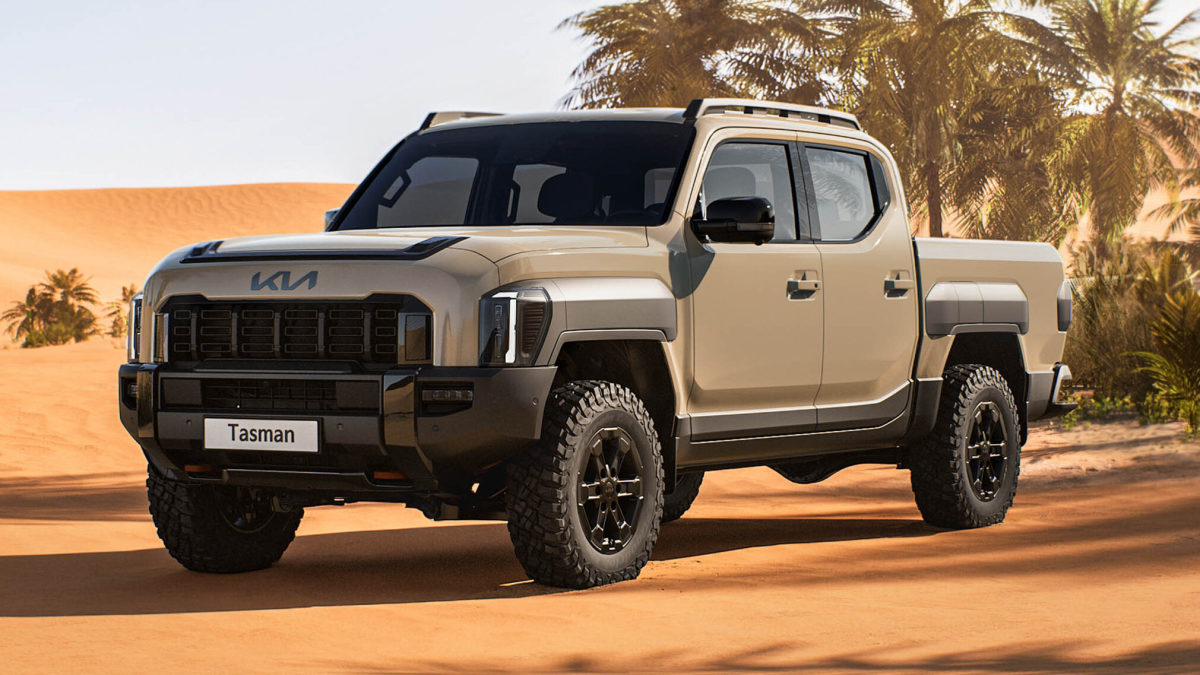
By now, you should know that Kia has an entry in the midsize truck segment called the Tasman. It’s aimed squarely at established names like the Ford Ranger, and early feedback has been mixed – styling and tough competition are both part of the conversation. A recent test in Australia probably won’t help the Tasman’s image right now.
While the Tasman is actually a capable off-road machine, a pickup’s main job is to carry heavy loads in the bed without drama. If something as basic as closing the tailgate becomes an issue when the truck is loaded, as this recent test exposed, it calls into question how well the Tasman lives up to its workhorse image.
A Pickup Should Do Truck Things Easily, Right?
In routine testing, Australian outlet Carsales loaded up the Tasman with two 717-pound lead boxes – 1,434 pounds in total – and strapped them down using the lower rear-side-wall hooks.
On paper, that load shouldn’t trouble the Tasman. The truck’s gross vehicle mass is 7,165 pounds, and lighter trims can handle up to 2,478 pounds of payload. Even the top-spec X-Pro, which was tested, is rated for 2,234 pounds.
According to the publication, in both the X-Line and X-Pro, the tailgate fouled on the tub when closing. It could be forced shut, but it rubbed against the body, leaving marks. No other pickup tested the same way reportedly showed this issue, Carsales indicated.
The likely culprit is inward flex from the ratchet straps pulling on the rear wall-mounted hooks, which slightly distorts the tub. According to an experienced automotive engineer Carsales spoke with, floor-mounted hooks are generally better because they direct the load to stronger parts of the structure. Mounting them higher on the tub walls can put stress on areas that aren’t as robust.
Of note, the publication claimed it tried various methods of securing the load. Diagonal straps still led to the same issue. Running straps front-to-rear on the same side helped a bit, but the tailgate was still tighter than when empty. That method also only works if your cargo has top-mounted rings.
Kia Australia told Carsales that its technical and R&D teams in Korea are looking into the issue. So far, there haven’t been any customer complaints in this exact situation, but Kia says it will take action if needed.
Looking Toward America
All of this comes as Kia is working on a separate midsize pickup for the US market. At the Seoul Mobility Show, CEO Ho Sung Song confirmed that the Tasman was never meant for the American market.
The upcoming truck, which is expected to be built in Georgia, will go up against mainstays like the Toyota Tacoma, Chevrolet Colorado, and the North American Ford Ranger.
If Kia wants to be taken seriously in the truck segment, especially in America, structural strength isn’t optional. A pickup needs to carry weight in its bed without losing basic functionality. If this tailgate issue sticks around, it chips away at the core promise of what a truck should deliver.


There are no reviews to display.