




A More Accessible Lucid, With a Twist
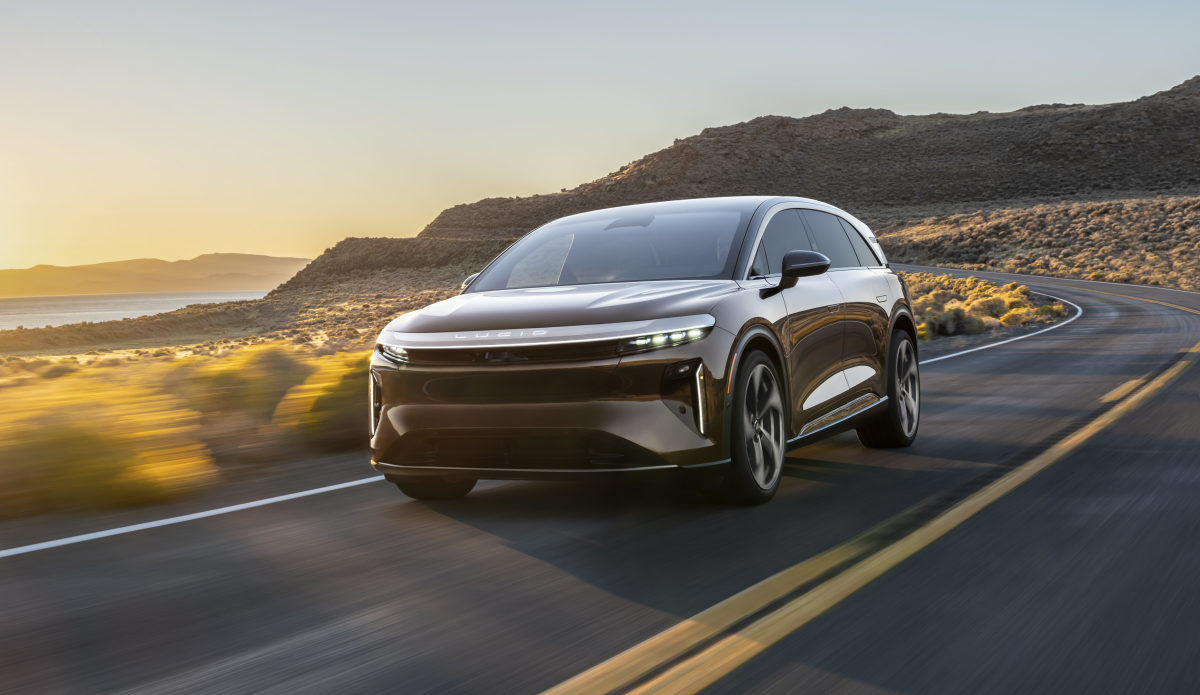
The Lucid Gravity is aimed at buyers who never considered the Air. Where the Air put Lucid on the map as a luxury EV – sometimes to a fault – the Gravity goes after a wider audience. It’s priced to be within reach and comes as an electric SUV – the body style most new car buyers are looking for right now. You get the space and practicality you expect from an SUV, but Lucid skipped the over-the-top luxury extras that usually push prices up.
But there’s more to the Gravity than just its shape and price. Lucid teamed up with Trimble, a company known for pinpoint-accurate positioning tech in aviation and construction. Now, that same technology is built into the Gravity’s navigation and driver-assist systems, giving the SUV a much sharper sense of where it is on the road.

Why This Driver-Assist Tech Is Different
Most driver-assist systems rely on standard GPS, which works until you hit a tunnel, a parking garage, or a city full of tall buildings. That’s when the system can lose track of your location – sometimes by several meters. Trimble’s RTX and ProPoint Go solve this by combining satellite data with six-axis sensors, so the Gravity always knows exactly where it is, even when GPS can’t keep up.
What sets the Gravity apart is how Lucid puts this positioning tech at the core of the driving experience. The SUV uses Trimble’s system as its main source for location, speed, and direction, sending that data straight to its Hands-Free Driving Assist. In practice, the Gravity knows exactly which lane it’s in and its spot on the highway before it lets you take your hands off the wheel.
The best part is, Lucid didn’t have to load the Gravity with a bunch of new hardware. Instead, the system uses sensor fusion, blending the SUV’s existing sensors with Trimble’s positioning engine. That’s how Lucid can offer this tech without redesigning the whole vehicle.
This improved positioning also makes range estimates more accurate, since the Gravity can use real altitude data. That means it can factor in hills and elevation changes, not just assume you’re always driving on flat roads.

What It Means for Other Lucids
Trimble’s positioning technology will come standard on new Lucid Gravity models starting at the end of January 2026. Existing Gravity owners won’t be left behind, as Lucid plans to deliver the feature through an over-the-air software update, upgrading navigation and driver-assist behavior without a service visit.
As for other Lucid models, whether they’ll get this tech depends on how their hardware lines up and how closely the system can work with each vehicle’s sensors and software. The Gravity is the first Lucid built from the start to use this level of positioning accuracy. Rolling it out to other models will probably need the same kind of technical groundwork.


There are no reviews to display.