


Electronically operated ‘hidden’ door handles have been in the news a lot lately after China passed a law earlier this month banning them over safety concerns. Now, an official report into the fatal crash of a Xiaomi EV in the Chinese city of Chengdu has illustrated why that move’s been made, as the failure of its electronic door releases has been deemed responsible for the driver’s death.
Driver Trapped by Failed Doors
The incident in question took place on October 13 2025, when a Xiaomi SU7 was involved in a single-car crash in Chengdu. Following the impact, the car caught fire, and the driver – a 31-year-old man named Deng, according to Car News China– was trapped in the burning vehicle. The official report from local authorities states that the car was travelling at around 104 mph at the time of the collision, and that the driver was allegedly under the influence of alcohol.
Video captured of the crash’s aftermath shows several bystanders attempting to rescue the driver, both by pulling on the SU7’s electronic door releases, which are concealed behind flush-fitting handles, and by attempting to break the window. The door releases are thought to have lost power after the fire broke out, and with no mechanical backup release on the outside, the driver ultimately perished.
Not the First Incident

Tesla
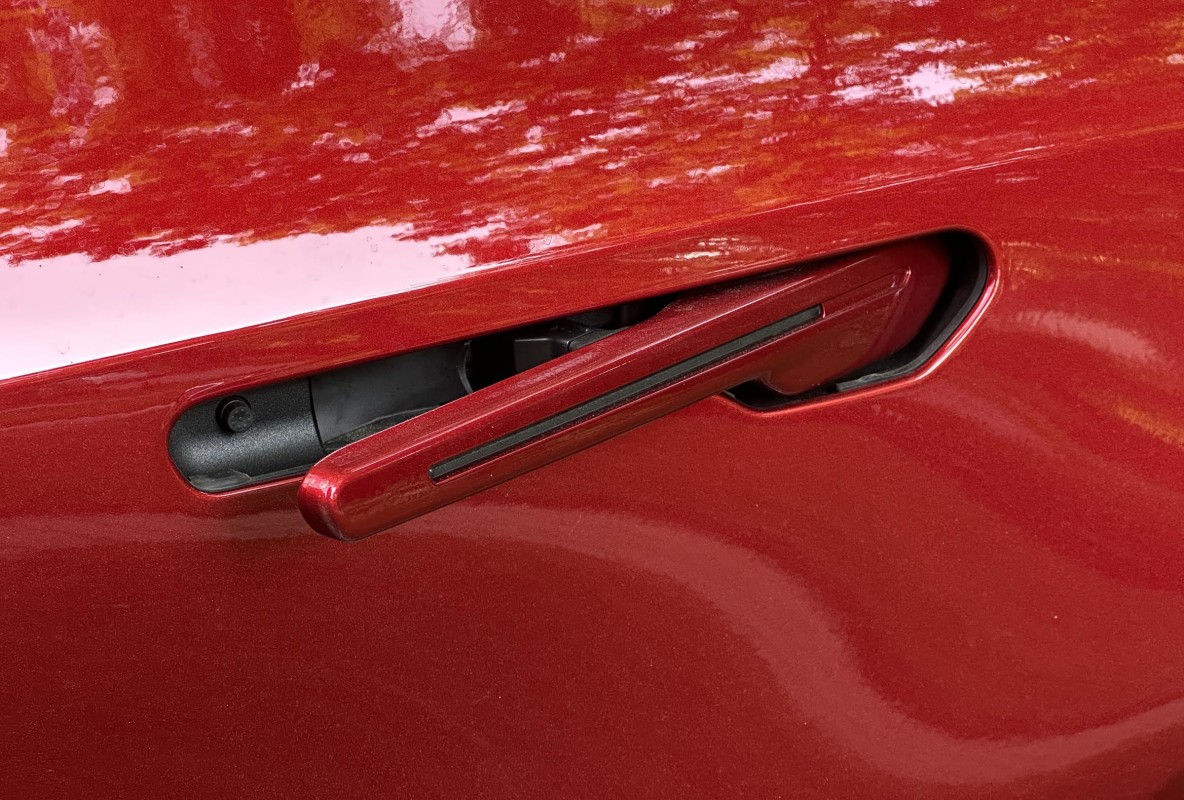
Flush-fitting door handles – either ones with a recess like the SU7’s, or pop-out items like the ones found on Teslas and plenty of other modern cars – have been growing in popularity in the car industry over the last few years. That’s in part because they allow designers to sculpt cleaner, less cluttered surfaces, and partly because they allow for aerodynamic gains – particularly important in the world of EVs.
However, safety concerns have long been raised around the sort that rely on electricity to operate for this exact reason – and this incident is far from the only one to highlight the danger. A Bloomberg report last year identified at least 15 fatal incidents involving Teslas alone where electronic door releases failed to open after crashes or fires.
China Takes Action – Will Others Follow?
Cadillac
Earlier this month, China became the first country to officially take action on flush door handles, introducing a law banning them that’ll come into effect for new models introduced from January 1 2027. All cars introduced from then must have a mechanical release accessible from both inside and outside the car, and while semi-hidden releases will still be allowed, the recessed area to access them must measure at least 2.4 by 0.8 inches.
While China is the only country so far to officially ban this controversial design, the law will likely have knock-on effects globally as plenty of EVs from other countries are sold in China, and Chinese cars are increasingly prevalent in other global markets. When hard evidence like this Xiaomi crash exists, it’s hard to imagine that other countries won’t follow suit anyway.


There are no reviews to display.