




A Closer Look
In November 2025, Stellantis recalled more than 320,000 Jeep Wrangler and Grand Cherokee 4xe models over a high-voltage battery pack issue that could pose a fire risk if left unaddressed. Now, one owner affected by the safety campaign – identified as manufacturer recall number 68C – has offered a behind-the-scenes look at how dealers carry out the fix, filming the repair process as technicians work on the vehicle.
The YouTube channel Jeeps On The Run shared footage of a dealer servicing the owner’s Jeep Wrangler 4xe, the SUV’s plug-in hybrid (PHEV) variant. This electrified system has been the subject of repeated owner complaints, to the point that Consumer Reports named the model the most unreliable midsize SUV in its most recent annual survey.
Inside Jeep’s Recall Workflow
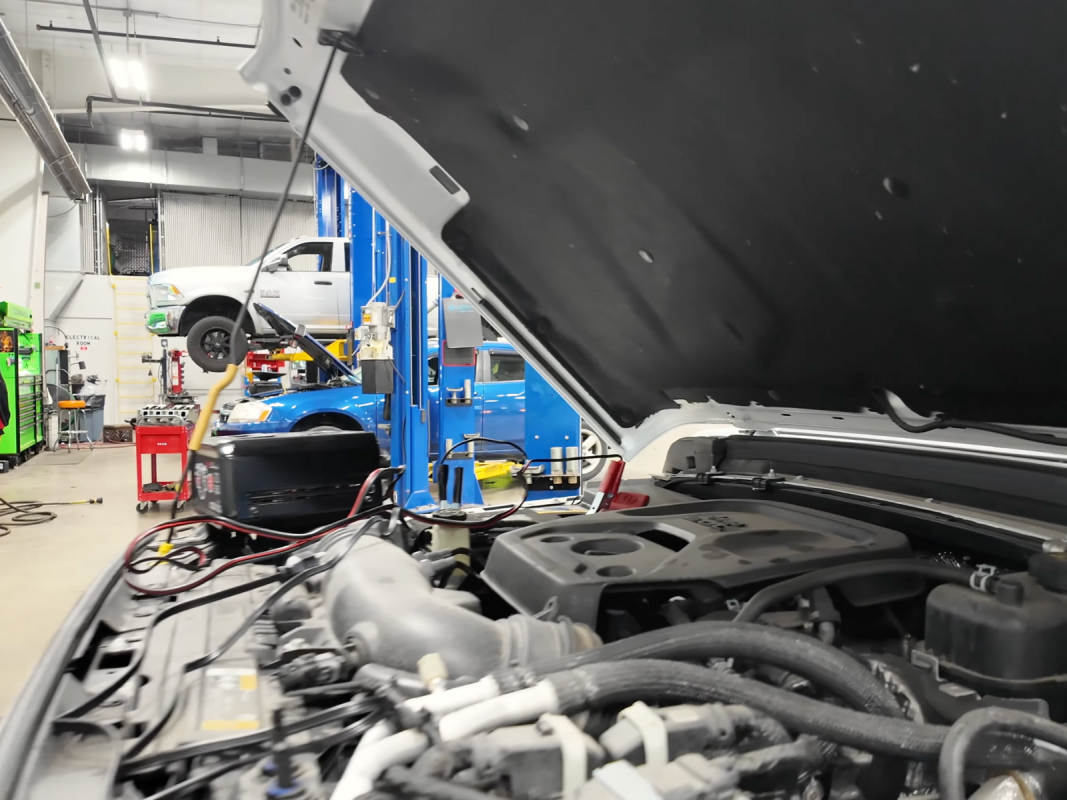
During the visit, the owner showed his Wrangler 4xe connected to a charging source while technicians updated the battery pack control module (BPCM) – a process commonly referred to in automotive terms as “flashing.” According to the on-site technician, the software update typically takes a couple of hours. Once completed, the vehicle undergoes a test drive, which usually lasts a short time—sometimes as little as 20 minutes.
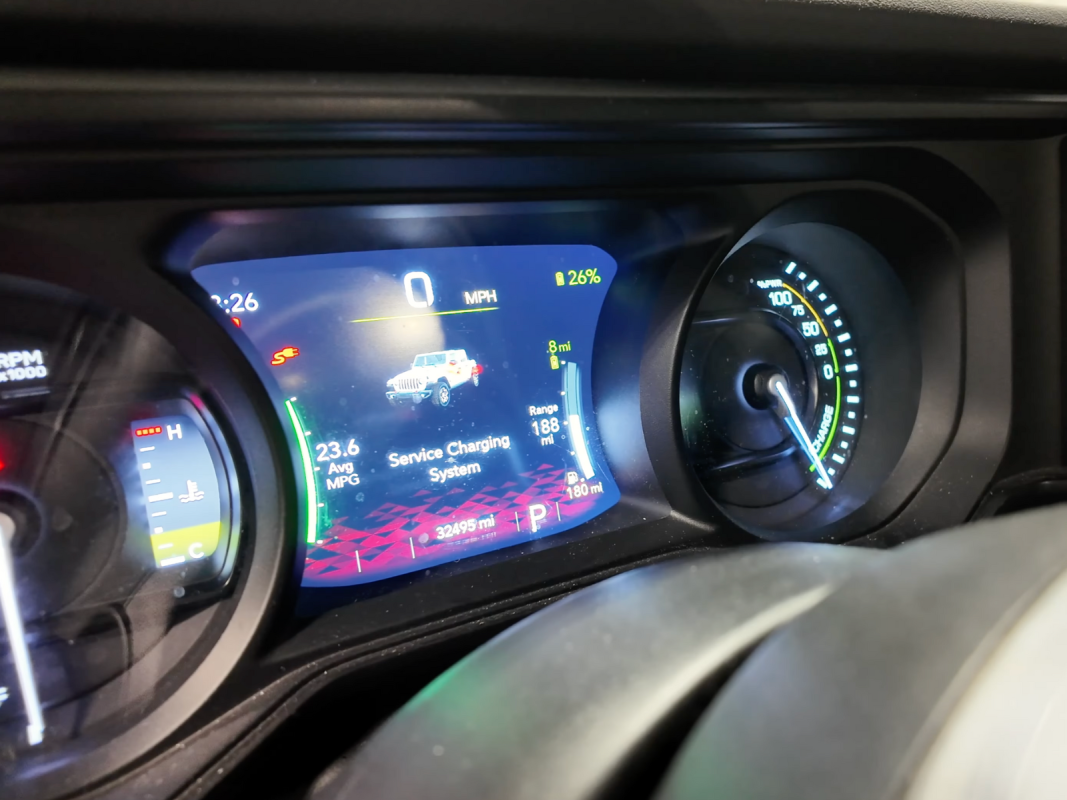
The owner also asked how customers could verify that the repair was completed correctly. The technician explained that successful repairs are indicated by a “completed test drive” screen and a “battery passed” screen. While these confirmations are not automatically printed, customers can request copies.
Following further discussion with the technician, the owner learned that his Wrangler 4xe ultimately required a battery replacement.
For context, plug-in hybrid vehicles differ from conventional hybrids in that they can be charged externally, allowing the high-voltage battery to power the electric motors, which contribute directly to improved performance and efficiency. PHEVs can also operate in all-electric mode, though typically for shorter distances than full EVs. In this case, the Wrangler 4xe pairs a 2.0-liter turbocharged engine with two electric motors, producing a combined 375 horsepower and 470 lb-ft of torque, with an all-electric range of roughly 21 miles.
Didn’t End With a Checkmark
Although the recall report issued last November did not yet outline a finalized remedy plan (with affected customers notified directly by email), any required battery replacement should be performed free of charge, as is standard for safety recalls. In the meantime, the owner was provided with a loaner vehicle – a Jeep Grand Cherokee Altitude 4x4 that was essentially brand new, showing just 95 miles on the odometer.
In addition to this issue, Stellantis has separately recalled 112,859 Wrangler and Grand Cherokee 4xe units due to sand contamination in the engine that could lead to failure.


There are no reviews to display.