




The Build Begins
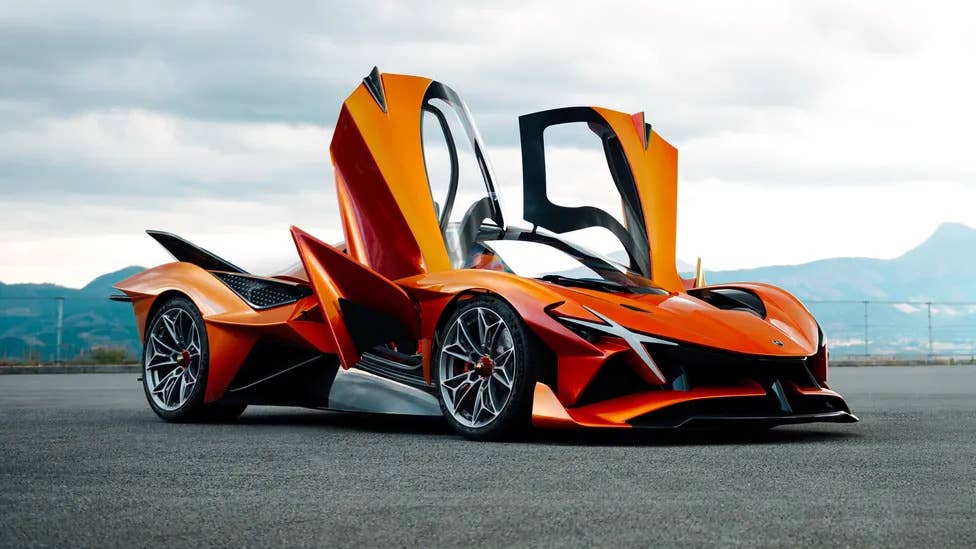
Apollo Automobil announced on Instagram that production of the Evo has officially begun, signaling that the project remains on schedule. Limited to just 10 units, the Evo is developed exclusively for track use and builds upon the innovations introduced by its predecessor, the Intensa Emozione (IE).
This means the same 6.3-liter naturally aspirated V12 sourced from Ferrari remains in use, though it has been tuned to produce 800 horsepower—up from roughly 780 hp in the IE. That output makes the engine a unique offering today, as most modern high-performance cars, such as the Ferrari SF90 Stradale, rely on forced induction and/or hybrid assistance. In that sense, the Evo becomes even rarer, beyond its already ultra-limited production run.
Built for Life on the Track
The latest update from the German automaker also notes that there is still one major reveal to come. Notably, the interior has yet to be unveiled, which, given that the car is strictly track-only, suggests it will look far from suitable for daily driving. Its predecessor, the IE, was developed with road legality in mind, though sightings on public roads remain extremely rare, as production was also limited to just 10 units—making it even rarer than cars such as the V12-powered Lamborghini Veneno.
The company has also stated that each of the 10 customers can extensively reconfigure their individual example through its Apollo Studio program.
As for the exterior and structure, the Evo weighs 2,866 pounds—roughly 110 pounds more than its predecessor—but features a carbon-fiber monocoque that is said to be 15 percent stiffer. Some sources suggest the hypercar can generate up to 6,600 pounds of downforce thanks to its Le Mans–inspired active aerodynamic components.

Limited by Design
This track-only hypercar could make its way stateside, especially considering that some IE units have reportedly arrived in the country. In fact, one example with 1,600 miles on the odometer was listed for sale at Miller Motorcars of Greenwich, Connecticut, as recently as November 2025.
Apollo sold the IE with a starting price of $2.670 million, so it is reasonable to assume that the Evo—benefiting from increased power, added stiffness, and further development—will fetch an even higher price. Given its extreme rarity and the brand’s apparent focus on craftsmanship over mass commercialization, the Evo is positioned to stand as one of the most coveted modern collector cars.


There are no reviews to display.