




Tesla has quietly put what appears to be a production-ready Cybercab on display at its Santana Row showroom in San Jose, giving the clearest public look yet at the dedicated robotaxi it wants on the road in 2026.
The upright, two-box EV is being shown with production-style lights, glazing and trim, and it arrives at a moment when Tesla is trying to reset its narrative around autonomy and services after a stretch of weaker demand and pricing pressure.
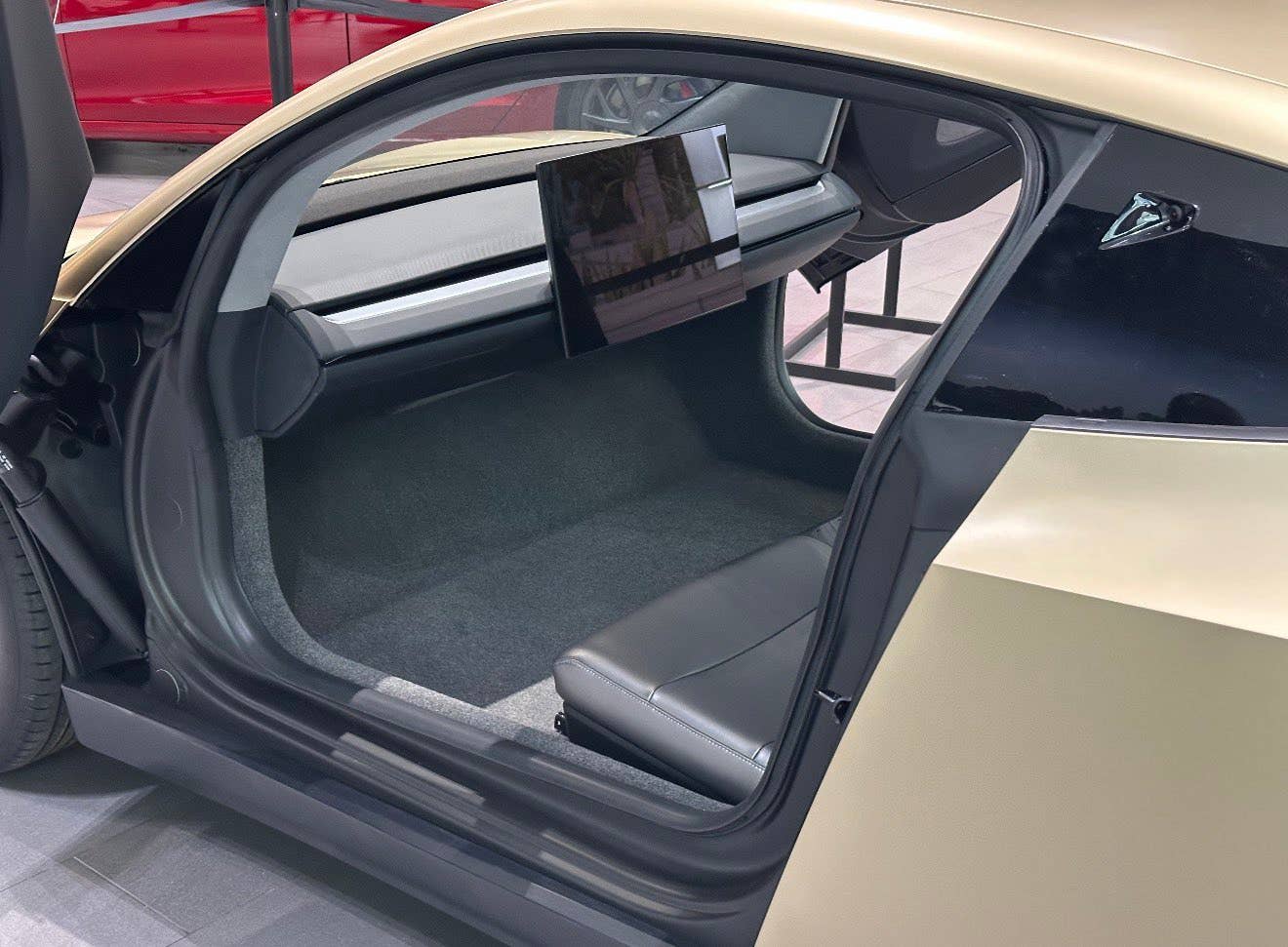
Cybercab looks closer to a real product than a concept
The Cybercab keeps the cab-forward shape and very short overhangs seen at its original reveal, but the Santana Row car looks far more like a roadgoing vehicle than a design study. The front bumper and lighting units are more conventional, panel gaps appear closer to production spec, and the side glass and mirrors look ready for homologation rather than hand-built display duty. Inside, the cabin is a minimalist two-seat layout with a flat floor, a large central touchscreen and more finished materials than earlier mockups, signalling that Tesla is close to freezing design and starting tooling for low volume builds.
Tesla has already said that it sees robotaxis and software as key profit drivers, even as it juggles short term pricing tactics such as delaying planned lease increases until after the holidays. Putting a near-production Cybercab in a high profile California store helps shift the conversation from discounts and quarterly deliveries toward what comes next.
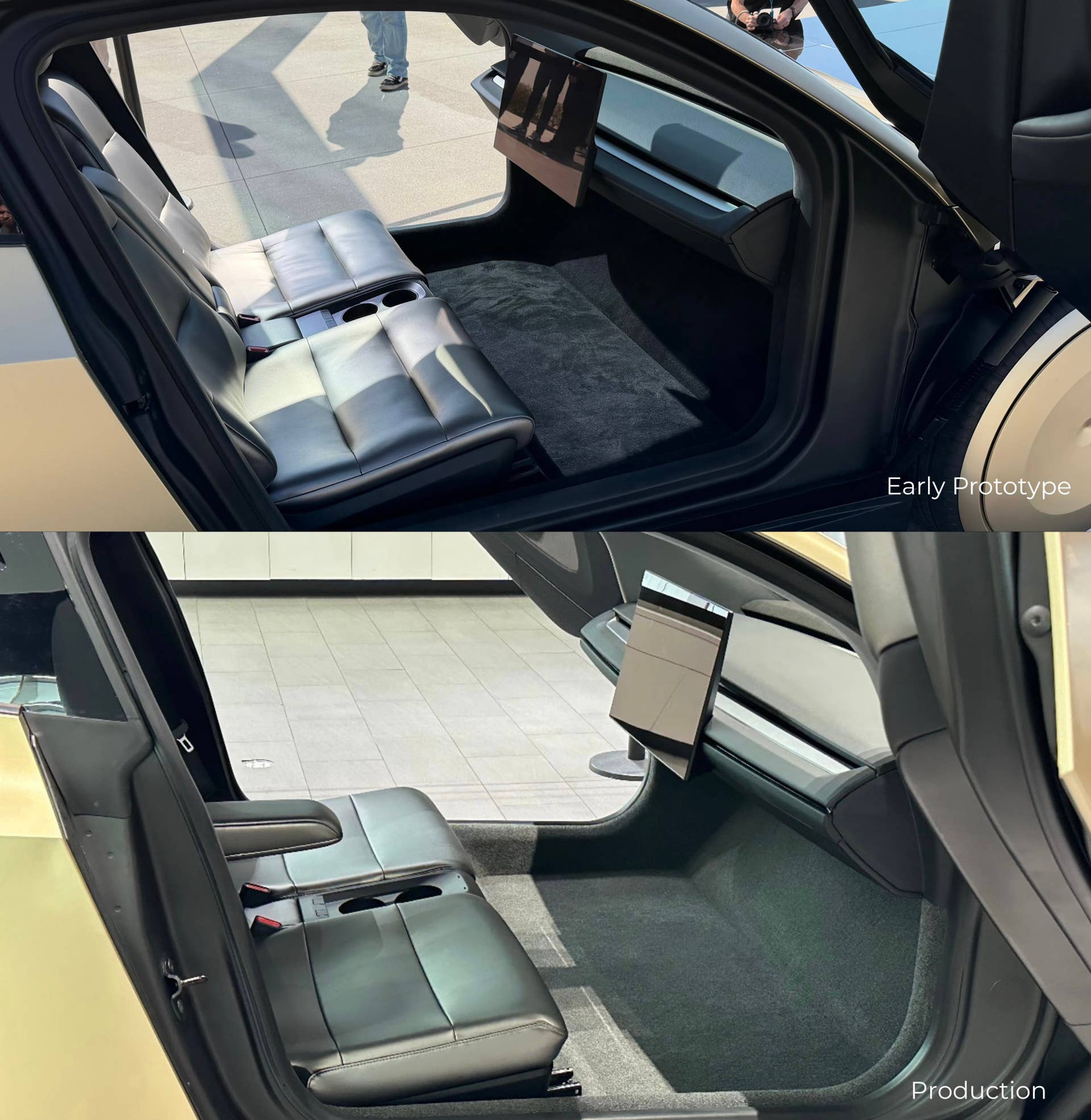
Designed from day one as a robotaxi
Unlike a modified Model 3 or Model Y, the Cybercab has been conceived from the start as a dedicated robotaxi, with a simple interior that is easy to clean, wide door openings and packaging aimed at maximizing passenger space inside a small footprint. Tesla positions it as the hardware that will eventually run on its full autonomy stack for a future ride hailing network, while interim services are expected to rely on human backup drivers and adapted versions of existing cars. The company is already running limited experiments with vehicles like the Model S in supervised taxi style roles
From a regulatory perspective, the Cybercab display does not mean full autonomy approvals are imminent, but it does show that Tesla is serious about having a purpose built vehicle ready if and when the software and legal environment line up. For now, the Santana Row car is a physical reminder that Tesla’s robotaxi ambitions are tied to specific product planning, not just software updates on existing models.


There are no reviews to display.