




From Viral DIY to a Six-Figure V12 Gamble
Mat Armstrong is no stranger to ambitious DIY supercar content. Across the wider YouTube car scene, he has pushed the idea that even the most exotic machinery can be tackled outside traditional dealer networks, including experiments around 3D-printing hypercar parts. Bugatti has publicly explained why that thinking does not apply to a Chiron, citing material science and safety-critical tolerances. That context matters because Armstrong’s Ferrari 812 Superfast rebuild sits squarely between internet optimism and engineering reality.
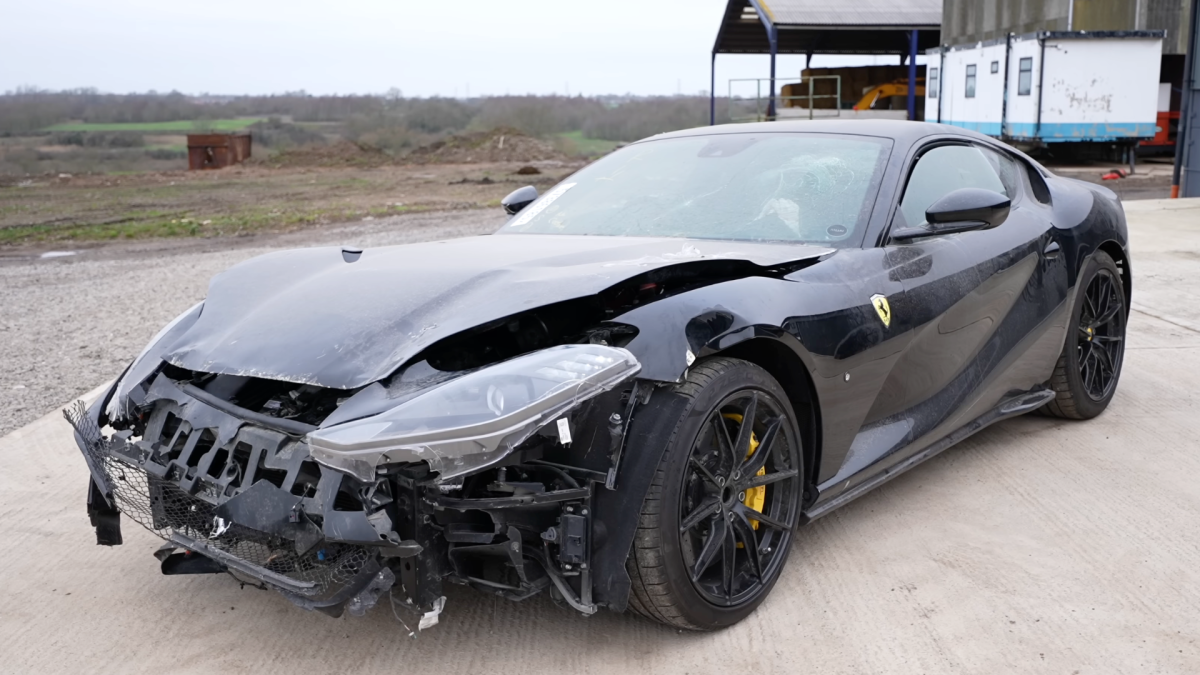
When new, the Ferrari 812 Superfast carried a price tag of around $335,275 in 2017, firmly placing it in six-figure territory before options. Armstrong’s example promised access to that V12 experience for far less, though the exact purchase price was never disclosed. With just 9,000 miles and listed as running and driving, it looked like a calculated risk. That illusion faded quickly once oil was found in the intake and the dipstick revealed milky contamination, raising immediate concerns about internal engine damage.
Engine Anxiety Before Any Rebuild
Rather than rushing to fire it up, Armstrong and his team focused on understanding whether the 6.5-liter naturally aspirated V12 could be saved. All twelve spark plugs were removed, and each cylinder was inspected with a camera to check for oil or water that could cause hydraulic lock. Attention quickly turned to the PCV system, along with the possibility that the car had been tipped forward during the crash or recovery, forcing oil and water into places they should never reach.
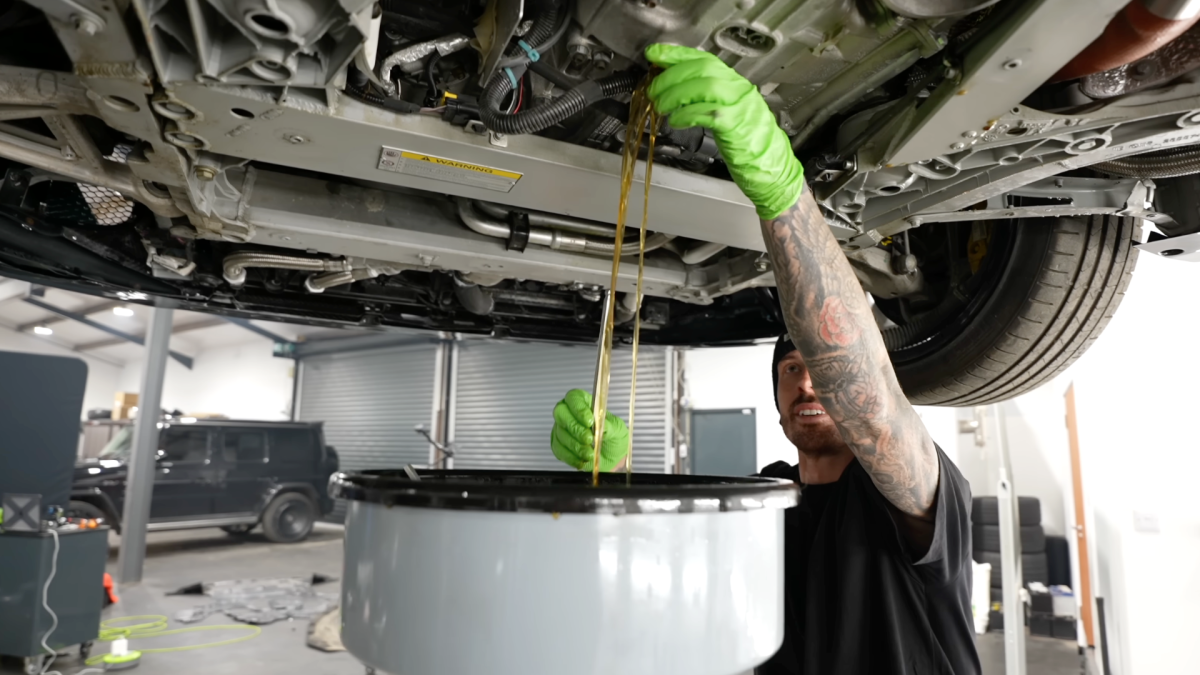
Repeated oil drains confirmed the worst suspicions, with thick, caramel-colored fluid pouring out. Despite this, the cylinders themselves were clean, and the engine ran without catastrophic noise. Through multiple oil flushes, clearing the breather lines, and correcting damaged oil-cooler plumbing, the V12 gradually stabilized. It was enough to justify continuing the project, even though the true source of the contamination was not immediately obvious.
Mat Armstrong/YouTube
Solving Problems as They Appeared
With the engine tentatively cleared, the rebuild escalated into structural repair. What initially looked like front-end damage included bent aluminum chassis legs, distorted mounting points, and a crushed radiator pack. Sections of the front structure had to be cut out and remade to factory dimensions, with careful measurements taken to ensure the headlights, bumper, and body panels would eventually align correctly.
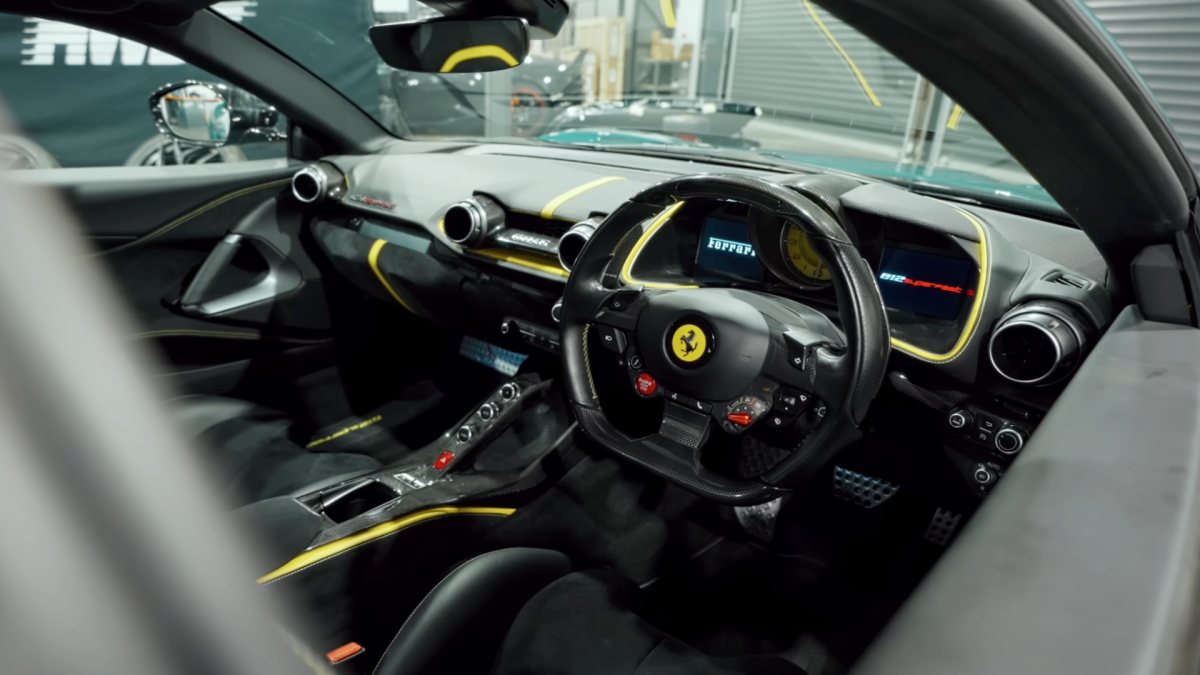
Inside the cabin, modern Ferrari complexity became unavoidable. All airbags had deployed, seatbelts were locked, and crash data was stored in control modules that required specialist resetting.
Mat Armstrong/YouTube
What the Build Says About Real-World Ownership
By the time the 812 began to resemble a finished car, the original 24-hour rebuild target had collapsed. Wrapping the car in green consumed significant time and eventually required professional help. Add in structural fabrication, repeated oil and coolant flushing, interior restoration, and a full valvetronic exhaust system, and the labor bill quickly grew. The final tally reached roughly 54 hours, involving multiple skilled hands across different disciplines.
While rebuilding a wrecked Ferrari may look like a shortcut into the supercar world, the manpower, specialist skills, and sheer hours involved suggest it is rarely a bargain. With the purchase price for the wrecked vehicle undisclosed, it is difficult to judge the true savings, if there are any. In practical terms, sourcing a clean used example at auction may have made more sense. Armstrong’s 812 is somewhat of a success story, but it also shows that buying the car is only the beginning. Making a modern Ferrari right is where the real cost begins. At least it made for compelling content.
Mat Armstrong/YouTube


There are no reviews to display.