


The Ultimate Moving Target
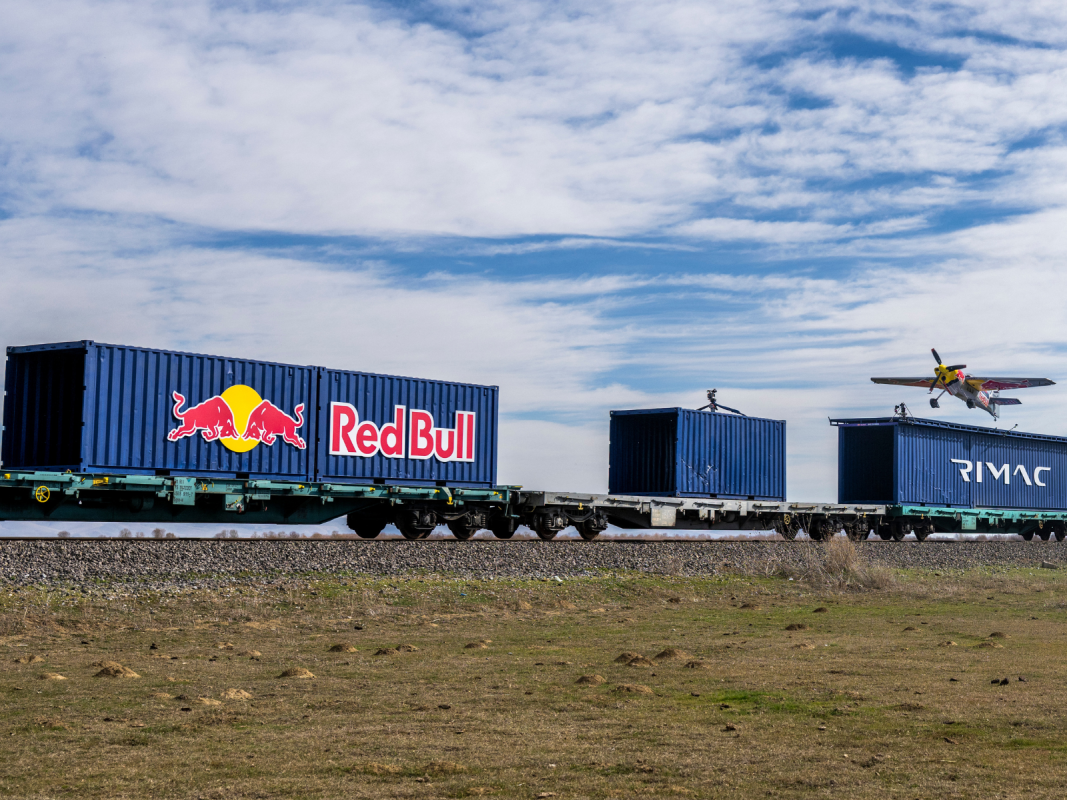
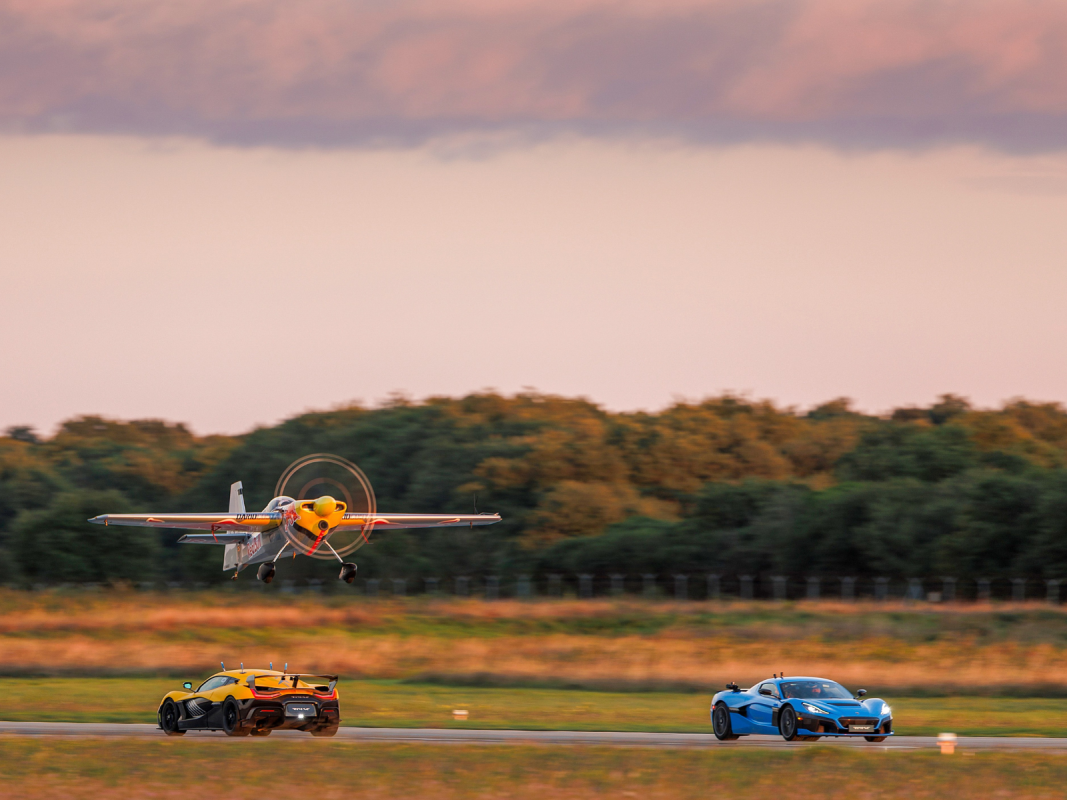
Rimac Automobili collaborated with Red Bull athlete Dario Costa on what’s being described as a world-first aviation stunt in Turkey. While electric powertrains are not yet widely used in aviation, Rimac’s involvement had little to do with aircraft propulsion. Instead, the EV manufacturer supplied its hypercars – the Nevera and Nevera R – to serve as high-speed practice targets for the attempt.
The stunt required Costa to take off from the top of a cargo train traveling at 120 km/h (approximately 75 mph) and later land back onto the moving platform. Rehearsing with a real train would have been logistically difficult and risky, so the two Nevera models were used to emulate the train’s pace and the visual dynamics of a moving landing zone. Preparation took place at an airport in Croatia, Rimac’s home turf.
When EVs Become Tools of Flight
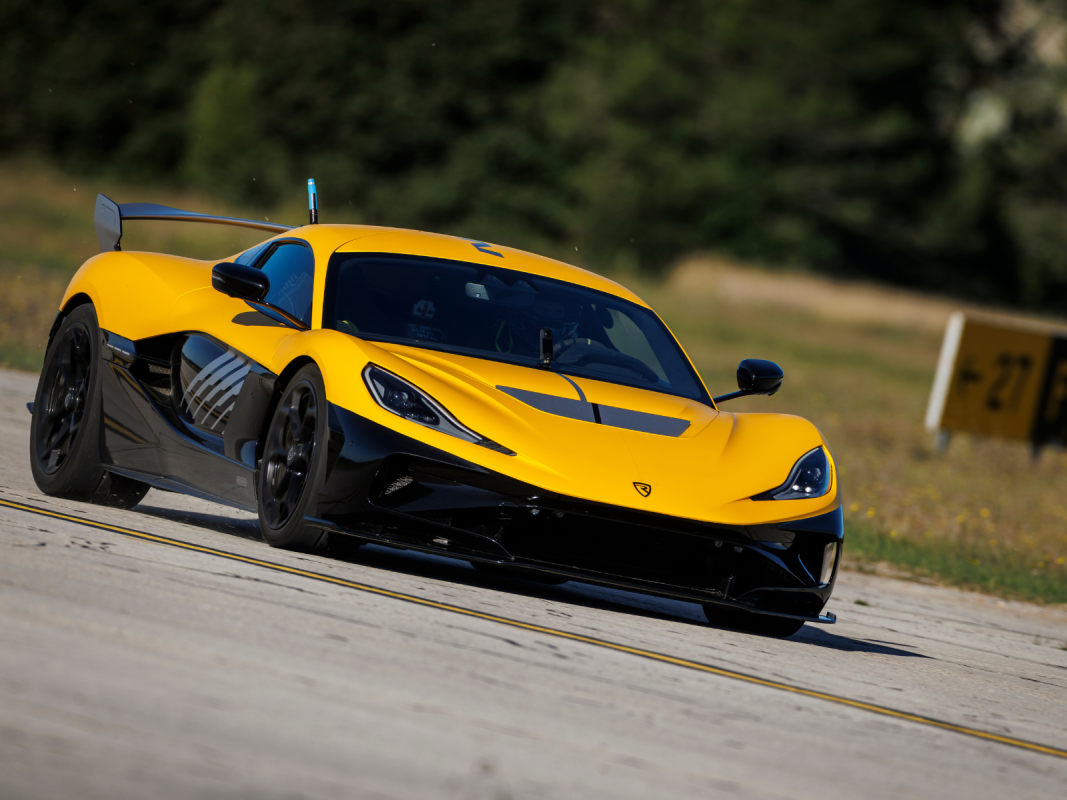
The hypercars were an ideal choice given their outright performance. The Nevera uses a quad-motor setup producing 1,914 horsepower – nearly double the output of the Ferrari SF90 Stradale. Meanwhile, the Rimac Nevera R is the more extreme, track-focused evolution that has set multiple performance records, including a 0–60 mph time of just 1.66 seconds.
One potential drawback during the three-day practice sessions could have been the charging time. High-speed runs can quickly drain the battery, unlike a gas-powered vehicle that can refuel and return to action within minutes. For reference, the Nevera supports DC fast charging from 0 to 80 percent in roughly 30 minutes on a 250 kW charger – and even quicker on higher-capacity units.
Of course, the hypercars could not replicate one critical factor: the wake turbulence generated by a full-size moving train. That was one of several variables Dario Costa had to contend with, along with flying at a near-stall speed of 87 km/h (54 mph).
Beyond supplying the hypercars, Rimac also contributed engineering expertise. The company developed a canopy for Costa’s aircraft using its CFD (computational fluid dynamics) capabilities and designed a bespoke seat optimized for improved stabilization and reduced pilot fatigue.
The Fastest Way to Train
Speaking about the collaboration, Rimac founder Mate Rimac said, “This project is the perfect expression of what Rimac stands for.” He added, “When you are pushing into completely unknown territory, you need tools that match your ambition. We were proud to be part of that.”
Costa completed the stunt on a 2.5-kilometer (1.55-mile) railway track in Afyonkarahisar, Turkey, on February 15, 2026.
This is not the only recent collaboration between Red Bull and an automaker. The energy drink giant previously partnered with Porsche specialist Singer Vehicle Design to develop a 13-piece carbon-fiber reinforcement structure that increases torsional rigidity in open-top 964-generation 911s to match the performance levels of the coupes. Meanwhile, Ford is set to return to Formula 1 with Red Bull Racing as a technical partner.


There are no reviews to display.