



CarPlay can be a real dealbreaker for car buyers
It's fair to say that in today's interconnected digital world, smartphone mirroring capabilities like Apple CarPlay and Android Auto aren't just subtle luxuries, such as tri-zone climate control, but outright essential features that could make or break a car purchase.
In a recent study of over a thousand car owners conducted by American Trucks, approximately 55% of drivers stated that a lack of Apple CarPlay would influence their decision to buy a particular car. In contrast, 36% of Android Auto users shared the same sentiment. In addition, when the same people were asked if they trusted an automaker to build an in-car system as good as Apple or Google, 31% said no, 36% said they were not sure, while 33% said yes.
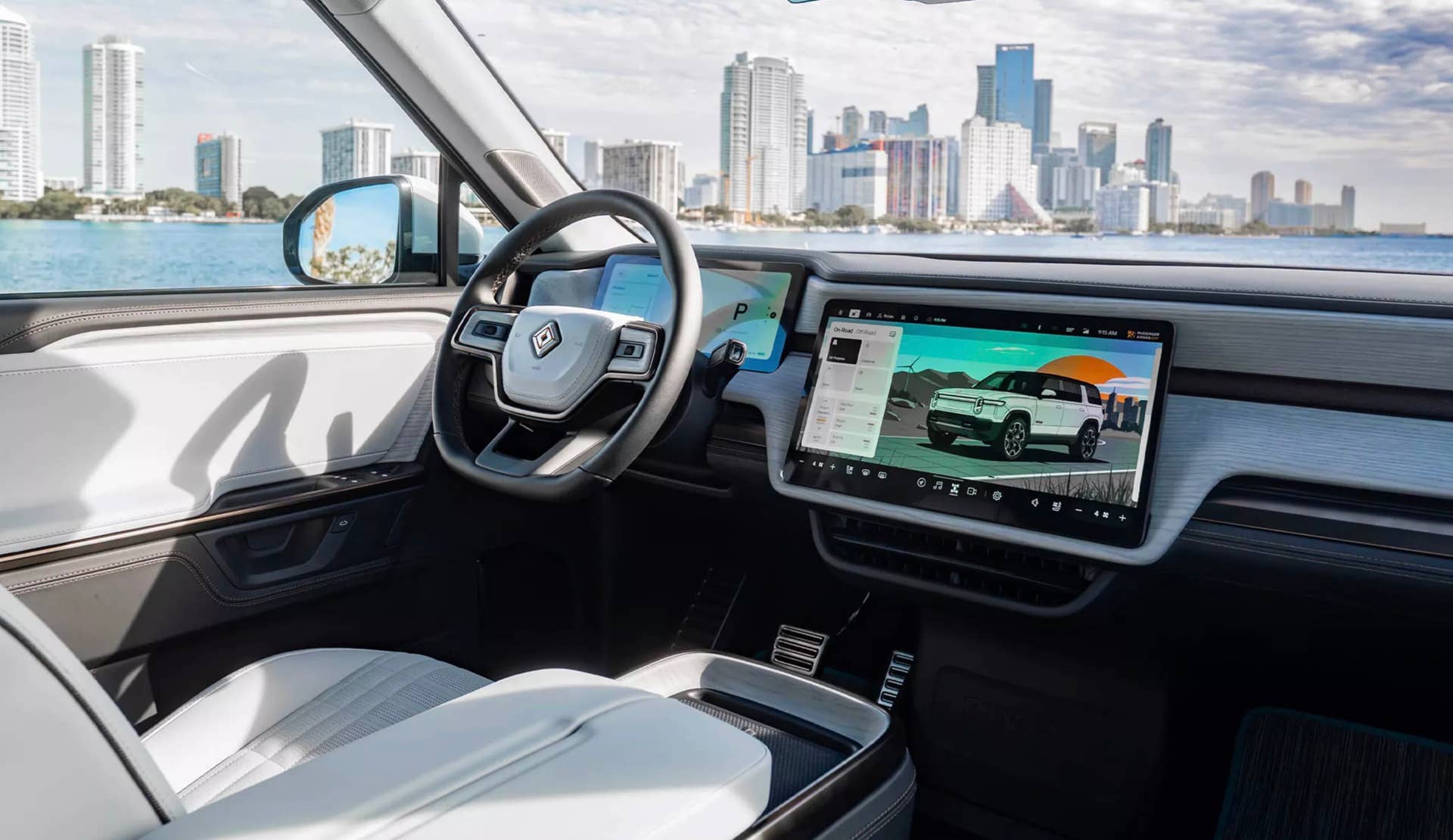
Despite this, one automaker that notably omits these kinds of features from its cars is none other than the adventure EV brand Rivian, the makers of the rugged R1T electric pickup and the R1S SUV. However, according to Rivian founder and CEO RJ Scaringe, the decision to omit CarPlay and Android Auto is not due to any technological shortcomings; it’s actually because, in his opinion, most other cars don’t cut it on the software front.
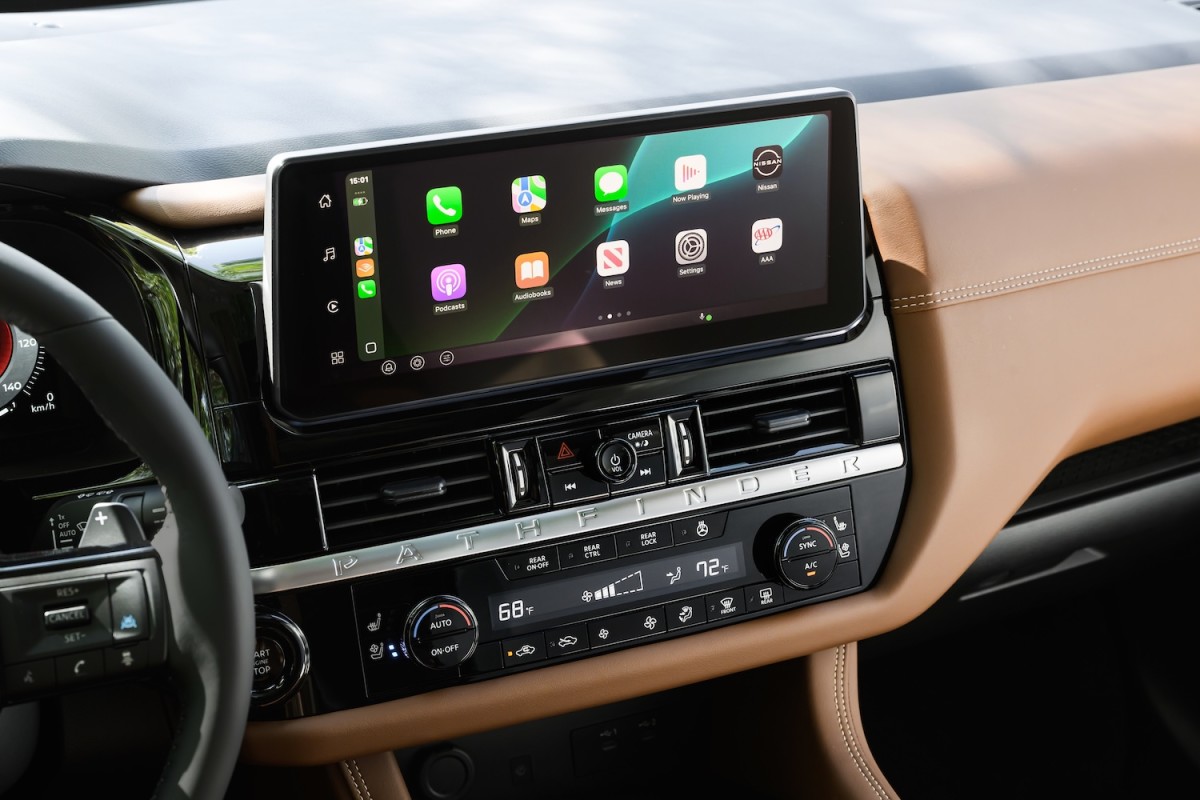
Nissan
RJ Scaringe: CarPlay is an excuse to make bad in-car software
In a recent interview on Ben Thompson’s Stratechery podcast, the two explored a wide range of topics, including Scaringe’s background, Rivian’s early days, the company’s partnership with Amazon and Walmart. But when he was asked about his company’s controversial decision to skip CarPlay, he called it a “good system,” but pointed out a key thing about its owners.
“The only reason people want that is they’ve been trained because they’re in cars that have such bad software that the life raft to escape the horrible software that is embedded in the car is CarPlay, and CarPlay is a really important function for that,” he said. “If I’m in a non-Rivian or non-Tesla and I get in, it’s like a disaster, and I’m like, 'Oh thank goodness there’s CarPlay.' It has some thoughtful UI, but we have a really thoughtful UI, and the few things that are missing we’ve been adding.”
The Rivian CEO actually explained his shade at the competition, as it is based on actual technical stuff that can consequently impact one’s driving experience. Scaringe argues that building a truly seamless driving experience means controlling everything on the screen yourself, and that when you hand over your dashboard to Apple a la CarPlay, you’re essentially letting another company run part of your car, which can create conflict between you, your car, and the software running on the infotainment screen.

Jason Henry/Bloomberg via Getty Images
Scaringe says that he and Rivian are “very convicted” that keeping their own software is essential in maintaining an in-car experience “where you can talk to the car and ask for things,” and also know up-to-the-minute info on “the state of health of the vehicle, the state of charge, distance,” and “outside temperature,” which can be disturbed if an application like CarPlay is integrated into Rivian’s on-screen infotainment software.
The real issue, according to Scaringe, is the future of these tech-forward machines, where he believes we’ll soon be talking to our cars like personal assistants. In his line of thought, if you ask your Rivian about your schedule for the day, you shouldn’t have to care whether it’s pulling from Google Calendar or Apple’s system behind the scenes. You just want the answer, instantly.
“[...] you just want the information, that interface becomes really important, it becomes so fundamental to the user experience and the whole user journey,” Scaringe said. “So as we’ve thought about this, inserting any sort of abstraction layer or aggregation layer that’s not our own just is extremely risky, and you start to build dependencies on that that are hard to reverse.”
This becomes especially messy when you add self-driving features into the mix, of which Rivian has dipped its toes into as of late. CarPlay typically takes over your entire screen, which can hinder the car’s ability to show you essential information about driving conditions. Scaringe suggested that it could use split screens to display different information. Still, in an effort to point to Apple as a guiding example, he noted that such an experience could be overwhelming for drivers.
“It’s like you have two different UIs playing out, and I just think it’s poor UI, it’s a poor user experience,” he said.
R
The no-CarPlay effect
Rivian has been working to provide people with an experience that would make them forget about CarPlay. In its R1S and R1T, Google Maps is a built-in navigation option, while support for major music streaming services, including Apple Music, Spotify, and Tidal, is also included. Scaringe and the company believe their well-designed user interfaces eliminate the need for CarPlay; so much so that Scaringe says the people actually complaining about missing CarPlay are mostly those who haven’t bought a Rivian yet.
“[...] people that are in Teslas and Rivians that are actually driving it, the number of people that actually complain about it is very, very low,” he said, pointing out that Tesla drivers report the same experience. “The number of people that say they’re not buying Rivian because of CarPlay is a higher number, but once you get into it, you’re like, 'Oh, what was I worried about? This is really good!', and I think the same trend exists for Tesla.”
Final thoughts
Notably, Rivian is not the only company with this same philosophy. Recently, General Motors announced that Apple Music would be available in select Chevrolet and Cadillac models, and that audio streaming would be standard through OnStar Basics, its eight-year no-cost connectivity package, for all 2025 and newer vehicles in both the U.S. and Canada.
This philosophy aligns with Rivian's approach to building cars in general. The company is spending billions developing its technology, and part of that bet is keeping complete control over the driver experience. They see their vehicles as user-friendly computers on wheels, where having a unified, well-designed screen experience isn’t optional; it’s essential.


There are no reviews to display.