




Stellantis has Berlin's back
According to a new report published by Reuters on December 1, the large multinational automaker known as Stellantis is backing the German government's plea to soften the European Union car emissions rules that are set to take effect in about a decade, noting that the German Chancellor's proposal is aligned with demands to increase growth in the Automotive industry on the continent.
"We welcome the German government's support for revisions to the European regulations," Stellantis CEO Antonio Filosa said in a statement. He noted that the Chancellor built on the points raised by the auto lobby ACEA, "all of which are urgently needed to return the European auto industry to growth," adding that "urgent and definitive action" is needed to boost sales in the region.

Alicia Windzio/picture alliance via Getty Images
Apart from being the parent company behind American marques like Chrysler, Dodge, Jeep, and Ram trucks, Stellantis is responsible for major European assets, including Fiat, Alfa Romeo, Citroën, Lancia, Maserati, Opel, and Peugeot. Its CEO's messaging comes after Stellantis Chairman John Elkann warned during a Fiat 500 Hybrid event on November 25 that the European auto industry risks an "irreversible decline" if the EU does not soften its emissions stance and grant automakers more flexibility.
"There is another way to cut emissions in Europe in a constructive and agreed way, restoring the growth we have lost and people's needs," Elkann said.
The Germans ask for help
This development comes as the European Commission is set to review its carbon-emission targets on December 10, a date it has moved from next year amid demands from automakers who say a total shift to electric vehicles isn't possible. Previously, the EU set a target of 100% reduction in CO2 emissions for new cars and vans by 2035; a goal that has been interpreted as a total ban on internal combustion engines in new cars.
In a letter penned by German Chancellor Friedrich Merz last week, he urged Brussels to allow exemptions for several types of electrified cars, including plug-in hybrids, battery-electric hybrids, and range-extended electric vehicles with “highly efficient” combustion engines, as automakers in the country deal with slow electric-vehicle sales and fierce competition from China.
“I will ask the commission, even after 2035, to continue to allow battery-electric vehicles that also have a combustion engine,” Chancellor Merz said, per The Guardian. “It is much more opportune and pragmatic to invest more effort and money in the development of efficient, hybrid systems that will combine the best of the world of internal combustion engines on the one hand and electric mobility on the other.”
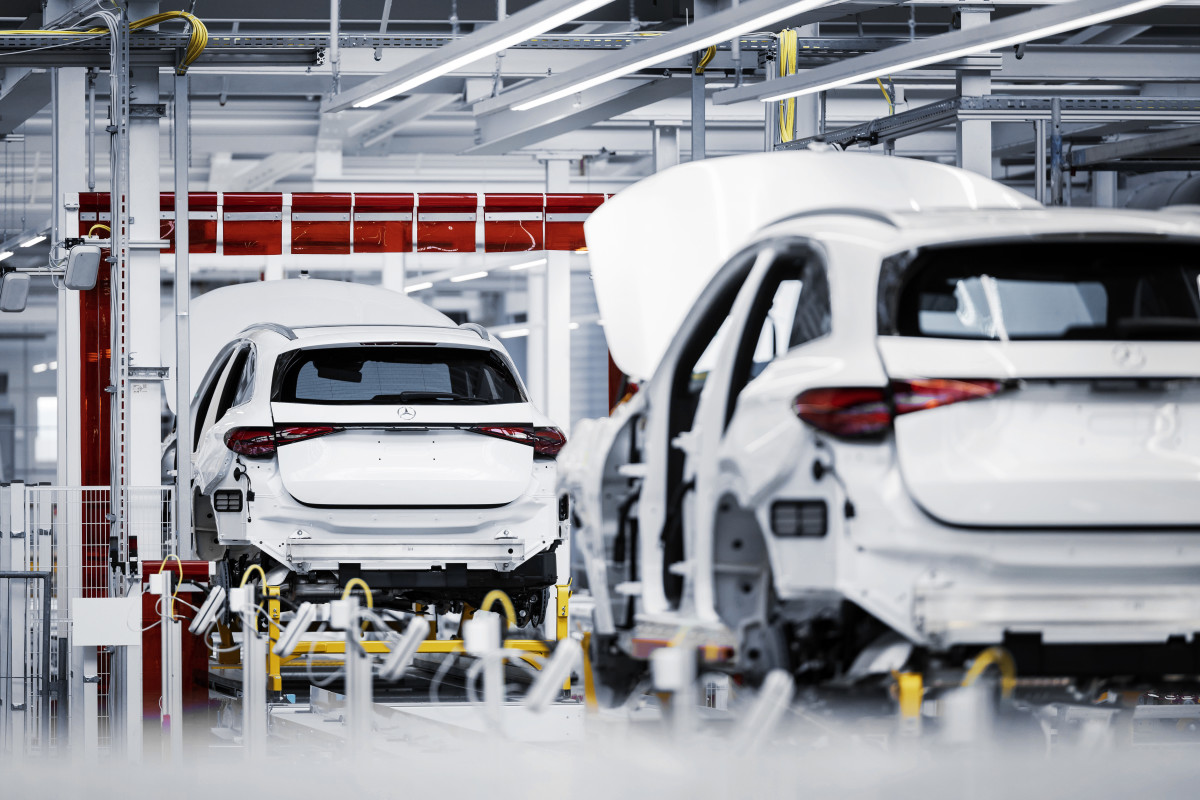
Mercedes-Benz
Stellantis isn't the only European automaker on board
Germany and Stellantis's plea isn’t the first time an automaker or a government has asked to loosen and/or amend the EU's 2035 carbon-slashing regulation. Previously, major automakers such as Volkswagen and Renault, as well as the Italian government, have each voiced support for loosening or delaying the CO2 targets.
At the 2024 Paris Motor Show, BMW Group CEO Oliver Zipse made a case for reconsidering the EU's 2035 zero-emissions goals, noting that the ban would only force Europe and European firms to become overly dependent on Chinese firms for crucial components like batteries.
"A correction of the 100% BEV target for 2035 as part of a comprehensive CO2-reduction package would also afford European OEMs less reliance on China for batteries," Zipse said. "To maintain the successful course, a strictly technology-agnostic path within the policy framework is essential."
FInal thoughts
It is interesting to see that these developments are happening as automakers finally recognize the writing on the wall regarding EVs. In new data from the European Automobile Manufacturers’ Association (ACEA), sales of plug-in hybrids (PHEVs) reached nearly 9.4% of new-car sales across Europe over the first ten months of 2025, overtaking the market share of diesel-engined cars; a fuel that once dominated more than half the continent.
All in all, these results demonstrate that in a market where regulations and trends would point towards a singular technology, such as battery-electric vehicles, sales numbers reveal whether a particular technology has a future. Although EVs are touted as the future, the present-day charging infrastructure in key regions, such as the US and Europe, has yet to expand to levels where concerns over charging reliability and range anxiety are top of mind for potential buyers.


There are no reviews to display.