



They Don't Make 'Em Like They Used To
For those old enough to remember, the Chevrolet Monte Carlo started out as a personal luxury coupe. It's a dead segment now, but it was thriving back in the day. That said, the Monte Carlo became renowned not for its cushy, luxurious side but rather for its motorsports background.
The Monte Carlo was absolutely dominant in NASCAR in the '70s, and its success carried on until it was axed in 2007. But perhaps one of the more interesting models of this coupe was from the mid-'80s. That would be the SS Aerocoupe, a true homologation special that we think deserves more attention.
Why it was Made
While the Monte Carlo established itself as a massively successful race car, the Ford Thunderbird at the time featured a sleeker, more aerodynamic design that sliced through the air like never before. Sure, the Chevy was still winning and got a smoother nose in the early '80s, but Ford wind-cheating 'Bird was a serious threat.
Not wanting to lose its grip on NASCAR, Chevrolet countered that with the Aerocoupe. But for it to be a valid entry in the series, the company needed to build 200 road-going versions in line with homologation rules. With that, Chevrolet got to work and sold it to the public in 1986.
Bring a Trailer
What Makes it Special
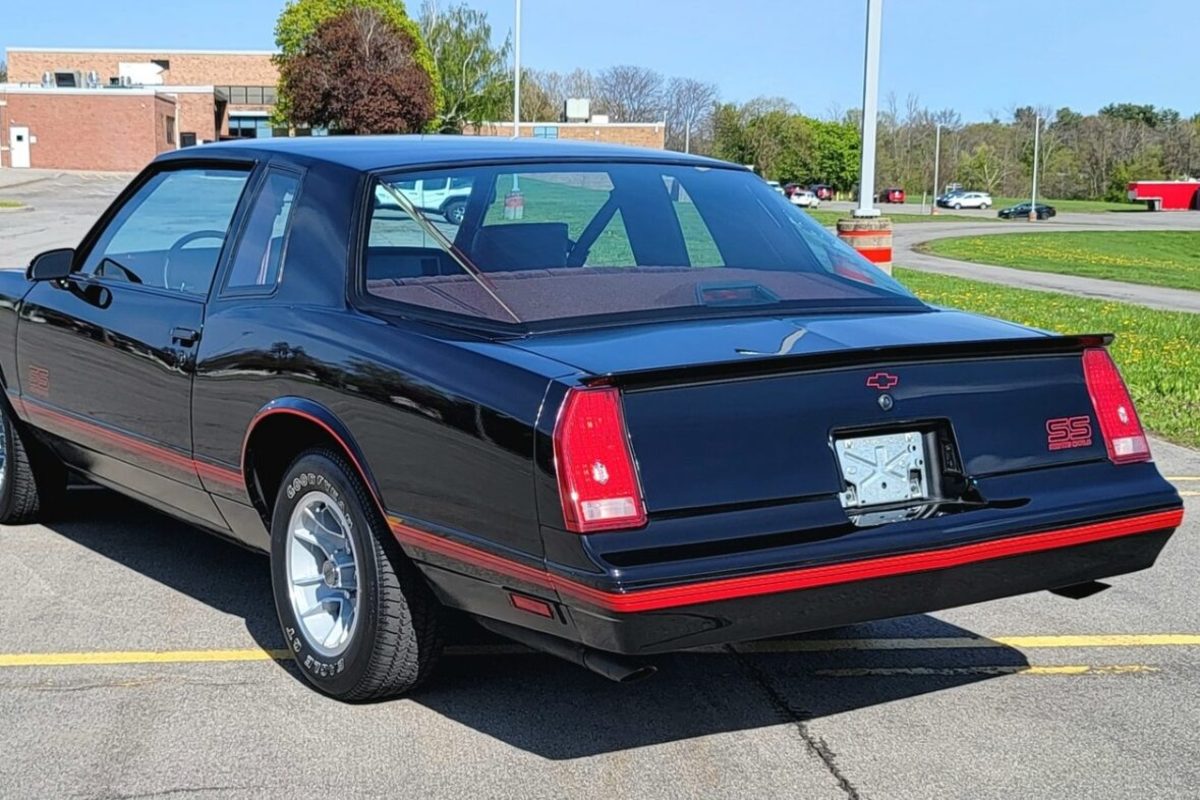
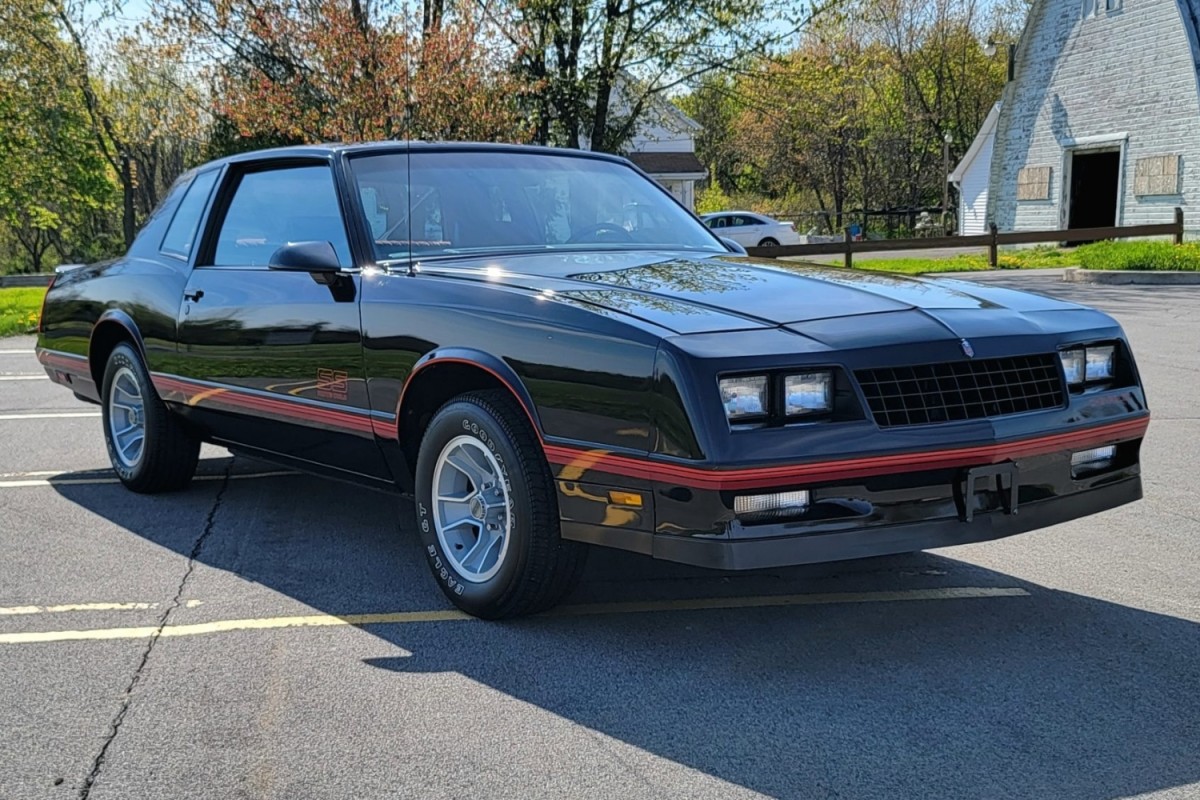
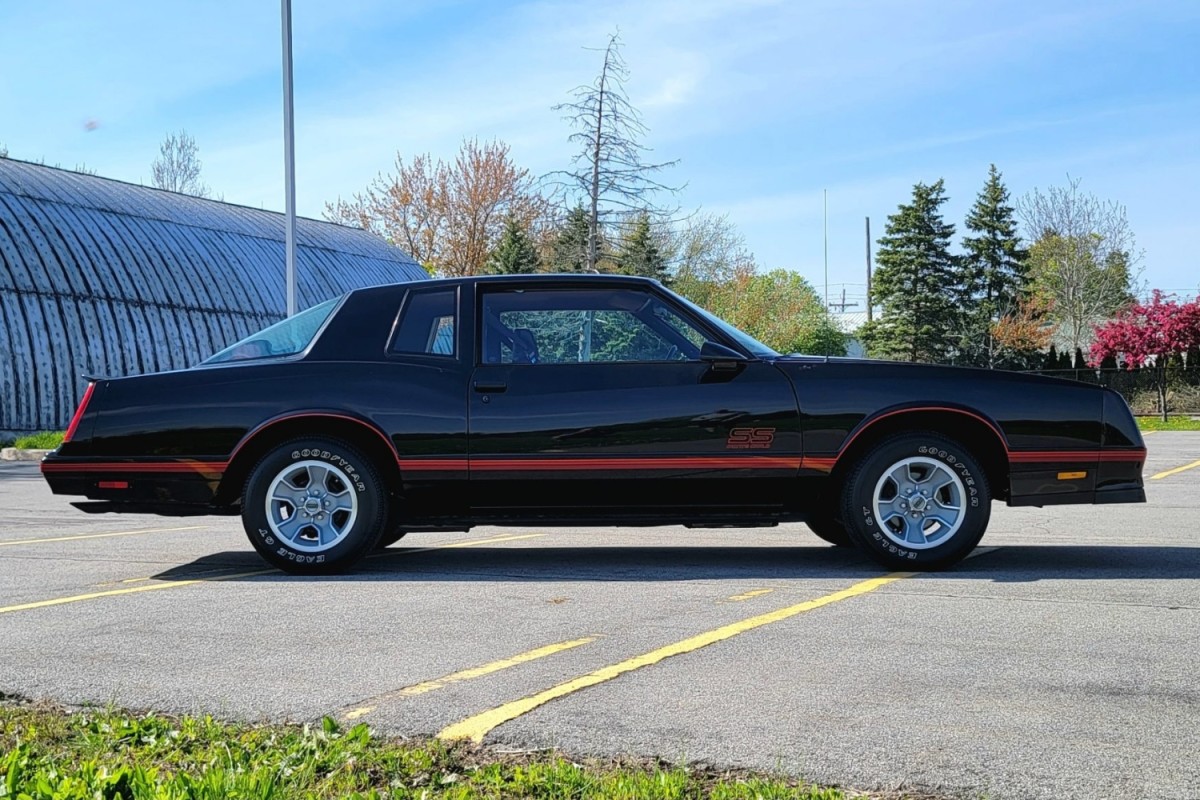
From the front to the B-pillar, it was your standard Monte Carlo SS, but the rear section is where the magic happens. The unique sloping rear windshield was longer than the standard coupe's, reducing turbulence created by air pockets, at least in theory. With aero enhancements, the trunklid was shortened to accommodate that change. The car was also given a lower rear spoiler compared to the standard SS coupe.
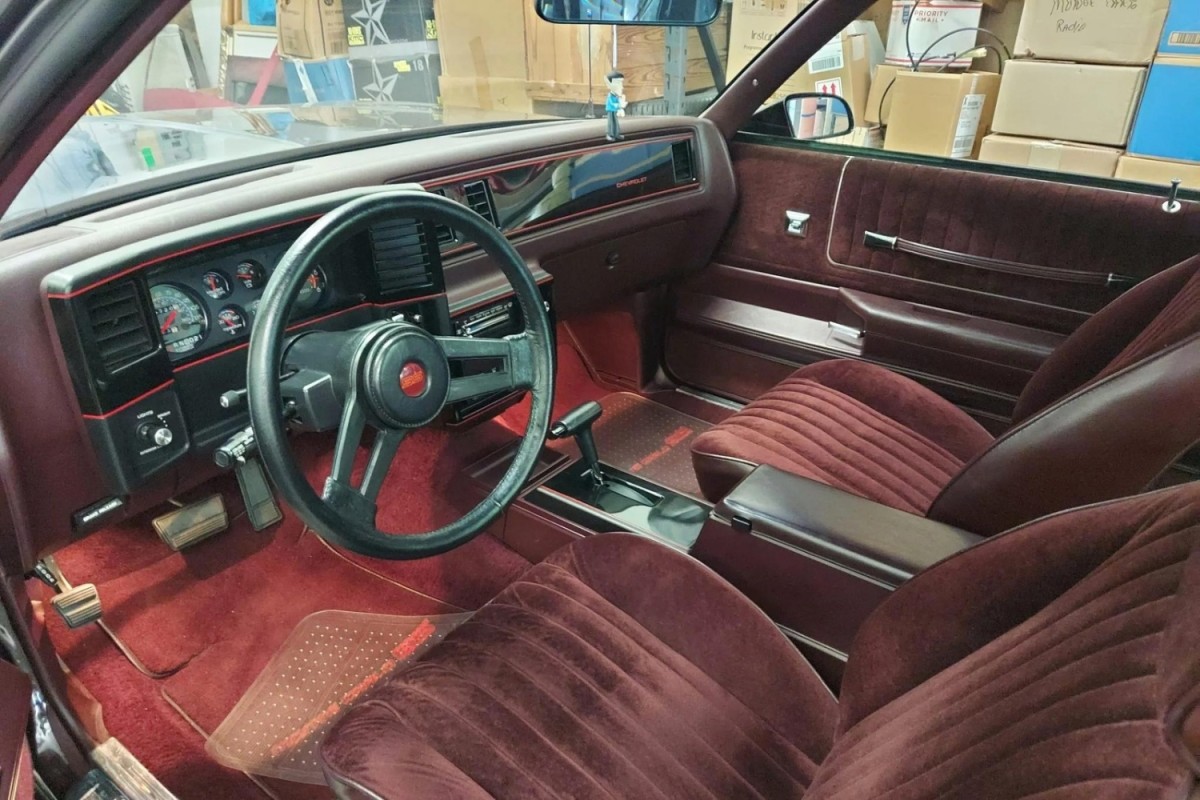
Only 200 of these cars were supposed to be built. All were finished in white and had a cushy burgundy interior. The cars were given the aero treatment by Cars & Concepts in Michigan. It's safe to say the first batch of Aerocoupes was snapped up pretty quickly, enough to merit a second production year. In 1987, Chevrolet shifted 6,052 SS Aerocoupes out of the 33,199 SS models.
Mind you, it wasn't just the Monte Carlo that got the Aerocoupe treatment. Pontiac also had its own version in the form of the Grand Prix 2+2 Aerocoupe, and that one had an even longer and larger rear windshield that gave it a laughably small trunk opening. It's much rarer than the Chevy, with just 1,225 built. Curiously, the Buick Grand National was left untouched.
Bring a Trailer
On the Track
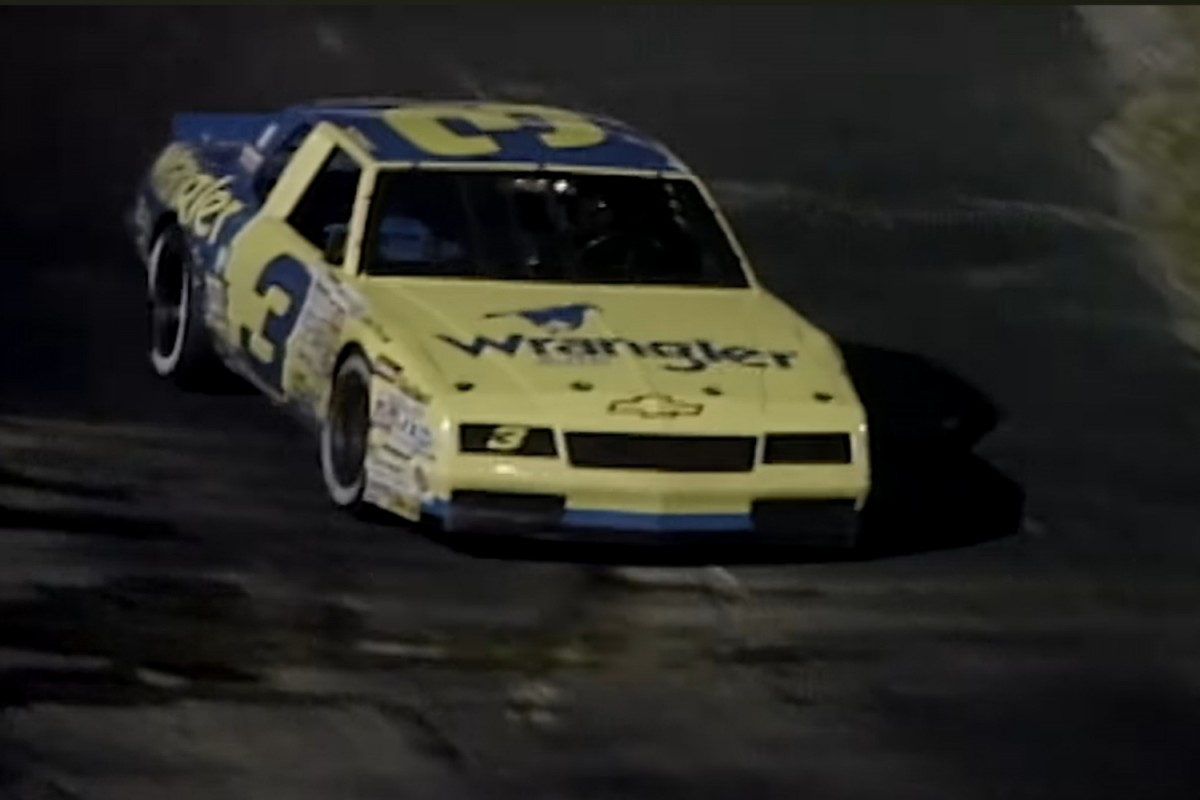
Truth be told, we can't say for certain if the sleeker rear did anything to improve the car, although the results seem to suggest that it did. It practically dominated the 1986 and 1987 seasons, and if it wasn't Dale Earnhardt winning, it was either Tim Richmond or Darrell Waltrip in their Aerocoupes driving to victory lane.
The Aerocoupe was vital in building up Earnhardt's legend, too. In the two years that the car was produced, he won back-to-back titles in both '86 and '87 Winston Cup seasons, netting him his second and third titles. All in all, The Intimidator won 16 times with the Aerocoupe, 11 of which were in 1987.
Dale Earnhardt 1987 Chevrolet Monte Carlo SS
On the Road
So, back to the road car, what did it have? Well, it's a lot more docile than the race car, that's for sure. When we think homologation special, we think of a stripped-down, hardcore version of a car, but it wasn't the case at all with the Aerocoupe.
It had a full interior, creature comforts, and even a three-speed automatic transmission. The engine was exactly the same as the one found in the standard SS coupe. That meant a 305 cubic-inch (5.0-liter) High-Output V8 with 180 horsepower and 225 lb-ft of torque. It also benefited from a more aggressive axle ratio, as well as the F41 sport suspension package.
Car and Driver tested a non-Aerocoupe SS way back in 1983. Let's just say that performance figures are very 'of its era,' to say the least. 0 to 60 took 8.2 seconds, and crossed the quarter-mile in 16.1 seconds with a trap speed of 88 mph. Sure, a modern compact will easily dust it, but do remember that America was just coming out of the Malaise Era, and anything that hit those numbers would be considered fast. Not fast by today's standards, but an important piece of American automotive history, nonetheless.
Bring a Trailer

Bring a Trailer


There are no reviews to display.