


Performance Icon
Subaru's claim to fame would be its performance-oriented reputation. Starting as rugged, dependable, and unbreakable cars, quickly translated into success in the world of motorsports, particularly rallying. While the Symmetrical AWD system is a feat of engineering, another aspect Subaru really leaned into is the perfection of the Boxer engine layout.
Boxer engines aid handling and stability; the flat construction and lower placement in the engine bay help lower the car's overall center of gravity. Another key aspect is that the engine is supposed to be smoother because opposing piston movements naturally cancel each other's vibrations. In other words, there are many reasons the Boxer layout still exists today. That hasn't stopped some curious people from experimenting with the layout.
From Boxer to Inline-4
YouTube channel Garage 54, known for its wild automotive experiments, is making the rounds for taking on a daunting challenge. These Russians have decided to convert Subaru's patented Boxer engine into the more normal inline-4 layout used by other brands. At the beginning of the video, it is quickly explained that the task itself will be intensive, requiring them to source another donor Boxer engine to complete the conversion.
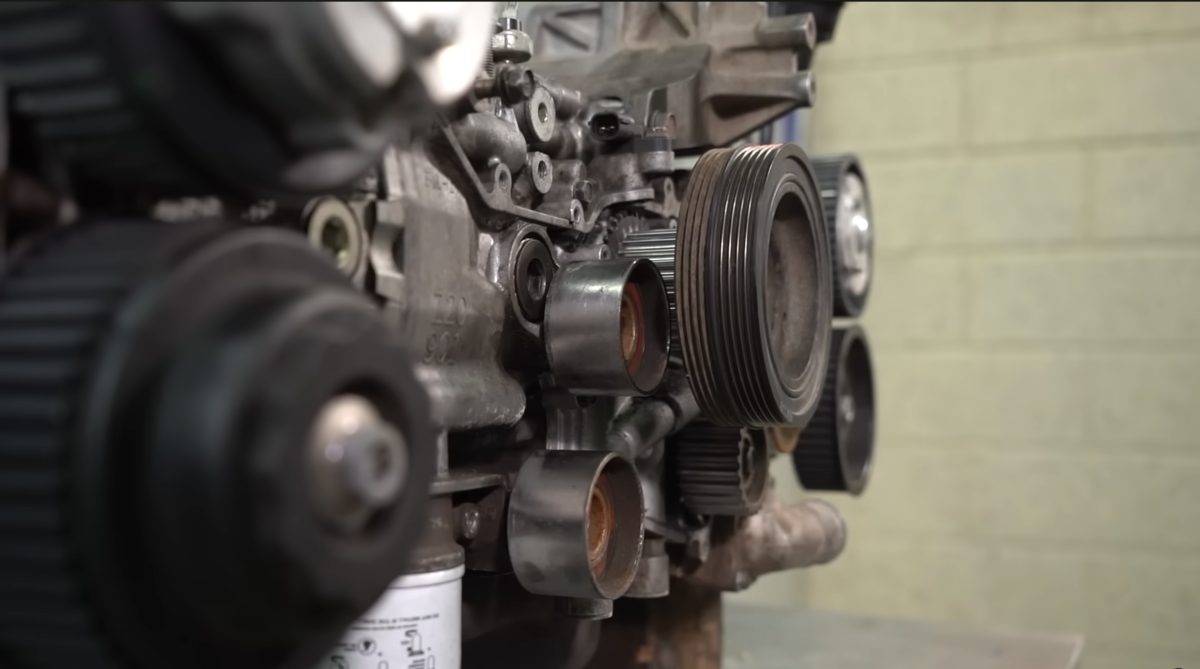
One of the first steps they needed to do was to chop the engine block in half to separate the left cylinder bank from the right cylinder bank. This process destroys the engine's naturally flat geometry design.
Next up was the rotation; instead of having the banks face each other like a Boxer, both were rotated upwards to 90 degrees. The layout that Garage 54 went with was an inline-4 similar to what Toyota or Honda does.
According to them, one of the hardest parts of the construction was the welding. Making two separate aluminum banks back together isn't easy by any means, but in this case it was made harder by the fact that the cast aluminum was oil-soaked and porous, which caused the metal to boil and crack under the heat of welding. Custom pins were needed to align the parts before fusing them into a singular vertical block.
Garage 54/YoutTube
Does It Run?
After they reconstructed the engine, they moved on to other vital parts of the engine's internals. The crankshaft was cut into pieces, then each piece was reinstalled to properly simulate the right firing order of an inline-4.
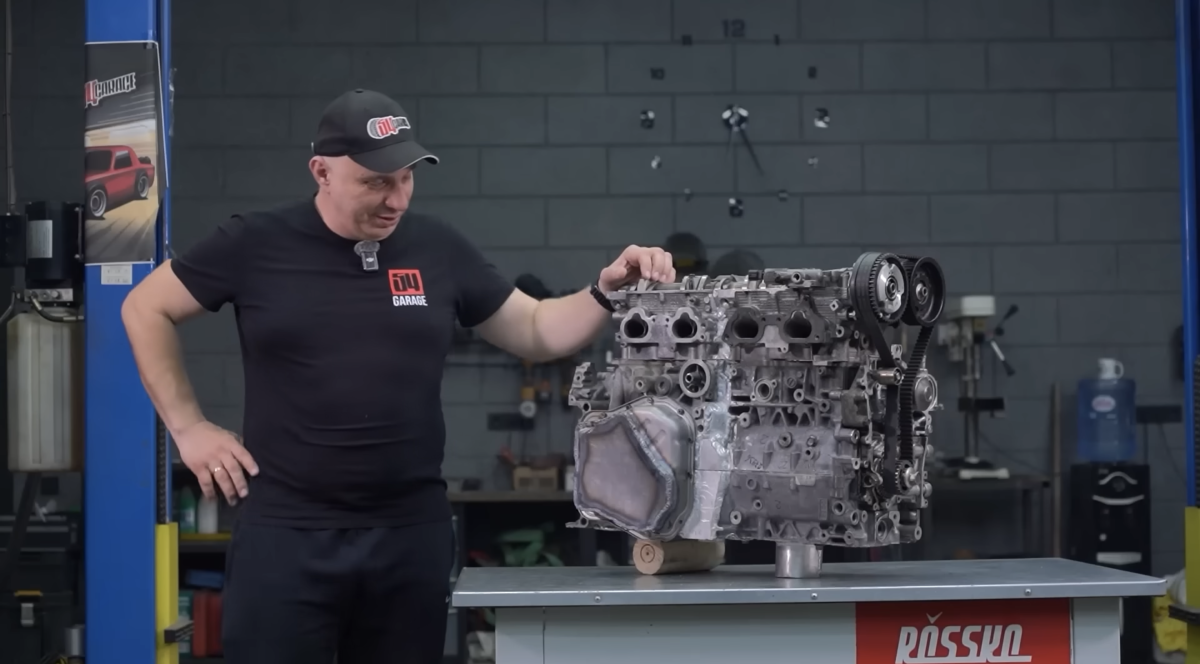
In the end, Garage 54 managed to actually make the Boxer engine resemble the form of an inline-4. Though they admitted that the process turned out to be more than what they initially thought. As for the function, they ended the video without starting it yet, but they are confident it'll work and have promised to post more videos about this experiment soon.
Garage 54/YoutTube


There are no reviews to display.