




Even the Tough Ones Have a Breaking Point
The LS-based L96 small-block V8 is deemed a tank for its iron block and conservative tune, traits that typically favor reliability over outright performance. That’s what made this particular L96 example featured on I Do Cars so interesting, as it failed violently and unexpectedly, raising questions about what actually went wrong.
General Motors introduced this 6.0-liter V8 around 2010 for full-size vehicles such as the GMC Yukon XL and Chevrolet Suburban 2500. According to the mechanic, the engine – destined for teardown – was likely pulled from a Chevy Silverado or GMC Sierra 2500/3500. Specific details like mileage or service history were unknown, which is entirely expected given that the engine was purchased for just $50.
The Damage Speaks for Itself
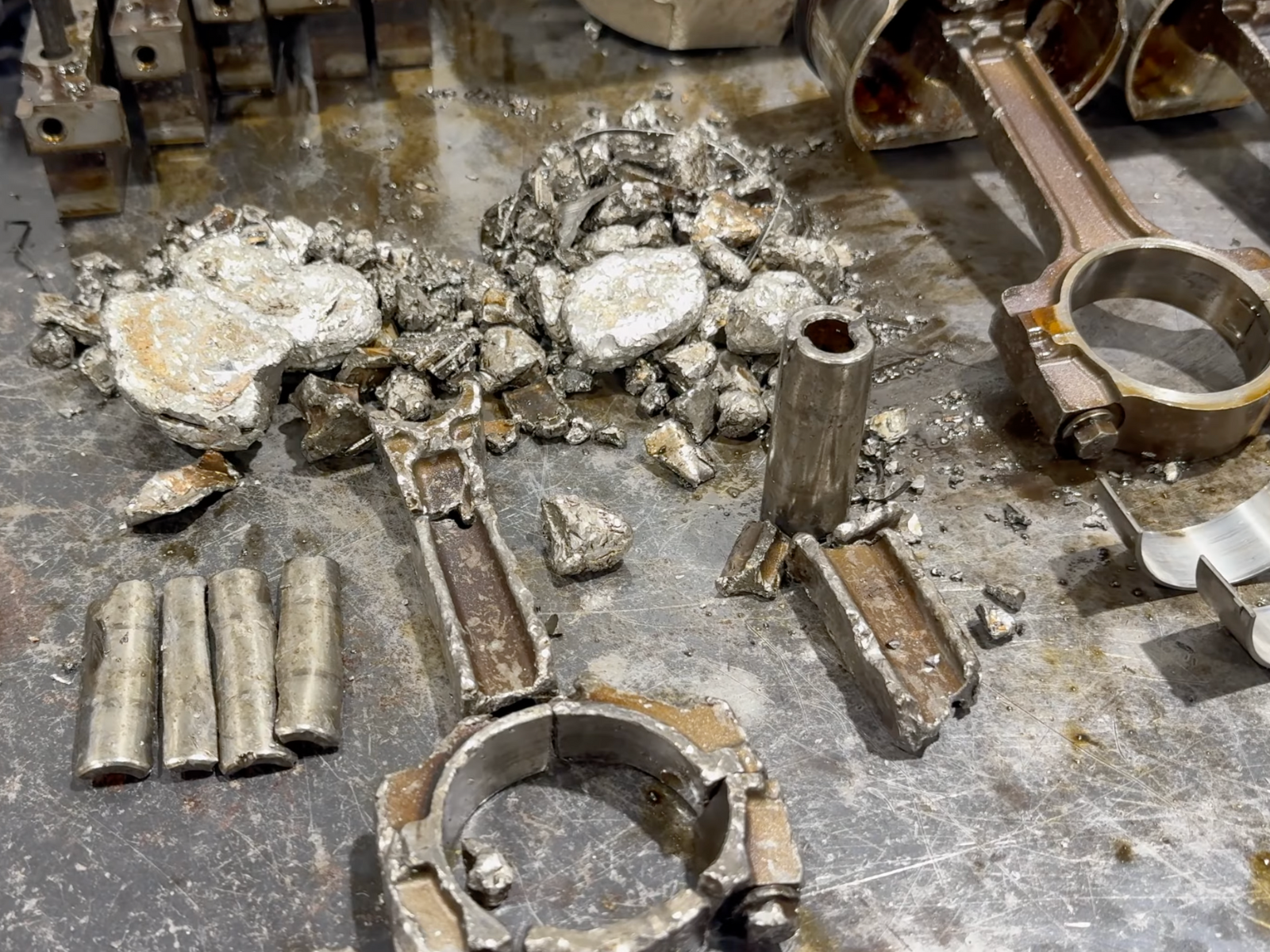
Right off the bat, a hole in the engine block was visible, indicating a catastrophic internal failure – especially considering the L96’s iron block is far more durable than aluminum. Parts in the cylinder head showed only minor, scattered damage, nothing particularly severe. The real disaster, however, was in the cylinder block itself, where two cylinders on each bank of the V8 were missing their pistons entirely.
Interestingly, a wrist pin – known for its strength – had shattered into four pieces, underscoring just how severe the internal impact must have been. The mechanic noted that one of the broken wrist-pin fragments likely locked up the crankshaft, which may have helped prevent even greater damage. But the fact that this component, which connects the rod to the piston, had already failed indicates the engine was effectively beyond repair at that point.
Where Things Took a Turn
Typically, a blown engine results from hydrolock, oil starvation, or overheating, yet none showed clear signs during the teardown. As a result, the mechanic concluded that the owner likely ignored early warning signs of failure, which ultimately led to the blowout. Other contributing factors – including the use of cheap parts, “shoddy” repair work, and improper torque specifications – only worsened the situation. On the bright side, this teardown didn't implicate an inherent engine design flaw.
At the time, the L96 went head-to-head with heavyweight rivals such as Ford’s 6.2-liter Boss V8 and Chrysler’s 6.4-liter Hemi – the latter being the most performance-oriented of the group and even finding use in the Dodge Challenger. GM’s small-block V8 was later succeeded by the L8T, which increased displacement to 6.6 liters and raised output from 360 horsepower to 401 horsepower.
Chevrolet


There are no reviews to display.