




Riding the 2000s Retro Wave
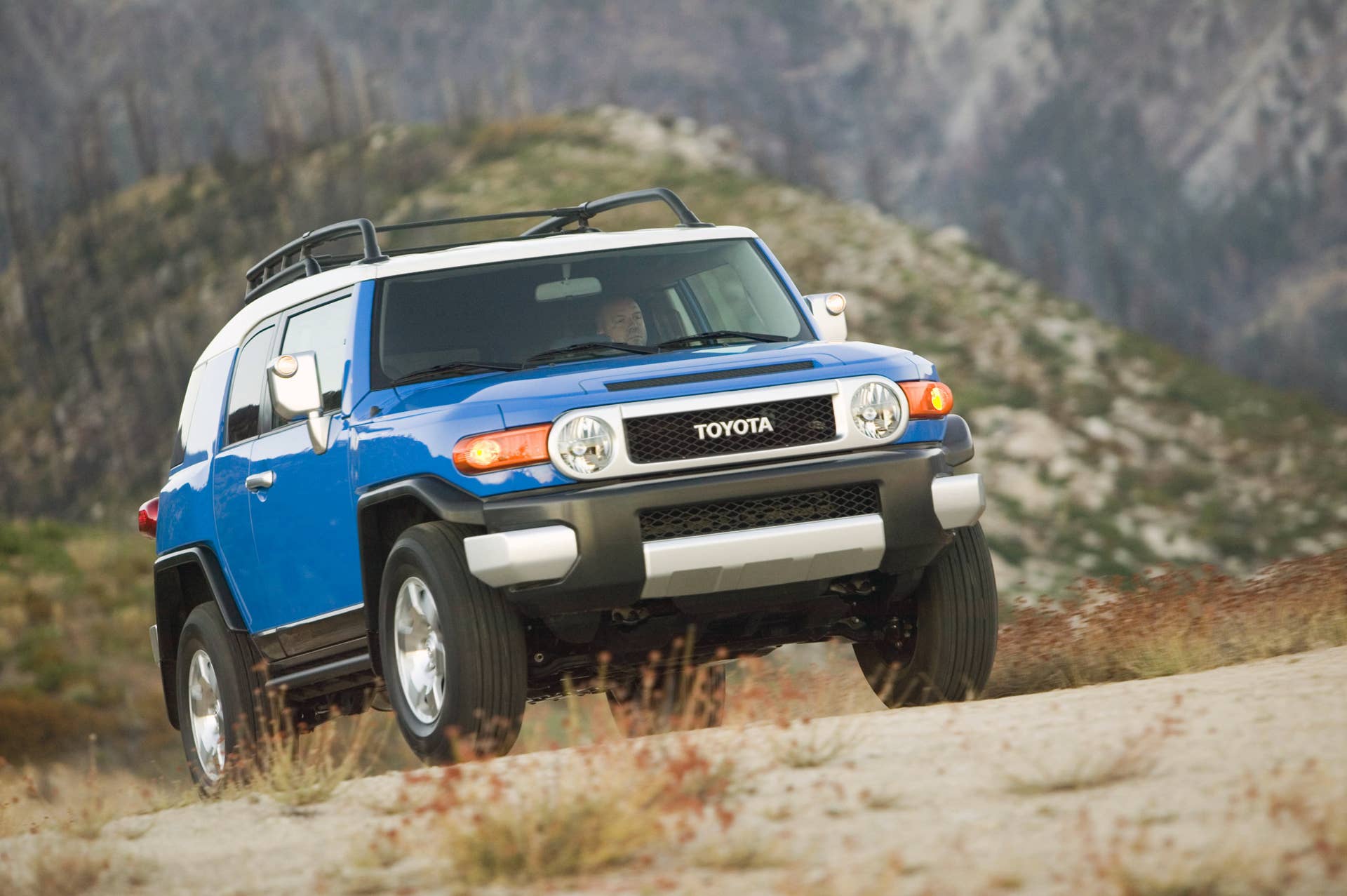
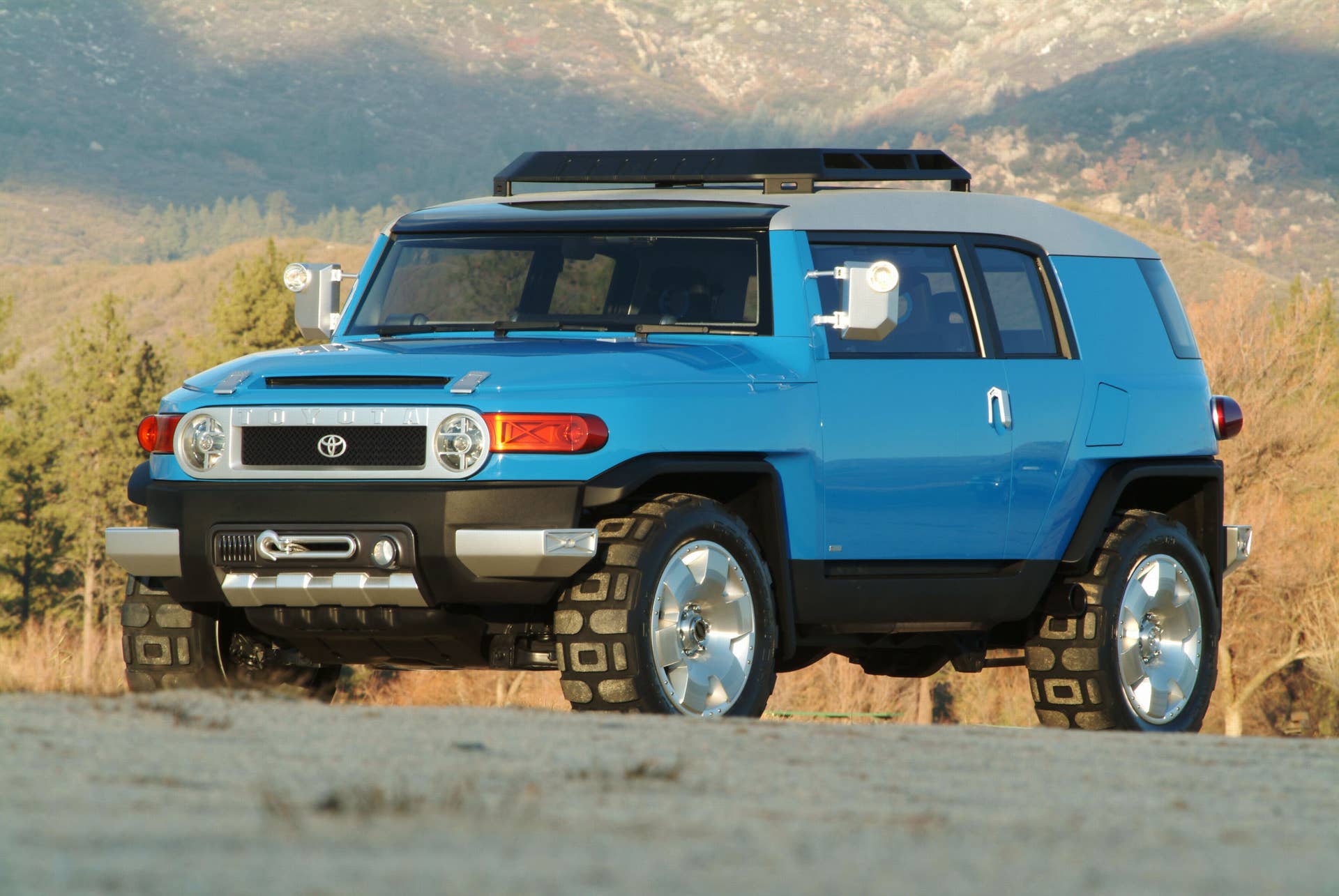
The late '90s and early '00s saw a wave of retrofuturistic cars that hit the market. Some prime examples include the New Beetle, the Mini, and the PT Cruiser. Of course, Toyota also jumped on that trend when it introduced the FJ Cruiser Concept way back in 2003 during that year's Detroit Auto Show.
Reception towards it was positive, to say the least, prompting the company to bring it to life as a production model. Fast forward to February 2005: it was shown in a pre-production show at the Chicago Auto Show. In January 2006, the first batch of road-going FJ Cruisers rolled out of the Hino Motors plant in Homura, Japan. With that, this 40 Series Land Cruiser-inspired SUV turns 20 this year, earning its spot on the modern classic table.
Toyota
Rugged Youth Utility
Now, Toyota didn't just wake up one day and think making a classic Land Cruiser-inspired concept would be a good idea. The FJ Cruiser story dates back to the '90s, with Toyota product planner Dave Danzer and vice-president of sales and operations Yoshi Inaba. The two drummed up the modern interpretation of the 40 Series along with Akio Toyoda, and the group actually had to work in secret in the early days of the vehicle's development.
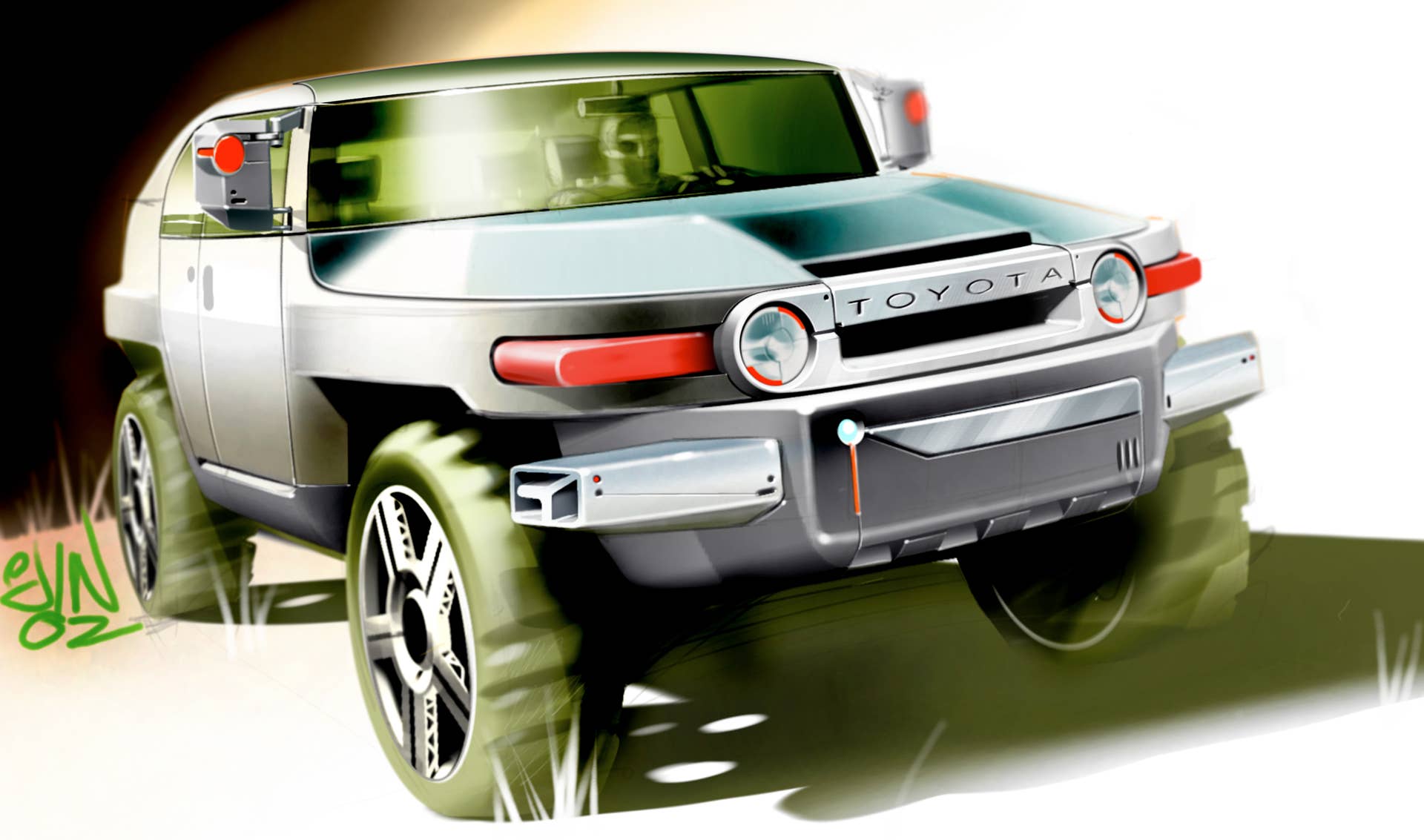
The project was internally known as the Rugged Youth Utility vehicle, and its purpose was to attract younger male buyers to the Toyota brand. It started out by sticking FJ40 bodies on top of the Tacoma's chassis to see its feasibility. It's likely Akio Toyoda liked the idea. After all, we did allow this secret plan to be done at the NUMMI plant in California. The thing was, he wasn't the company's president at the time, so some serious convincing to the board had to be done for it to gain approval.
Toyoda still had to tell the board that a modernized FJ40 would work and that he thought highly of the project. Of course, it also helps that your last name is also the company's namesake, but it was approved, nonetheless. Several design proposals were submitted, but it was Jin Won Kim's work that got the seal of approval. By the way, he was just 24 years old at the time...and we're now having an existential crisis.
Toyota
From Concept to Reality
As mentioned, the FJ Cruiser concept was a hit, and with approval from Toyota Japan, more extensive development began soon after. The frame used for the SUV was the F2 platform, the same as the 120 Series Toyota Land Cruiser Prado and Lexus GX, as well as the fourth-generation 4Runner and second-generation Tacoma.
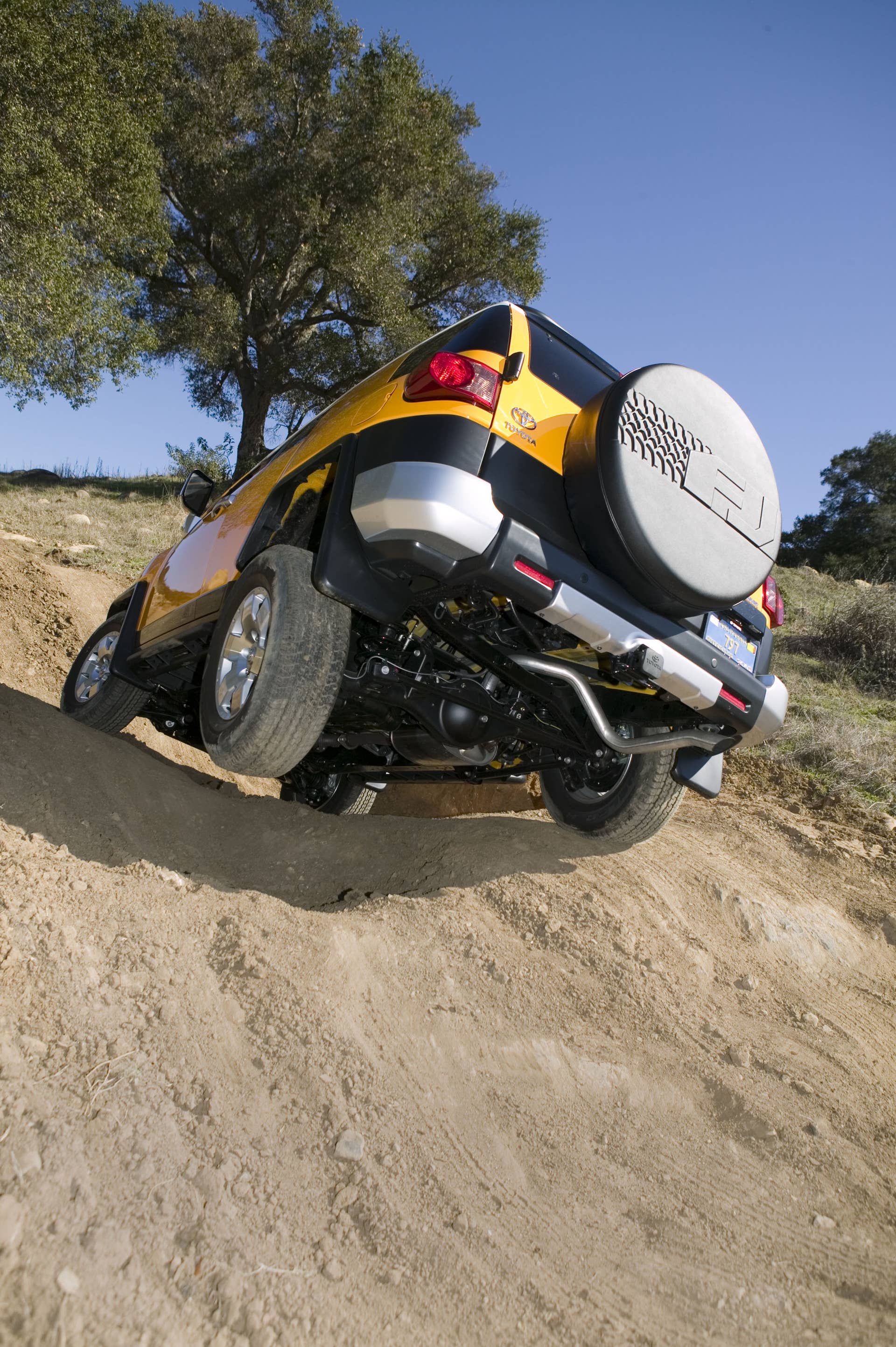
Test mules were extensively driven in Moab, Mojave, and the Sierra Nevada. Each one was driven to their breaking point to calibrate traction control systems and fine-tune the suspension setup. Development work was relatively quick, largely thanks to the existing F2 platform that had already undergone loads of testing prior to the FJ Cruiser's production.
Toyota
The Specs
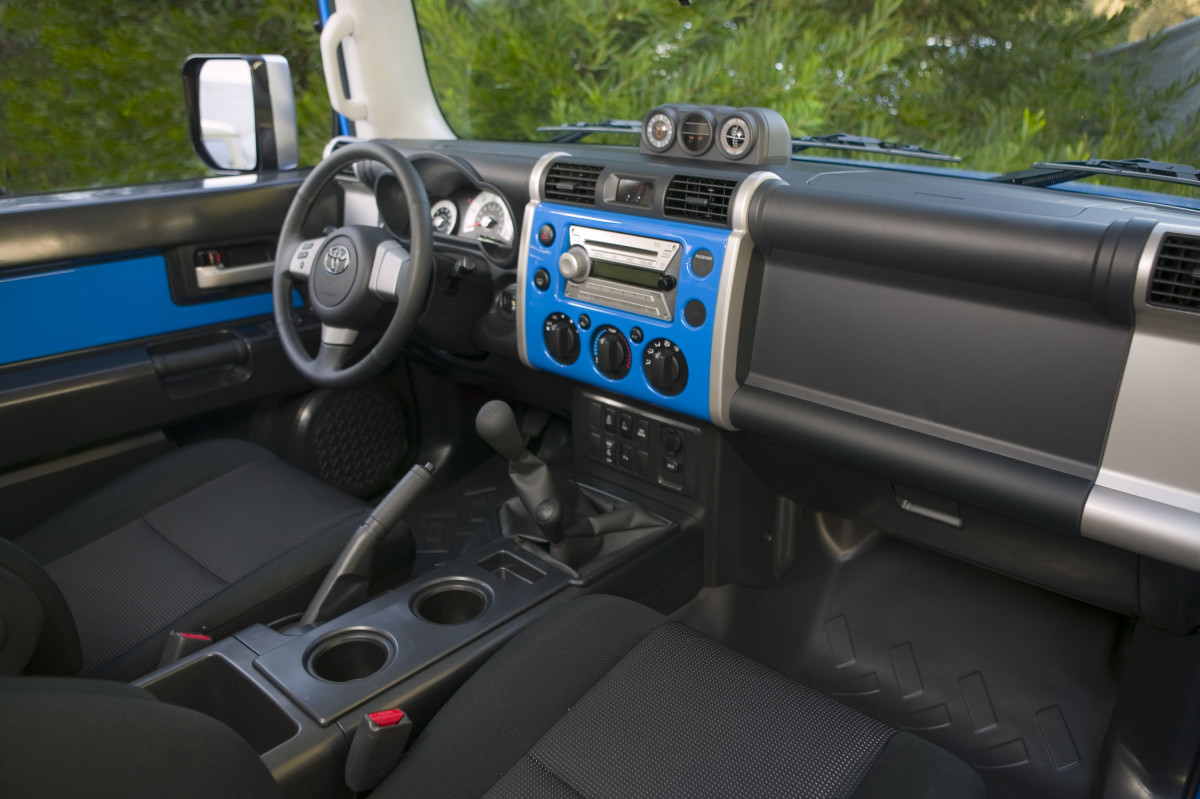
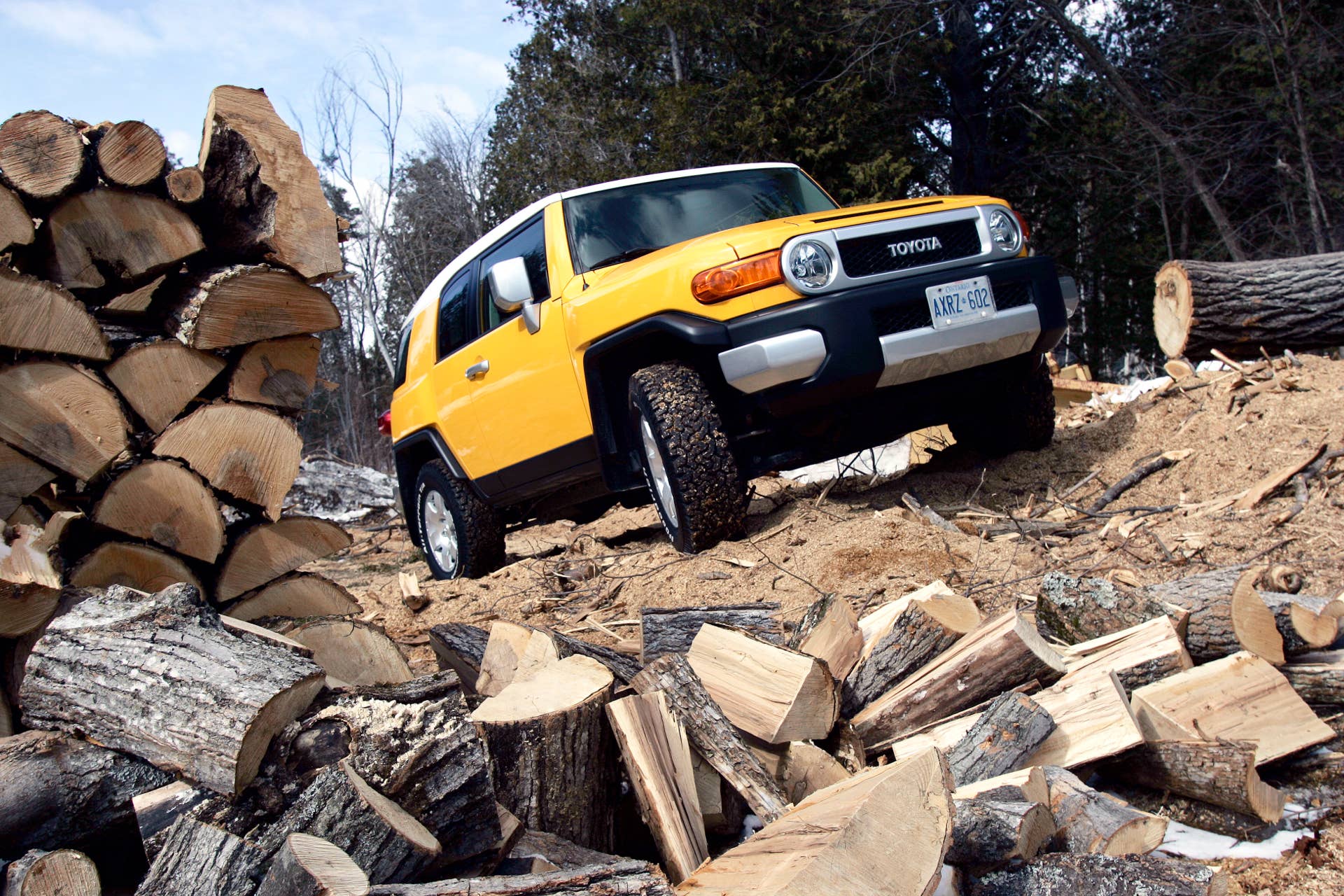
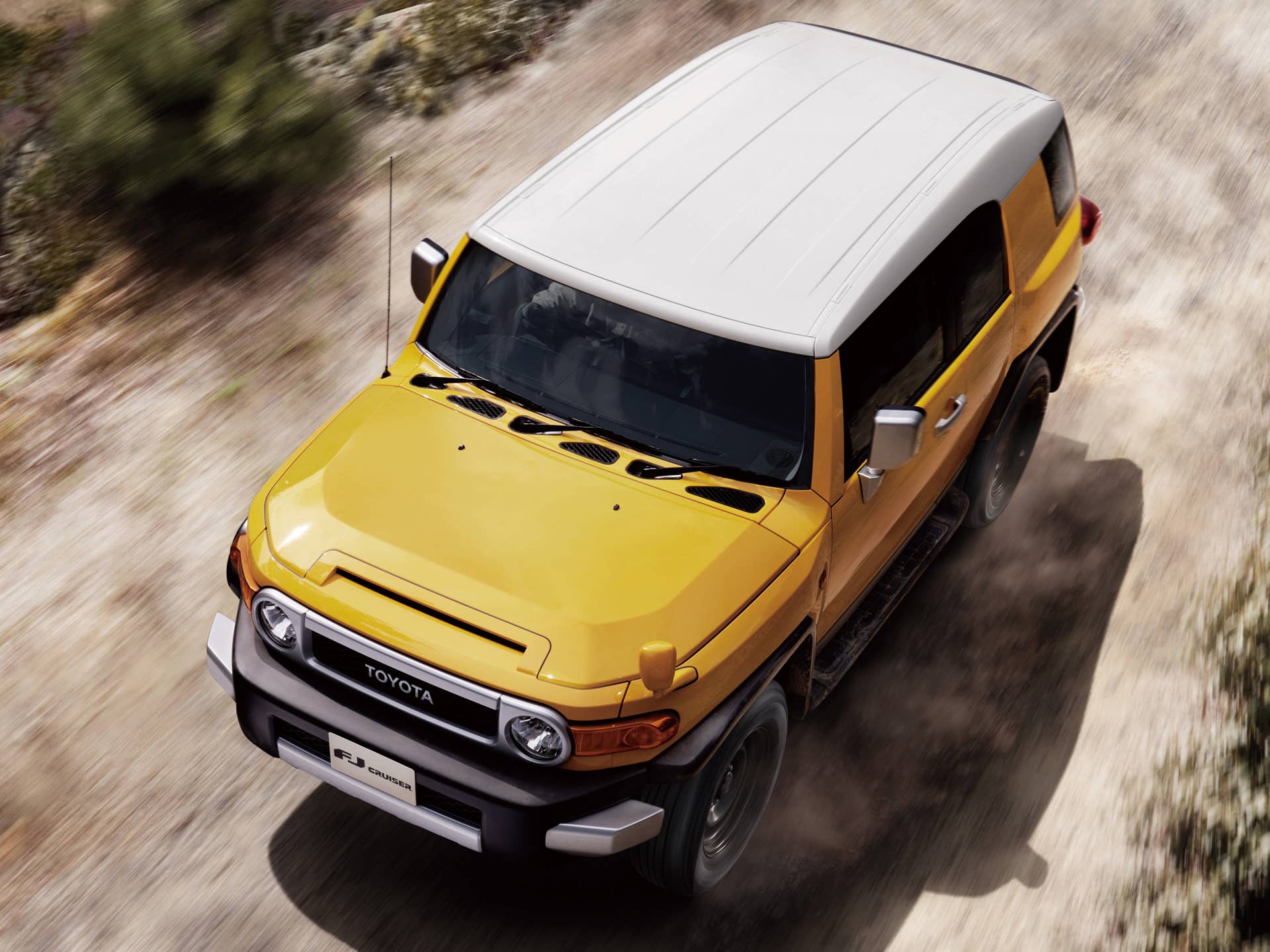
Externally, the FJ Cruiser remained unchanged from its introduction through the end of production, meaning its dimensions stayed the same throughout. It was 183.9 inches long, 75.0 inches wide, 72 inches tall, and rode on a 105.9-inch wheelbase. There was also 9.6 inches worth of ground clearance, and it can ford up to 27.5 inches of water.
Its 4.0-liter V6 saw some updates through the years. Initially, it made 239 hp and 278 lb-ft, but the 2010 model year added Dual VVT-i to bump it up to 259 hp and 270 lb-ft. That figure would be adjusted for 2011 to 260 hp and 271 lb-ft. Six-speed manuals were available, but most came with a five-speed automatic.
Toyota
Did it Sell Well?
Sales in the U.S were initially strong with 56,225 sold in its first model year. The year after, 55,170 FJ Cruisers saw new homes, but then declined sharply in 2008 due to the financial crisis, and went down to just 28,688. From that moment on, the SUV would hover around the 12,000 to 15,000 units mark until it was discontinued in 2014.
Interestingly, Japan had to wait until 2010 to get its hands on it despite literally being made there. It was sold there for eight years until 2018 and was more of a novelty item than a volume mover. Elsewhere, sales were decent, particularly around Africa, the Middle East, and in parts of Asia. Toyota wouldn't pull the plug right away if it wasn't making money for them, and global sales lasted until 2023. That's 16 years on a single generation.
Toyota
Lasting Legacy
These days, the quirky off-roader has its fans around the world and is celebrated as a cult icon of sorts. You can still see them along trails and being used as intended, as well as being cherished by their current owners. Second-hand values are still strong, and some are selling for over sticker in the used market. Its spirit lives on in some way in the new 250 Series Land Cruiser, whose design team was led by, you guessed it, Jin Won Kim.
Such is the impact of that model that Toyota brought it back in the form of the Land Cruiser FJ. Unfortunately, its chances of coming stateside are slim to none as it uses the smaller IMV platform that isn't made for America. The influence is clearly there, though, with tough mechanics, a ladder-frame chassis, and the promise of good off-road capability. In a way, though, we now have two spiritual successors to the FJ Cruiser.
Toyota


There are no reviews to display.