


With the average new car transaction price holding just below $50,000 last month, it’s not surprising that auto debt has ballooned to previously unseen levels. As more people borrow larger sums of money to be able to buy or lease a vehicle, auto debt is increasingly becoming a serious problem for consumers.
A new report shows that total auto debt reached $1.68 trillion at the end of 2025 in the United States, accounting for a 37% increase since late 2018, when the debt was at $1.23 trillion. The staggering figure is higher than credit card debt ($1.28 trillion) and is closing in on federal student loan levels.
The total debt figure includes traditional installment loans and leases, according to an analysis by The Century Foundation, a left-leaning think tank, and Protect Borrowers, a consumer advocacy group, provided exclusively to CNBC.
The Average U.S. Borrower Carries $33,519 in Auto Loan Debt

Getty Images
The analysis calculated that about 1 in 4 Americans—or nearly 86 million—have outstanding auto loan or lease debt, with the average origination balance for a car loan sitting at $33,519 at the end of 2025. That’s a massive increase over the fourth quarter of 2018, when the average origination balance for an auto loan was $24,782.
During the same period, the typical monthly auto loan payment has gone from $506 to more than $680. What this means for auto buyers is that a larger portion of their paychecks is being allocated to their car payments, leaving a smaller budget for other expenses, such as rent, groceries,, savings, and more.
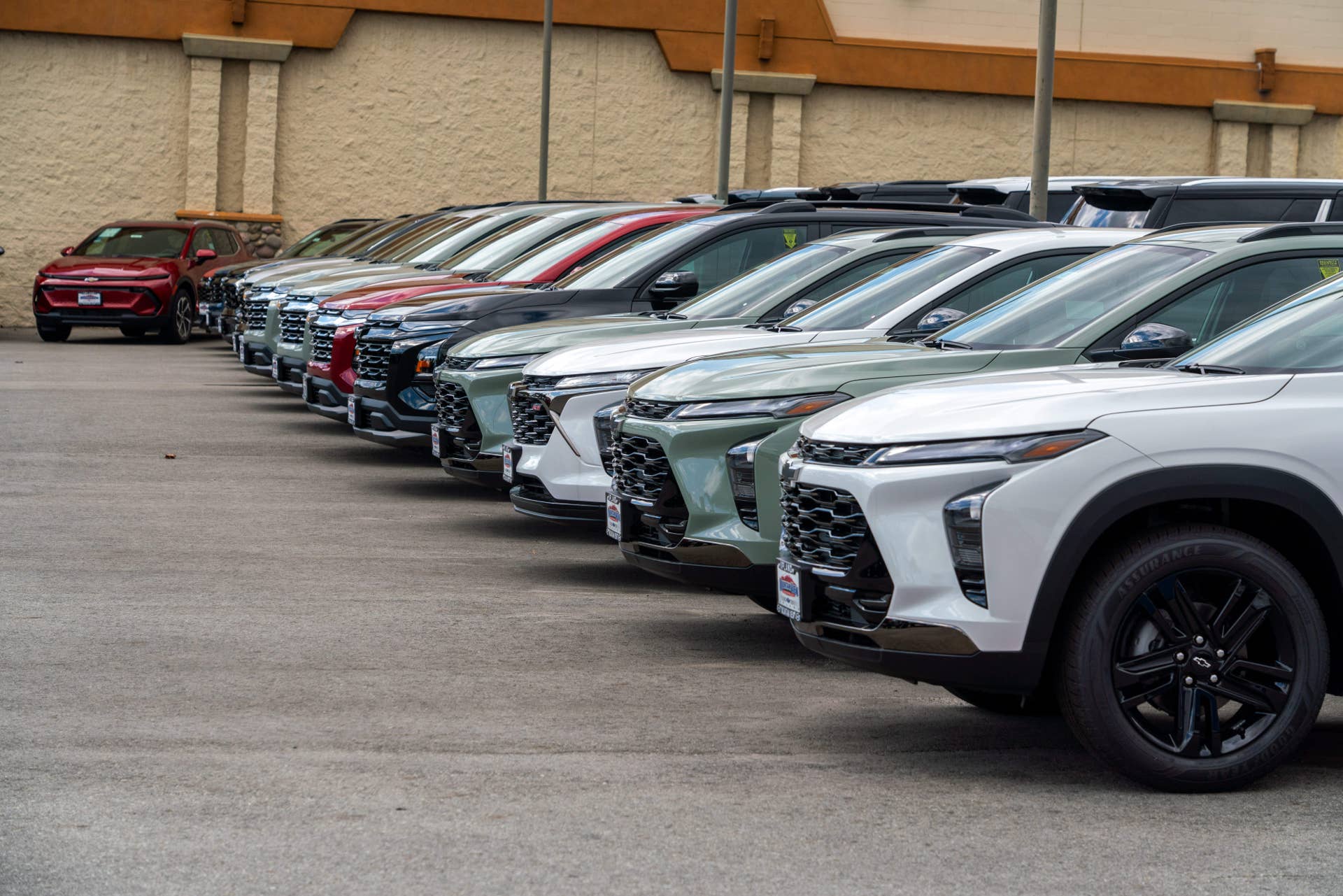
Kyle Grillot/Bloomberg via Getty Images
The combination of expensive vehicles and higher interest rates has led to an unprecedented surge in auto debt, giving consumers a tough choice between higher monthly payments and longer repayment terms. About the latter part, over 1 in 5 new car buyers took seven-year auto loan agreements in 2025, according to data from Cox Automotive.
Factor in the inflation and the rising gas prices caused by the Iran war—the nationwide average price per gallon was $4.53 on May 6 according to AAA—and it’s pretty clear that car owners can’t catch a break these days. And let’s not forget that the average transaction price for a new vehicle was nearly $49,000 last month, according to Edmunds, up from $35,000-$37,000 in 2018.
Needless to say, the significant increase in new car prices has far outpaced the increase in incomes. To make matters worse, the supply of affordable cars is almost depleted, with no new vehicles for sale under $20,000 anymore.
More Buyers Than Ever Have $1,000 Monthly Auto Loan Payments

Getty Images
Amid an unstable environment, automakers are focusing more on higher-income buyers, with more than 43% of new cars being bought by households with incomes of $150,000 or more, according to Sean Tucker, a managing editor at Kelley Blue Book.
This leaves no other option to many low- and middle-income families than to take on bigger loans to be able to afford a new car. The lowest-income borrowers, who earn under roughly $35,000 a year, paid an average of $738 a month on their car loans in 2025, according to the study—significantly more than the average monthly auto loan payment of $680.
Rather worryingly, Edmunds found that the share of buyers who agreed to monthly auto loan payments of $1,000 or more accounted for 20% of all financed new vehicle purchases in the first quarter of 2026, compared to 17% a year earlier. That means 1 in 5 borrowers have accepted $1,000 monthly car loan payments so far this year.


There are no reviews to display.