




Before Batteries, There Was a V8
While Volvo is now more closely associated with eco-oriented products, the Swedish automaker once offered a V8 in models such as the XC90 and S80 during the 2000s. The 4.4-liter B8444S may not be as bulletproof as alternatives like General Motors’ LS V8, but it still offers plenty of character – especially considering it was developed in collaboration with Yamaha, and its architecture even underpinned a 5.0-liter version used in Australia’s V8 Supercars.
The all-aluminum Volvo V8 – which produced 311 horsepower in road-going applications – has long been regarded as a rare engine. As such, a teardown by Eric from I Do Cars on YouTube helps bring this unusual powerplant back into the spotlight, offering a detailed look at an example inside his shop. The engine arrived in poor condition, and with little background information available, the teardown became especially compelling as Eric sought to determine what went wrong.
Inside a Rare Find
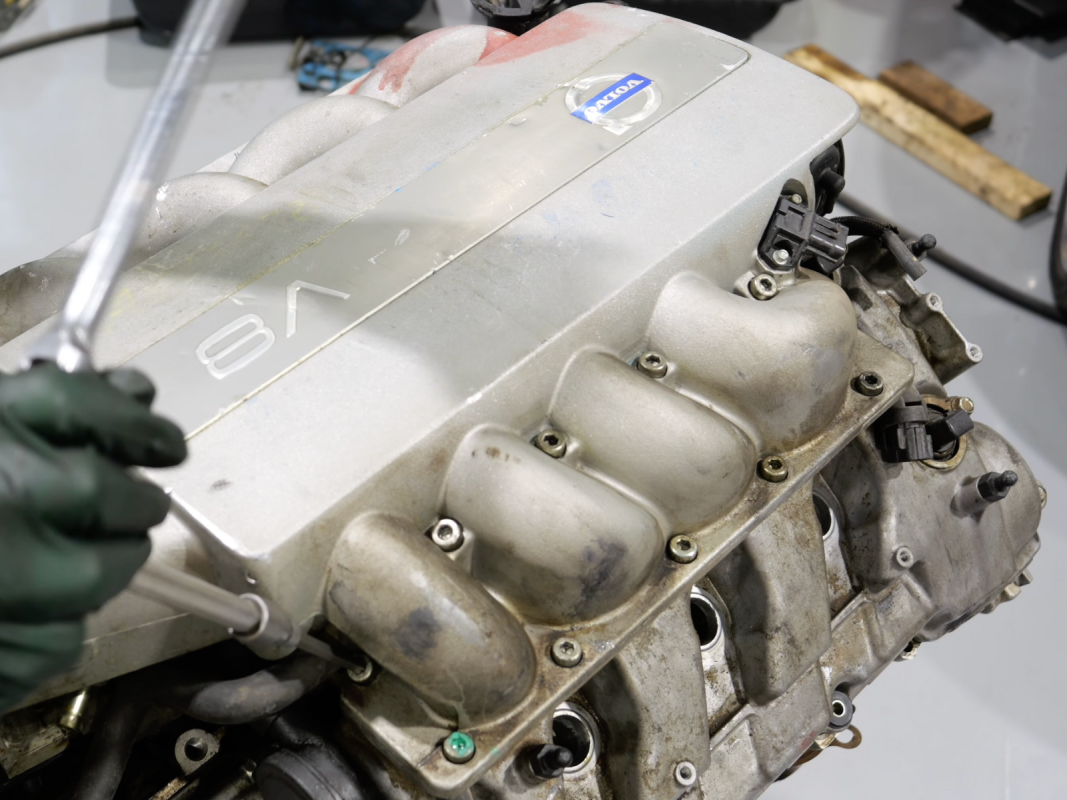
After removing the upper plenum, the internal components appeared “dirty,” suggesting the V8 was a high-mileage engine. Some oil varnish was also visible throughout the valvetrain, though no immediately catastrophic issues were present that could clearly explain why the engine had ended up in such poor condition.
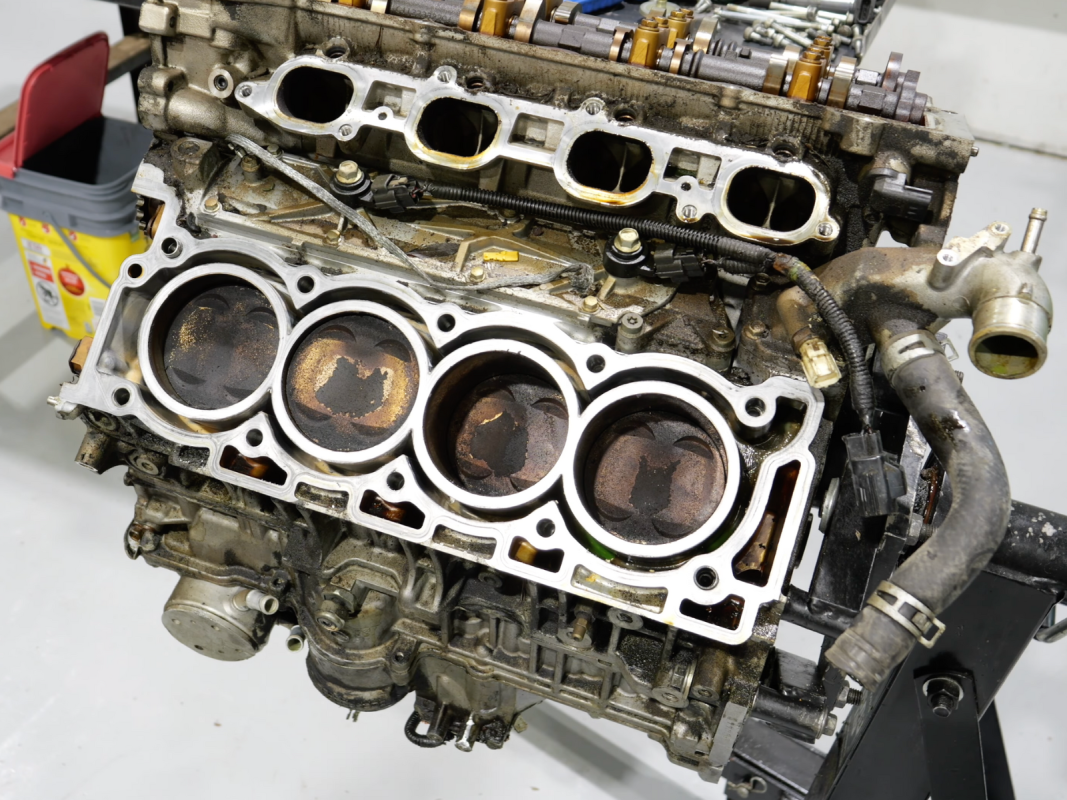
Further inspection of the cylinder block revealed rust on top of several piston crowns, along with visible coolant residue around the cylinders. Because of the presence of rust, Eric tested whether each piston could reach top dead center. Since all of them did, bent connecting rods – typically associated with hydrolocking – were ruled out. Hydrolock occurs when water enters a cylinder while the engine is running; because water is incompressible, it can cause severe damage and failure even to the most reliable power units.
Following the Trail of Water
That said, water intrusion into the engine likely occurred after it had already been removed from the vehicle. The engine may have been exposed to rain, moisture, or temperature fluctuations due to improper storage. In other words, the engine’s poor condition was unlikely to have stemmed from a mechanical failure in service or an inherent design flaw.
Following the discontinuation of the B8444S in 2010, Volvo continued to downsize its internal combustion engines – a move that aligned well with the brand’s long-term electrification strategy. Today, the core of Volvo’s combustion lineup is the 2.0-liter inline-four Drive-E engine, which is used across much of the model range with at least a mild hybrid system. At the same time, the automaker has expanded its all-electric portfolio, with U.S. buyers now offered models such as the EX30, EX40, and EX90.


There are no reviews to display.