


A drag race between three mainstream hybrid sedans doesn’t immediately sound like a recipe for excitement. But, as much as we all like to see exotics from the likes of Ferrari and Koenigsegg battling it out on the drag strip, the Toyota Camry, Honda Accord, and Hyundai Sonata hybrid sedans represent the cars the average consumer will end up buying. Performance isn’t the main motivation for buying one of these sedans, but nobody wants a slow car. So, which of these hybrid sedans is the quickest in a straight line?
Camry Vs. Accord Vs. Sonata Specifications
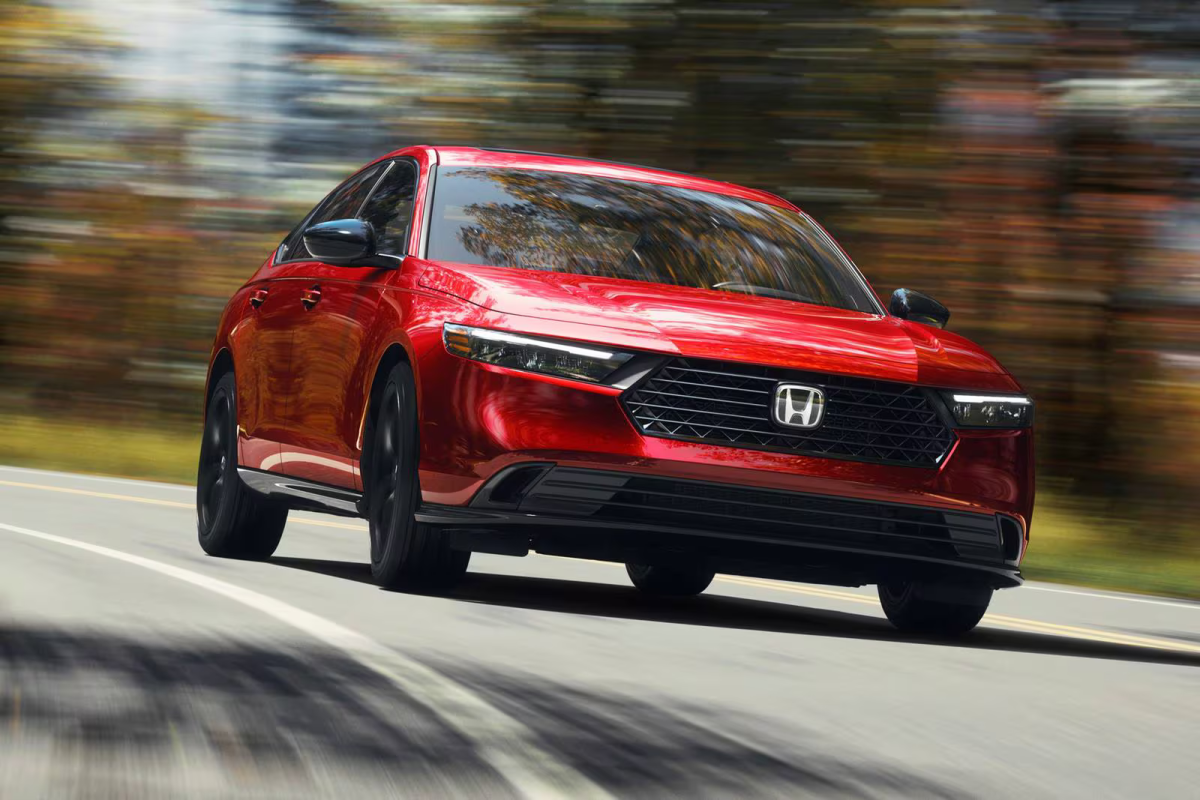
2025 Honda Accord Hybrid
Honda
Before we get into the Camry Hybrid vs Accord Hybrid vs Sonata Hybrid drag race, we must compare these vehicles’ specs. All have four-cylinder hybrid powertrains, but only the Toyota is available with all-wheel drive. That gives it an immediate traction advantage, although none of these cars are so powerful that traction should be a major factor—at least, in drier conditions. The Camry’s AWD system also adds weight, so here’s a look at how they compare.
Toyota Camry Hybrid | Honda Accord Hybrid | Hyundai Sonata Hybrid | |
Engine | 2.5L I4 Hybrid | 2.0L I4 Hybrid | 2.0L I4 Hybrid |
Horsepower | 232 hp combined (AWD) | 204 hp combined | 192 hp combined |
Engine Torque | 163 lb-ft | 134 lb-ft | 139 lb-ft |
Drivetrain | AWD | FWD | FWD |
Transmission | E-CVT | Direct Drive Unit | 6-Speed Automatic |
Curb weight | 3,627 lbs (SE AWD) | 3,541 lbs (Touring) | 3,530 lbs |
These are all U.S. specifications, besides the curb weights, which were Canadian-spec figures as these sedans were tested by Sam CarLegion in Canada. However, they’re nearly identical to models sold here.
Although it’s the least powerful, the Sonata is almost 100 lbs lighter than the Camry, but is that enough to make up for its power deficit?
The Drag Race
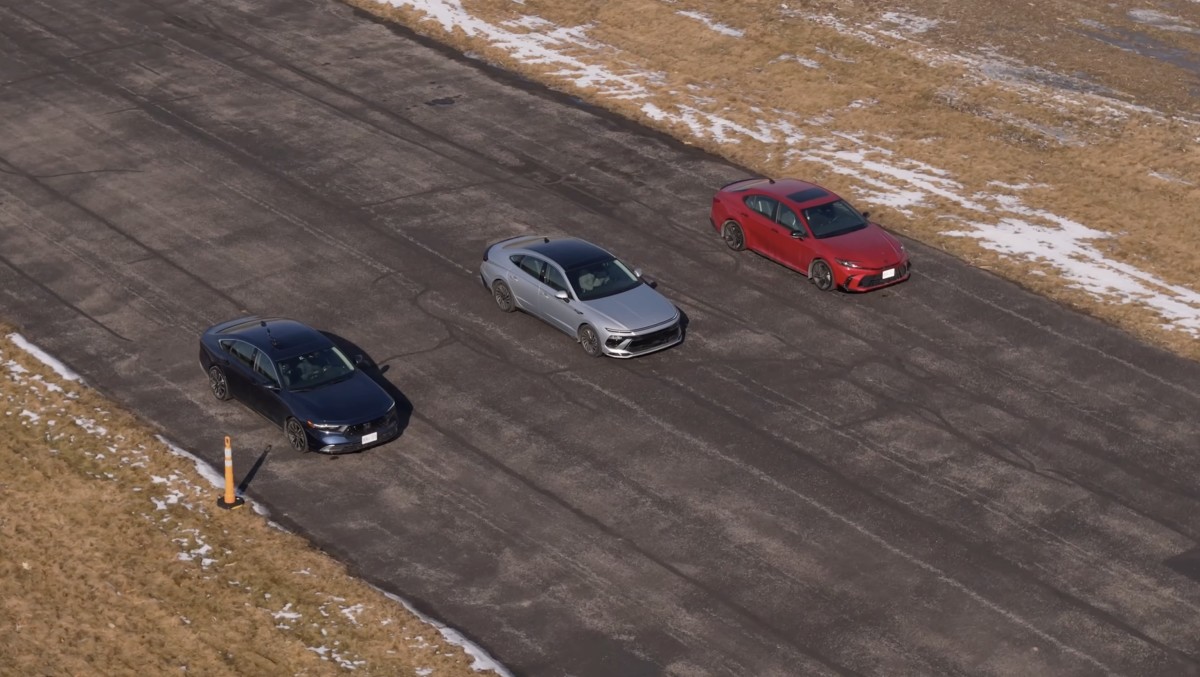
The three cars were lined up on what appeared to be a slightly damp track, but conditions were sunny and clear. In the video above—the action begins at the 8:56 mark—the Camry and Accord both get off to a fast start, immediately pulling ahead of the Sonata. Roughly four seconds after setting off, the Camry starts to surge ahead of the Accord. This suggests the Toyota’s primary advantage is its greater power, not the AWD system.
The tester noted the Accord’s immediate responsiveness off the mark, which makes it feel quick even though the Camry’s greater power takes over as the speed rises. Ultimately, the Camry is easily the quickest car here, followed by the Accord and Sonata. With standard FWD, the Camry produces 225 hp, so that should be a closer battle with the Honda. In Car and Driver testing, the Camry AWD was barely quicker than the Camry FWD (6.8 to 7.0 seconds), so the former model’s main advantage will be added traction in cold-weather states.

S
The testers then put all three vehicles through a quick slalom test. Here, the tables were turned, as the Camry came last with a time of 28.05 seconds. The Toyota is heavier than the others and that slowed it down in this test. The Sonata put in a time of 26.9 seconds, exhibiting a fair amount of body roll, while the Accord was first at 26.57 seconds. The Honda’s sharp steering and excellent body control make it the most confidence-inspiring of the three through the twisties.
Related: Hyundai Sonata Hybrid vs Toyota Camry Hybrid - Fuel Sipping Battle
Hybrids Have Come a Long Way
Around 15 years ago, buying an affordable hybrid sedan meant sacrificing almost every ounce of driving pleasure for efficiency. Older hybrids were noisier, much slower, and not nearly as mainstream as they are today.
While not many buyers will subject one of these sedans to a slalom test or a drag race, the results show that modern hybrid sedans are quick enough, won’t fall apart in the corners, and remain as efficient as they’ve ever been.
As far as these three sedans go, choose the Camry Hybrid is straight-line speed matters. When we drove the Camry, we felt the Accord remains the best for handling and driver enjoyment, while the Sonata's styling stands out.


There are no reviews to display.