


The Transmission That Many Drivers Love to Hate
Few parts in a modern car spark as much debate as the continuously variable transmission (CVT). For some, it’s a smart way to squeeze out more efficiency. For others, it’s the most annoying transmission you can get. Most of the complaints come down to how it feels to drive. Instead of fixed gears, a CVT uses a belt or chain between variable pulleys, which can make acceleration feel stretchy and disconnected.
But it’s not just about how it drives. The bigger worry is what happens when something goes wrong. Repairs aren’t cheap, and most of the time, a major failure means you’re looking at a full replacement instead of a simple fix.
So what actually happens when a CVT gives up? The YouTube channel I Do Cars, usually known for engine autopsies, tried to answer that question by tearing down a TR580 transmission from a 2013 Subaru Outback.
Inside the Failed Subaru Transmission
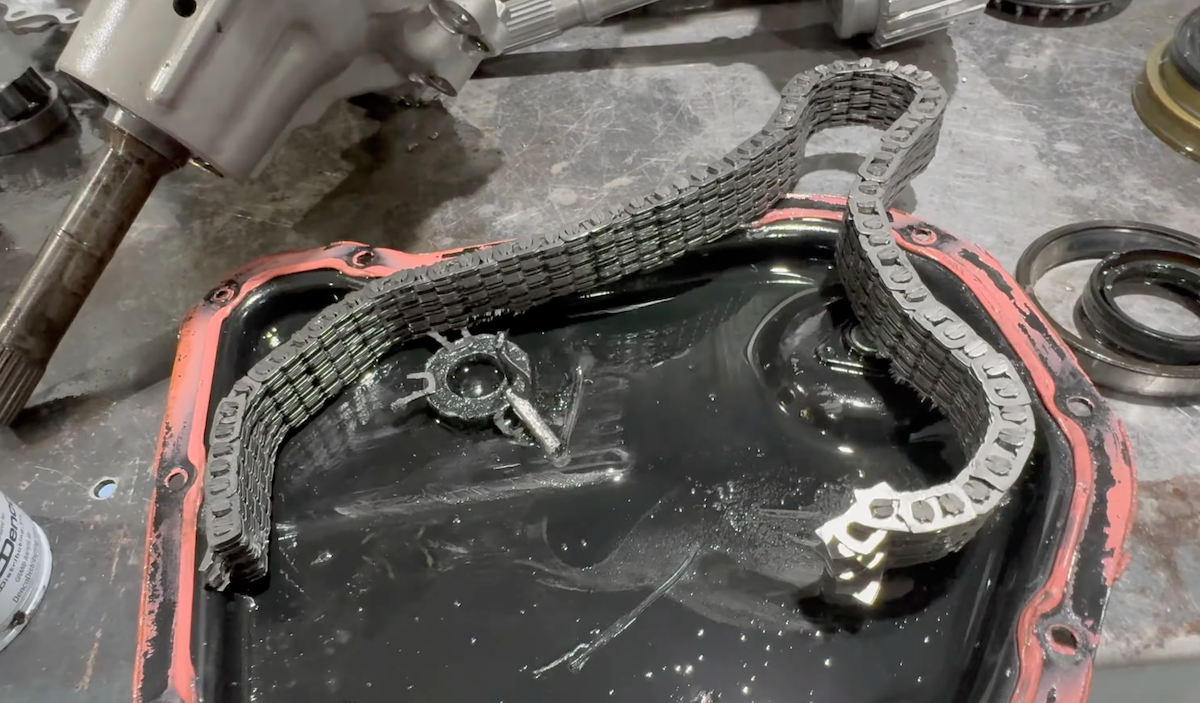
The teardown started out looking routine, but once the transmission pan dropped, the story changed. The magnet inside the pan was loaded with metal shavings and a few big chunks – clear evidence that something inside had gone very wrong. As the teardown went deeper, the culprit showed itself: the CVT’s chain, the part that actually transfers power between the pulleys, had snapped.
In any CVT, that chain or belt is always under heavy stress, constantly shifting to change the gear ratio. When it fails, things go downhill fast. Here, the broken chain sent metal fragments everywhere – scoring the pulleys, contaminating the oil pump, and spreading debris through the rest of the transmission.
What’s surprising is that most of the other internals looked fine. The planetary gears, differential, and clutch packs all showed normal wear. It was the chain failure that set off the rest of the damage.
Exactly why the chain broke remains uncertain, according to I Do Cars. It could have been fatigue, debris contamination, or an unusual load spike.
I Do Cars/YouTube
Are CVTs Actually Unreliable?
The idea of the CVT itself is not new. Variations of the concept date back centuries, with early designs appearing in sketches attributed to Leonardo da Vinci. Modern automotive CVTs began appearing in production cars in the late 20th century, eventually spreading widely as manufacturers pursued better fuel efficiency and smoother operation.
How long a CVT lasts really depends on who built it and how it’s cared for. Some can easily go past 150,000 miles with the right maintenance. But many problems stem from skipped service, especially when manufacturers call the fluid 'lifetime' and owners take it literally.
In practice, regular fluid changes are a must. They help cut down on wear and flush out debris before it can do real damage.
As with most car tech, it all comes down to design, how you use it, and how you maintain it. When a CVT is healthy, it can be smooth and efficient. But when a key part like the chain lets go, the fallout is anything but subtle.



There are no reviews to display.