


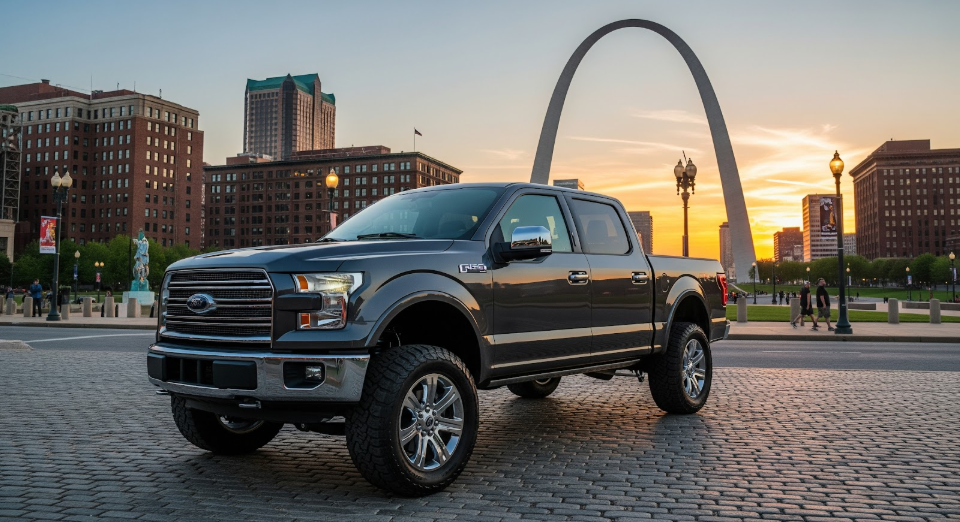
Many St. Louis Ford truck owners upgrade to lift kits for bigger tires, better trail performance, and a more commanding stance. But the wrong lift kit — or an incomplete one — can lead to steering wander, harsh ride quality, driveline vibrations, and unsafe towing behavior.
Ford trucks require lift systems designed around platform-specific geometry. This guide covers how to lift your Ford F-150 or Super Duty correctly and avoid the common mistakes that compromise drivability.
Before choosing a lift, you may want to review
leveling options.
1. Why Lifted Ford Trucks Develop Handling Problems
Lifting a truck increases leverage on suspension and steering components. Larger tires add rotational mass and amplify these effects.
Common Problems With Poorly Installed Lift Kits
- Steering wander
- Bump steer
- Harsh or inconsistent ride
- Driveline vibration
- Poor towing stability
These issues result from incorrect geometry correction.
2. Lifting Ford F-150 Trucks
The F-150’s independent front suspension requires specific components to maintain proper geometry at taller ride heights.
F-150 Lift Problems
- Ball joint binding
-
Limited caster recovery
- Inadequate alignment range
- Harsh top-out with spacer lifts
Better Lift Solutions for F-150
- Coilover lift systems
- Upgraded upper control arms
- Matched rear shocks
- Proper wheel offset
F-150 owners adding 35–37 inch tires benefit greatly from upgraded control arms and higher-quality shocks.
3. Lifting Ford F-250 & F-350 Super Duty Trucks
Super Duty trucks rely on precise caster and track bar geometry to maintain highway stability.
Super Duty Lift Problems
- Steering instability
- Driveline angle issues
- Off-center axle
- Reduced towing capability
Recommended Lift Components for Super Duty
- Coil or coilover lift systems
- Adjustable track bars
-
Caster-correcting radius arms
- Upgraded tie rods and drag links
To further stabilize steering, read the
steering upgrade guide.
4. Shock Selection for Lifted Ford Trucks
Shocks make the biggest difference in ride comfort.
Recommended Shock Brands
- Bilstein
- Fox
- King (for heavy off-road use)
Quality shocks improve damping, reduce harshness, and increase control.
5. Towing Stability for Lifted Ford Trucks
Lift kits alter hitch height, weight transfer, and trailer dynamics.
Recommended Towing Upgrades
- Helper air bags
- Rear sway bars
- Correct hitch adjustment
-
Trailer brake controller calibration
For power loss caused by bigger tires, see the
regearing guide.
Conclusion
A lifted Ford F-150 or Super Duty truck should be more capable, not harder to control. By choosing complete lift systems with proper geometry components, you avoid the problems that frustrate so many owners.
Explore all
Ford upgrade categories.


Recommended Comments
Create an account or sign in to comment