



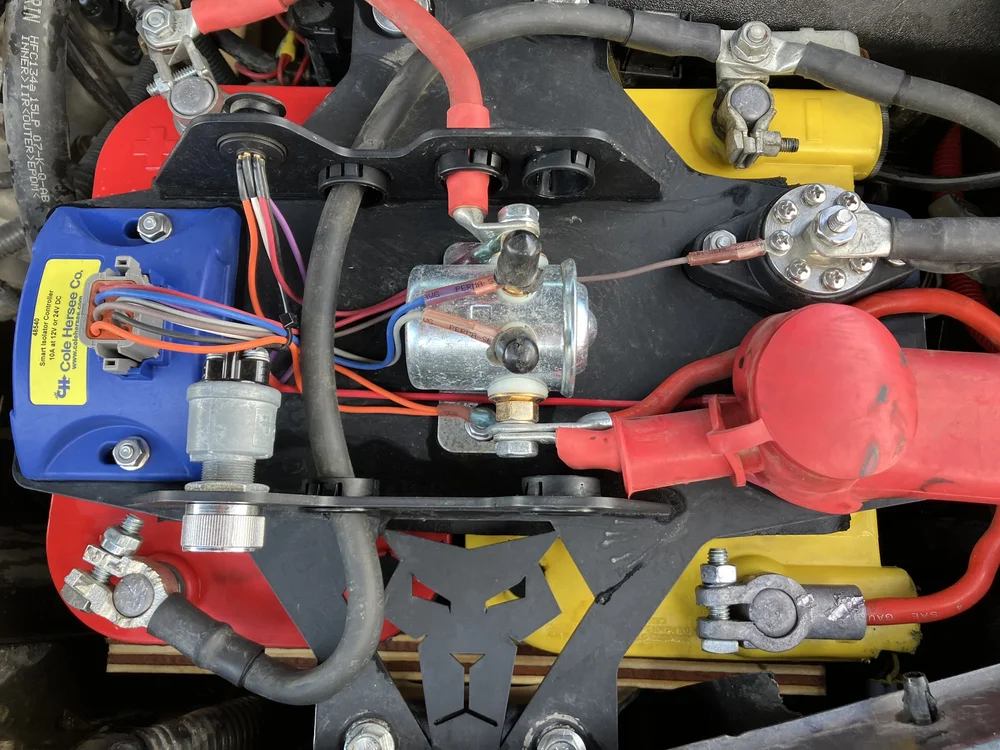
(Full disclosure: this is a long-term review of the first-generation Genesis dual-battery kit for the 2007-2021 Tundra. It has been superceded by a later design, the merits of which I cannot address.)
In 2021 we bought a beautiful, 80-year-old cabin in Fairbanks, Alaska, and soon realized we’d need a dedicated vehicle to leave there. A full-sized 4x4 pickup seemed the right choice, both for the conditions near the Arctic Circle and because I’d be hauling up a cargo trailer loaded with furniture, tools, and other immediate needs. So we bought a hideously overpriced (it was that period) 2014 Toyota Tundra.
Since we fully intended to do a lot of exploring, and since we also intended to spend part of our winters there (so as not to be viewed as mere un-snowbirds), I considered it mandatory to install a dual-battery system. I wanted the kit to fit in the engine compartment if at all possible, for simplicity, and the only one that came up on searches was from Genesis Off Road. At that time, in early June of 2022, I planned to drive up within a couple of weeks, so I ordered the kit with little in the way of research into it, or even a thorough reading of the installation procedure. Mea Culpa.
The first revelation when I got the kit and read the instructions was that it required Optima batteries, each of which was smaller than the stock battery. Starting reserve capacity would be reduced in comparison to the full-size stock battery, and the specified deep-cycle Yellow Top Optima had a capacity of just 48 amp-hours. Neither is ideal in potential -40º conditions. Ah well—I figured that was the sacrifice necessary to fit two batteries in the stock location.
The battery tray and top were nicely made, powder-coated, clearly laser-cut and incorporating a fancy large-cat-head design. The control unit looked solid, and all necessary wiring was already in place. Reading installation instructions thoroughly at last, I was a bit perturbed to discover that the entire assembly attached to the bottom of the original battery platform with four Rivnuts. That seemed a bit light for 60-plus pounds of battery, mount, and charge controller. The next thing I noted was that all the included hardware, including the bolts that secured the top plate to the base, was SAE. Really? On a Toyota? That might have saved Genesis, what, 50 cents per kit over metric hardware? A small thing, perhaps, but annoying.

Then, on trial-fitting the bracket into the Tundra after removing the stock battery tray, I realized that it was going to be a very, very tight fit. The instructions noted this and offered extremely precise directions for mounting, so I didn’t just do a trial fit, I did five or six, noting each time how close the whole thing would come to the bodywork in front and the fuse/relay box in back. In fact the front attachment bolts for the top plate were actually under the radiator frame.
Finally I was as satisfied as I could be that I had the bracket correctly positioned. I drilled the holes for the Rivnuts and bolted it down. The Genesis system was designed to use the extended plastic base plates that come with the Optima batteries, so I affixed those and dropped both batteries in place, with the Yellow Top on the right (looking toward the cab).
And I was completely stunned by how close the positive terminal of that battery came to the (steel) radiator frame. There was no more than an eighth of an inch between proper function and a major short circuit. I shifted the batteries as much as possible—no difference. I pulled them out and checked my installation, which agreed with the directions. There was no way to shift the Rivnuts one way or another since they were crimped in place. I was absolutely certain that eighth of an inch would disappear on some moderately rough stretch of the Alaska Highway and cause a serious problem. But I had no time to make any major adjustments.
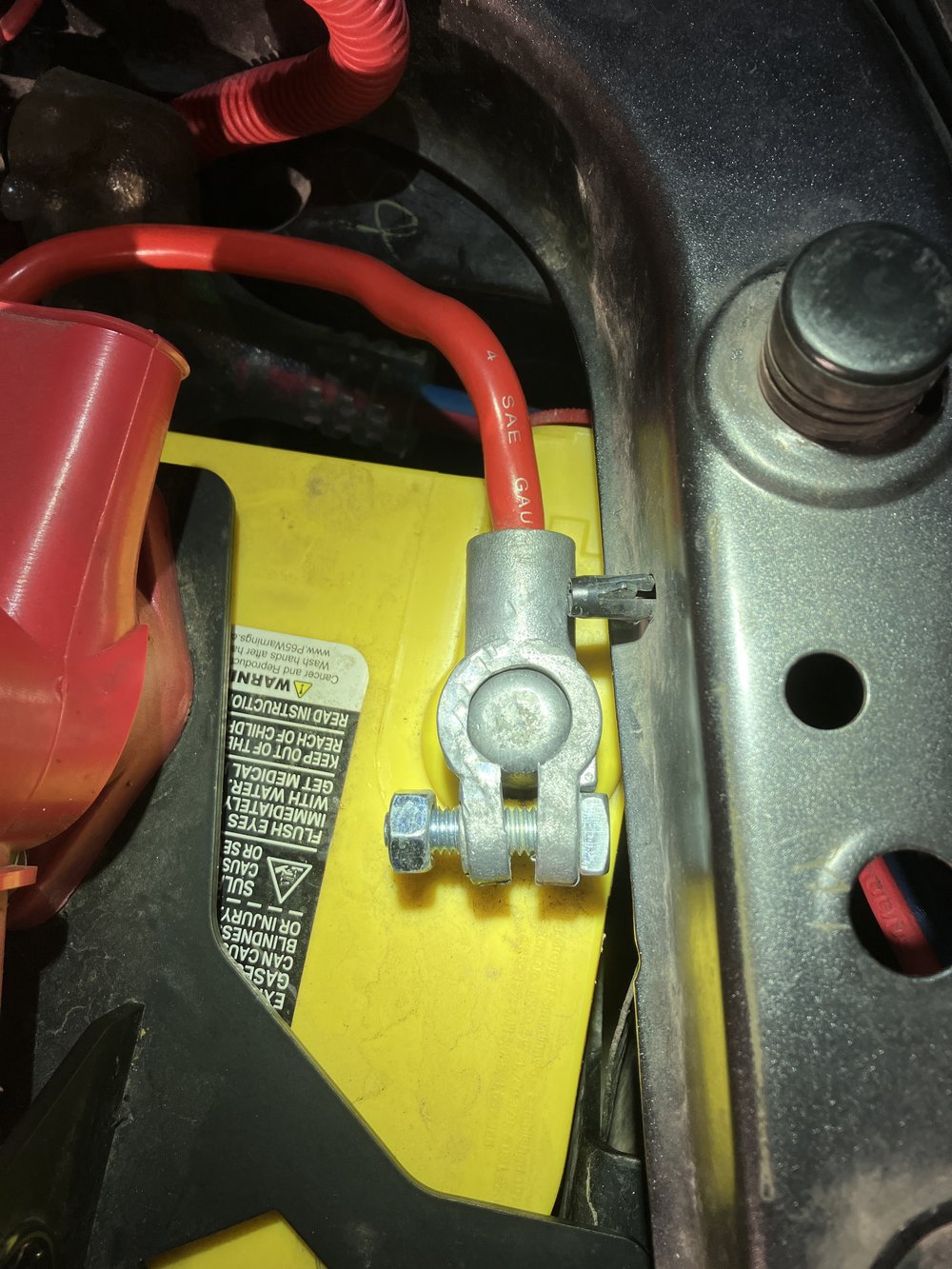
Too damn close . . .
So I removed the two base plates from the batteries, which dropped them below the immediate danger zone, and filled in the gap on top with dense, closed-cell foam, so tight that I had a difficult time inserting the bolts for the top plate to compress everything. The other bits were still frighteningly close together—access with a wrench to the positive terminals was excruciatingly tight, and even the not-very-sharp-eyed among you might notice the spot where I once managed to arc a wrench on a positive lead. But there was at least sufficient clearance between the hot terminals and bodywork.
One remaining worry was the left running and turn-signal lamp, the wires to which were bent sharply against the side of the Yellow Top battery. If the battery moved at all it could cause trouble, so I resolved to keep an eye on it.
The journey to Alaska was without issue, and in fact for the next two years the system worked perfectly in terms of keeping both batteries charged. I never had to use the switch that combined the batteries for an emergency start. I almost forgot my frustration with the installation. Then, one day when I put on my left turn signal, it started hyper-flashing rapidly—usually an indication that a bulb has burned out.
To access the bulb I had to disassemble the entire battery system, leaving only the bottom bracket in place. When I did so the issue became clear: the battery had in fact shifted just enough to smash the wires to the bulb, and one or the other had shorted.
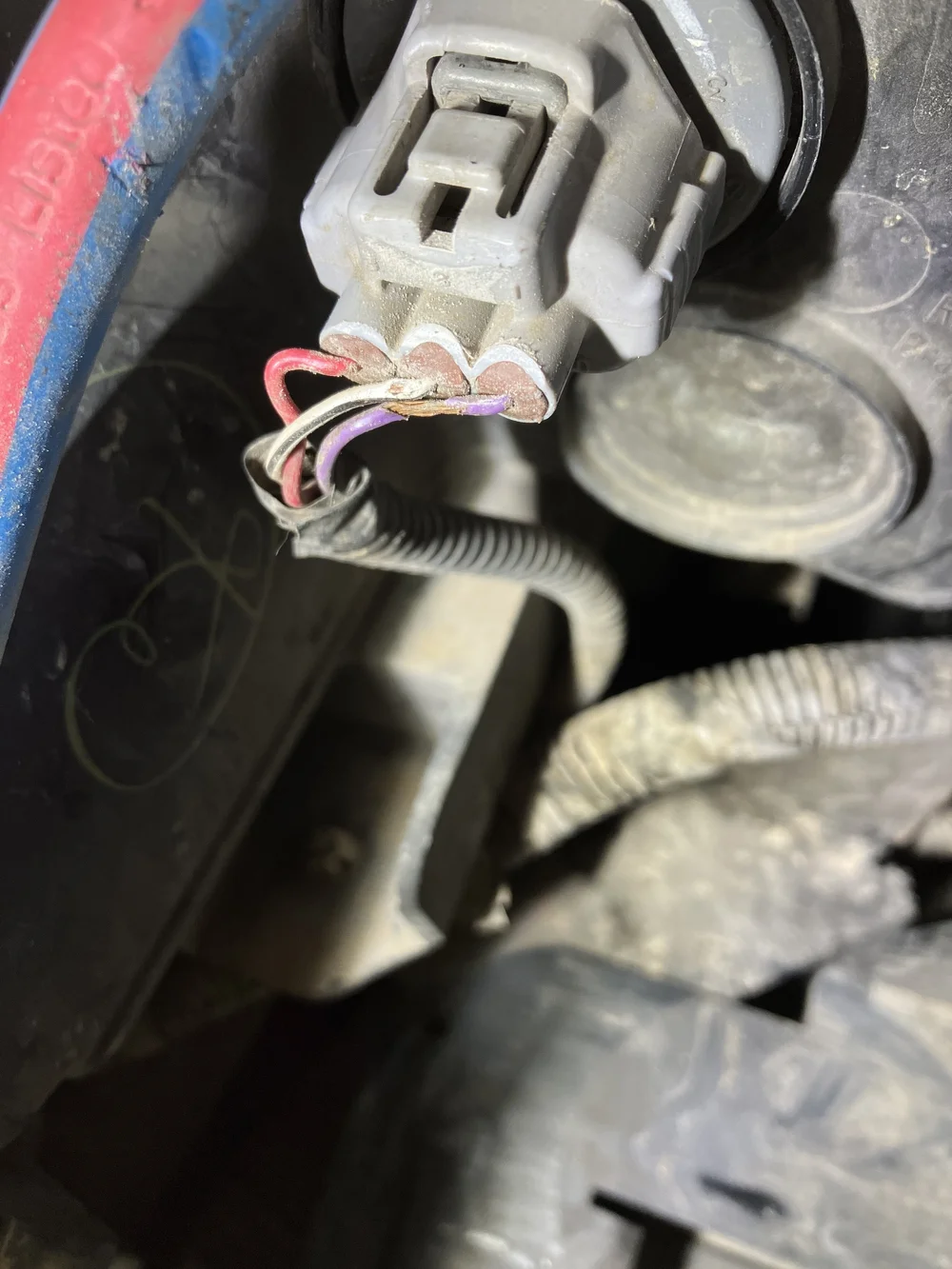
I installed a new plug and bulb and took another look at the clearances. I found that I could fractionally increase the distance between the battery and plug by grinding away part of the battery’s base plate, and did so—but by now my frustrations had resurfaced. (To be fair, I noted meanwhile that the tray had not loosened on those four Rivnuts.)
Last week the problem came back. Everything out again. This time I resorted to the ultimate bodge fix: I cut a square of three-quarter-inch plywood and wedged it in front of both batteries, gaining a critical few tenths of an inch extra clearance. With it in place I could barely get the top plate bolted on again, but I’m now hopeful things will stabilize for a while. Who knows, it might even be possible to replace a bulb without disassembling an entire corner of the engine compartment.
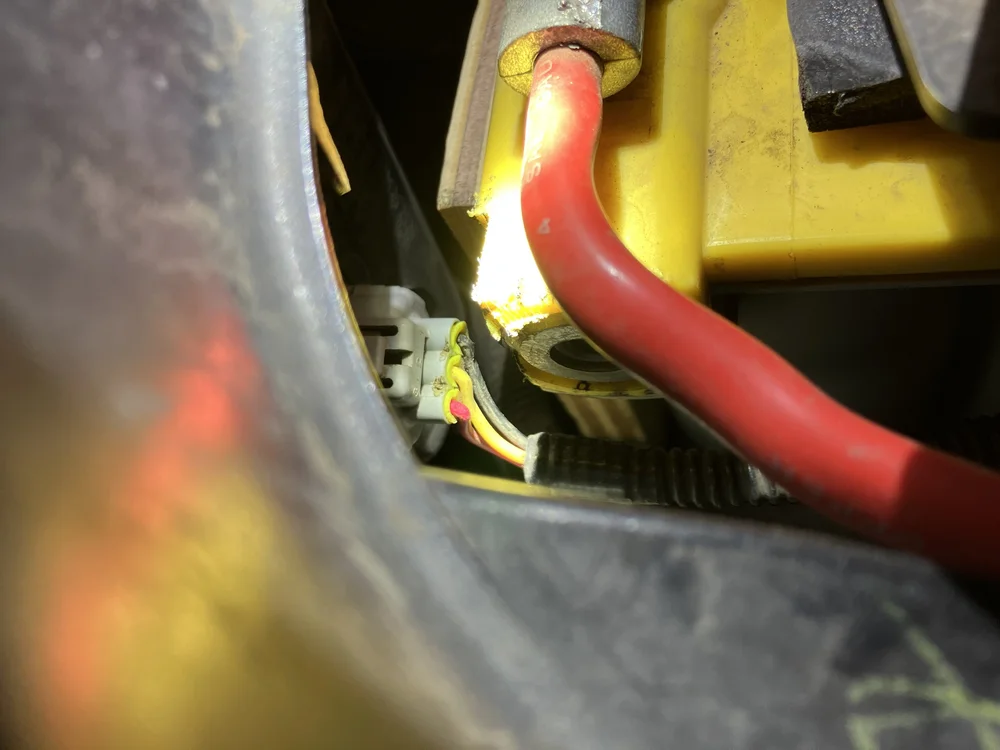
Is that . . . plywood? Yes . . .
Obviously, a reader (or the company) could claim that it was my modification of the battery arrangement in the first place that caused the turn signal issue. But there was simply no way I was going to leave that positive terminal that close to metal—and my modification only moved the battery vertically. Having done a fair number of aftermarket modifying on more than a few vehicles, I’m absolutely confident I installed the Genesis kit exactly where I was told to. As it is it is so tight at the back that opening the fuse box is a real struggle.
As I mentioned at the beginning, Genesis now offers a “Generation 2” version of this kit, now employing a pair of (still undersized) Odyssey batteries. Perhaps this new version addresses the issues the first one had (else why the need for a redesign?). I can’t say—and I’m not about to spend $700 plus batteries to find out. When I decide to fix this system permanently it will be with an entirely different approach and two full-sized batteries. In the meantime, if you’re considering the current Genesis kit you might ask a few questions regarding the improvements I hope have been implemented.


Recommended Comments
Create an account or sign in to comment